

We've reintroduced 64 endangered salamanders to the wild!
May 29, 2026
On May 4 and 5, 2026, personnel from Chattanooga Zoo, U.S. Forest Service and Lee University traveled into the Cherokee National Forest to release a total of 64 eastern hellbender salamanders in multiple creeks. This is part of the Hellbender Headstart program — housed here at the Zoo — that is working to replenish the eastern hellbender salamander, which is endangered in Tennessee.
Eastern hellbenders are native to Tennessee, and over a dozen other states, but have been declining for decades primarily due to habitat destruction and stream pollution. Hellbenders breathe directly through their skin, absorbing oxygen from water, making them sensitive to environmental changes.
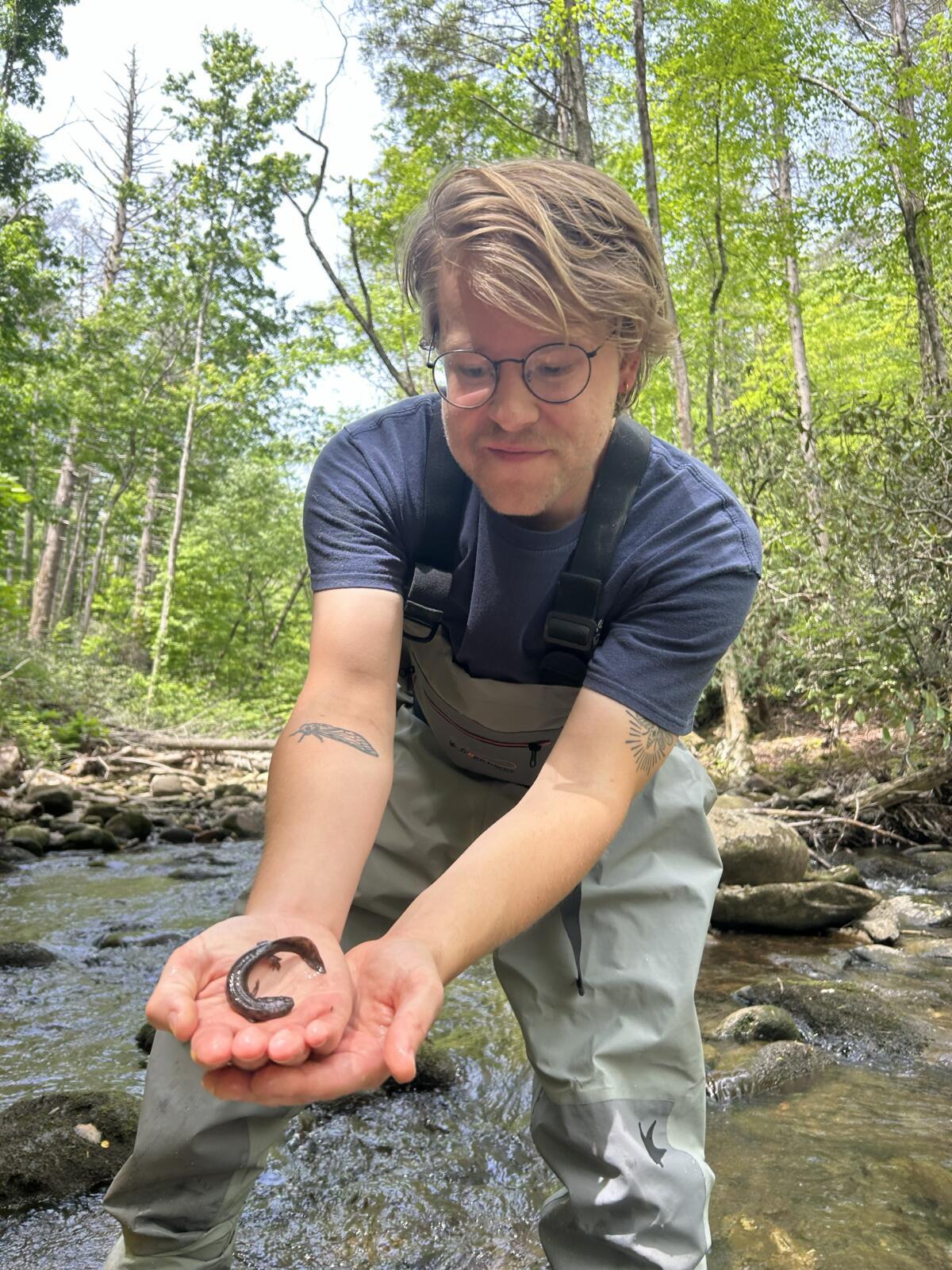
“Hellbenders rely on clean, well-oxygenated flowing water to survive, so a strong population of healthy hellbenders signifies good water quality and a thriving ecosystem,” said Will Ternes, a zookeeper who helps lead the hellbender program at Chattanooga Zoo. “It’s important that we take measures to save this crucial, local species from extinction and help them thrive in our region like they used to.”
In March of 2021, the Hiwassee Hellbender Research and Education Facility opened at Chattanooga Zoo to kick off the repopulation program. Each cycle of the program starts with the collection of hellbender eggs and larvae in the wild. Next, they are raised for two to three years at the Zoo before they are released back into their natural habitats.
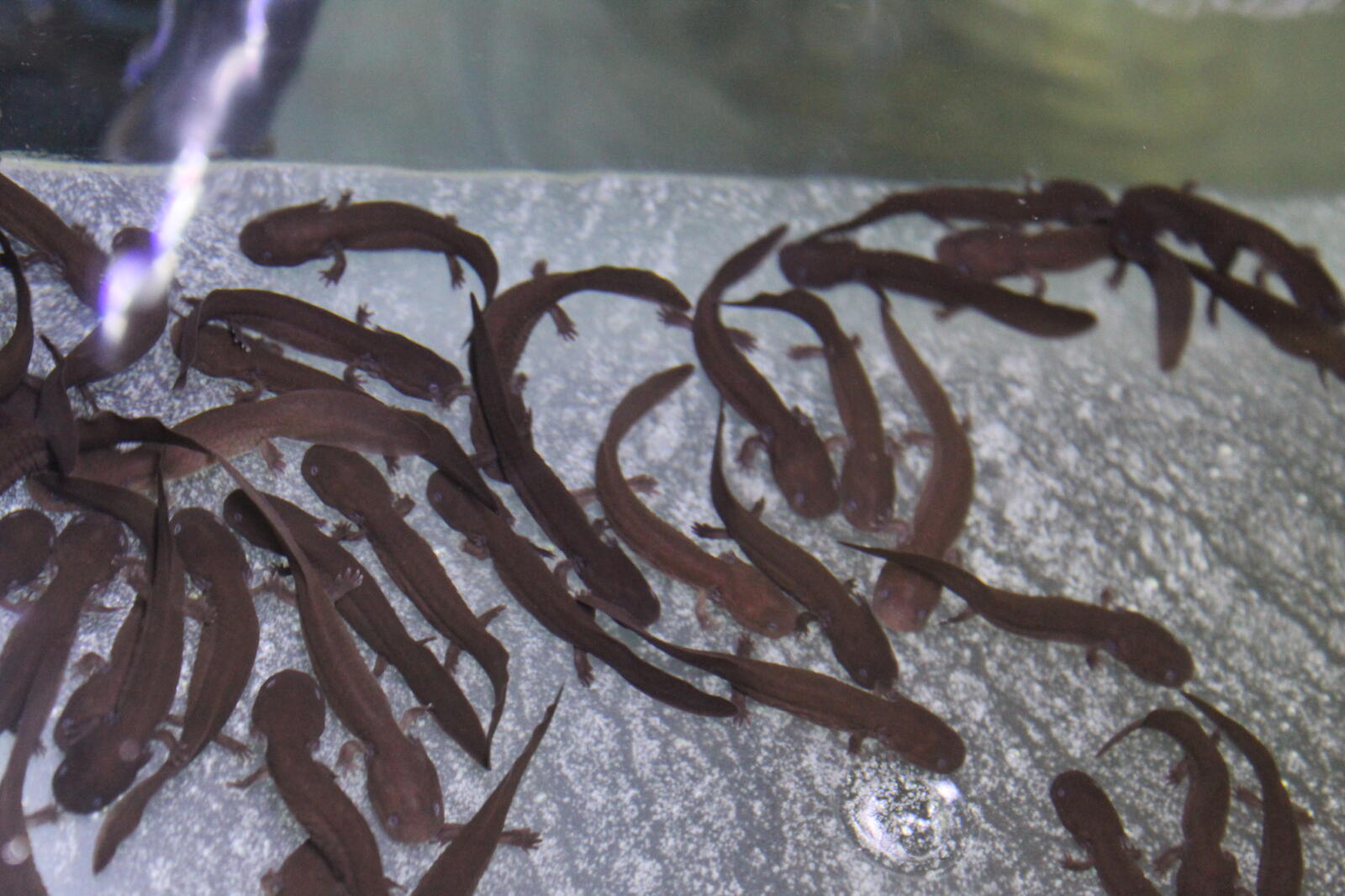
Young hellbenders have a low survival rate due to predation by fish, but full-grown hellbenders do not have this problem as they can grow up to two feet long and weigh around five pounds. By raising and then introducing more strong, mature individuals into the wild, the headstart program will continually bolster local hellbender populations.
Previously, we have released 61 hellbenders in the area, bringing the total number of releases to 125 salamanders. Additionally, there are hundreds of hellbenders currently living at Chattanooga Zoo that will grow bigger and stronger until they are ready for release.
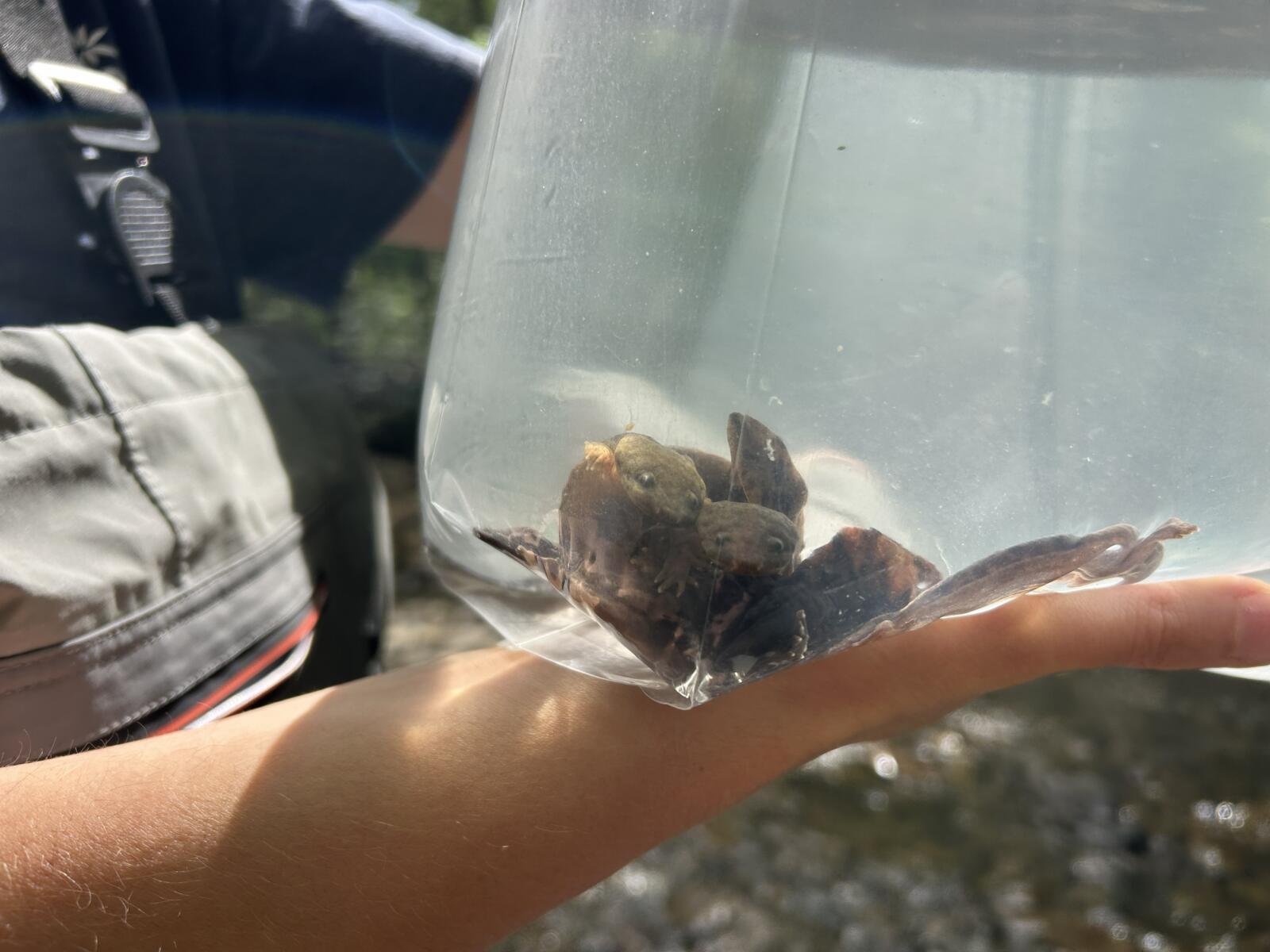
To release the salamanders, conservationists from Chattanooga Zoo, U.S. Forest Service and Lee University drove through forest roads, hiked along streams and waded through the water, carrying hellbenders in coolers and buckets. Hellbenders often nestle under rocks, branches and fallen trees, so it is important to their survival to find appropriate release points.
“We plan to continue the cycle of collection, care and release until local populations have made a demonstrable improvement,” said Ternes.
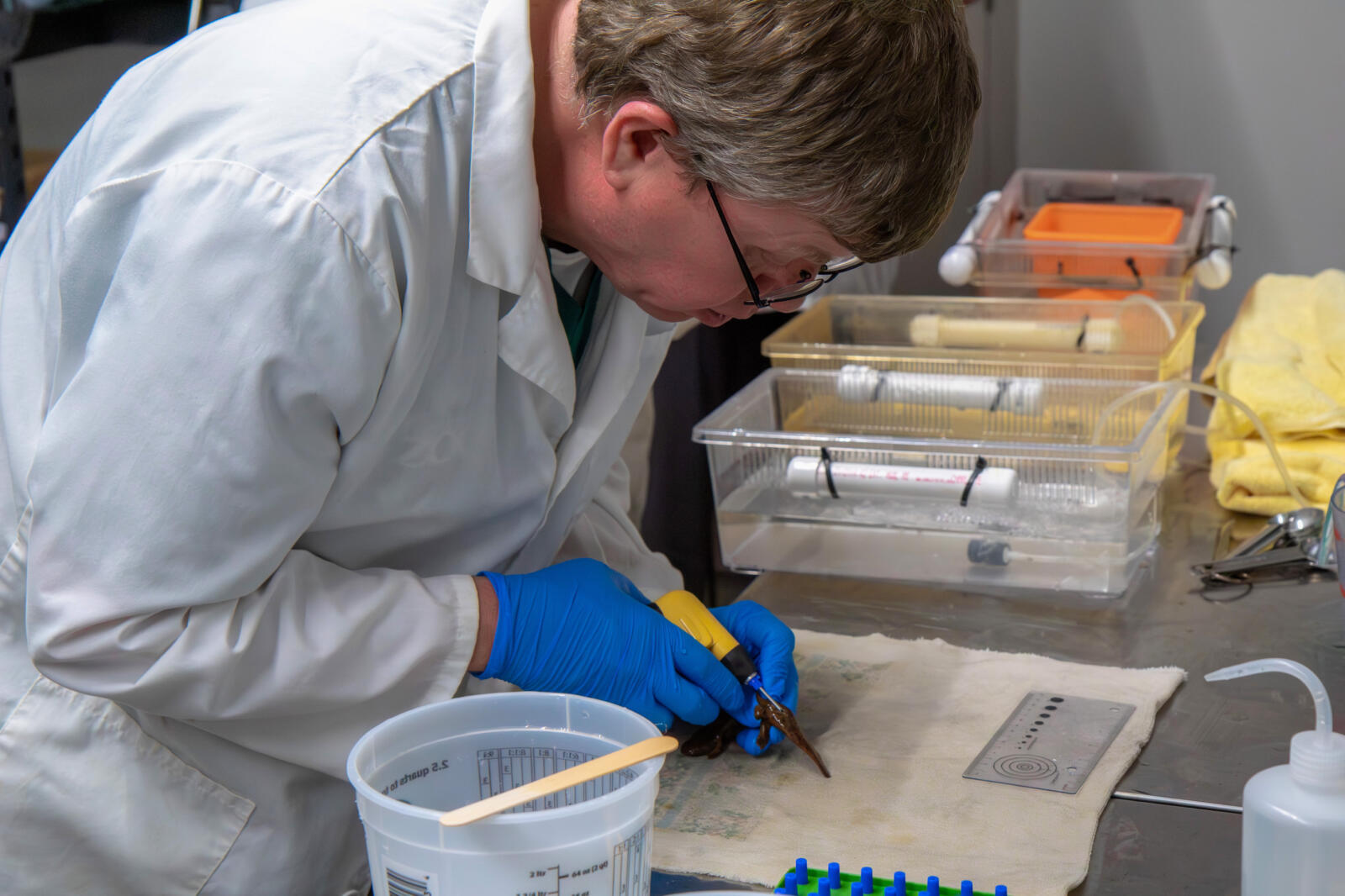
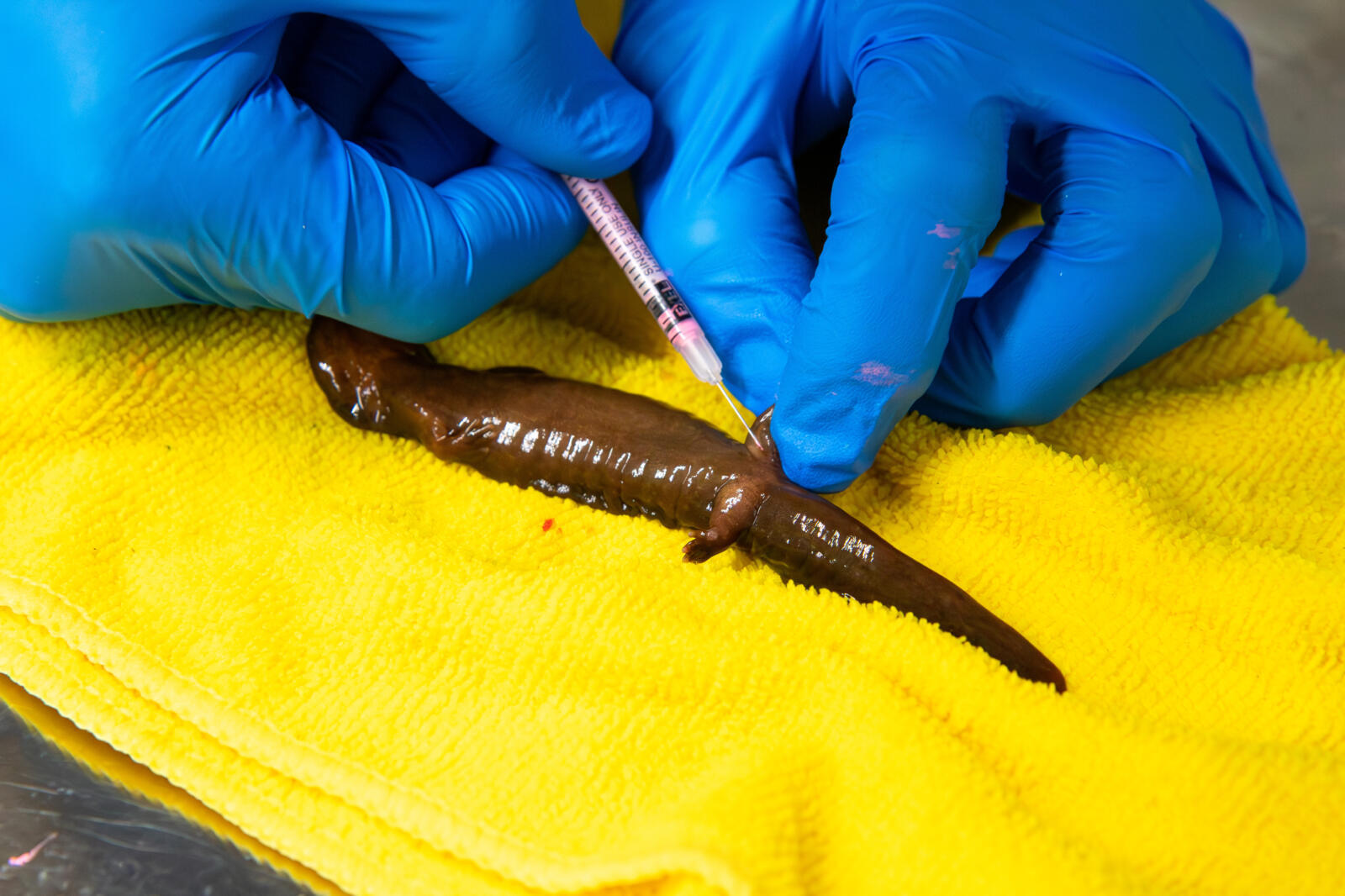
Dr. Michael Freake, a professor at Lee University, and Dr. Tony Ashley, Chattanooga Zoo’s veterinarian, injected PIT tags into the hellbenders before release. These tiny microchips will help researchers identify and monitor the hellbenders for years to come. Some hellbenders were also marked with a UV fluorescent tag to help evaluate the program’s success in the future.
In addition to Chattanooga Zoo, key program collaborators, sponsors and supporters include Tennessee American Water, the Lyndhurst Foundation, Lee University, TWRA, U.S. Forest Service, the Riverview Foundation, Lisa Lemza, Michael Schillinger and Dr. Mickey and Beth Myers.
Those who wish to learn more about eastern hellbenders can visit Chattanooga Zoo’s Hiwassee Hellbender Research and Education Facility on Zoo grounds on Saturdays and Sundays at 3:30 p.m. each day for a special Hellbender Chat.
To support our local and global conservation efforts, consider making a donation.