Deserts & Forests of The World
American Alligator
Did you know...
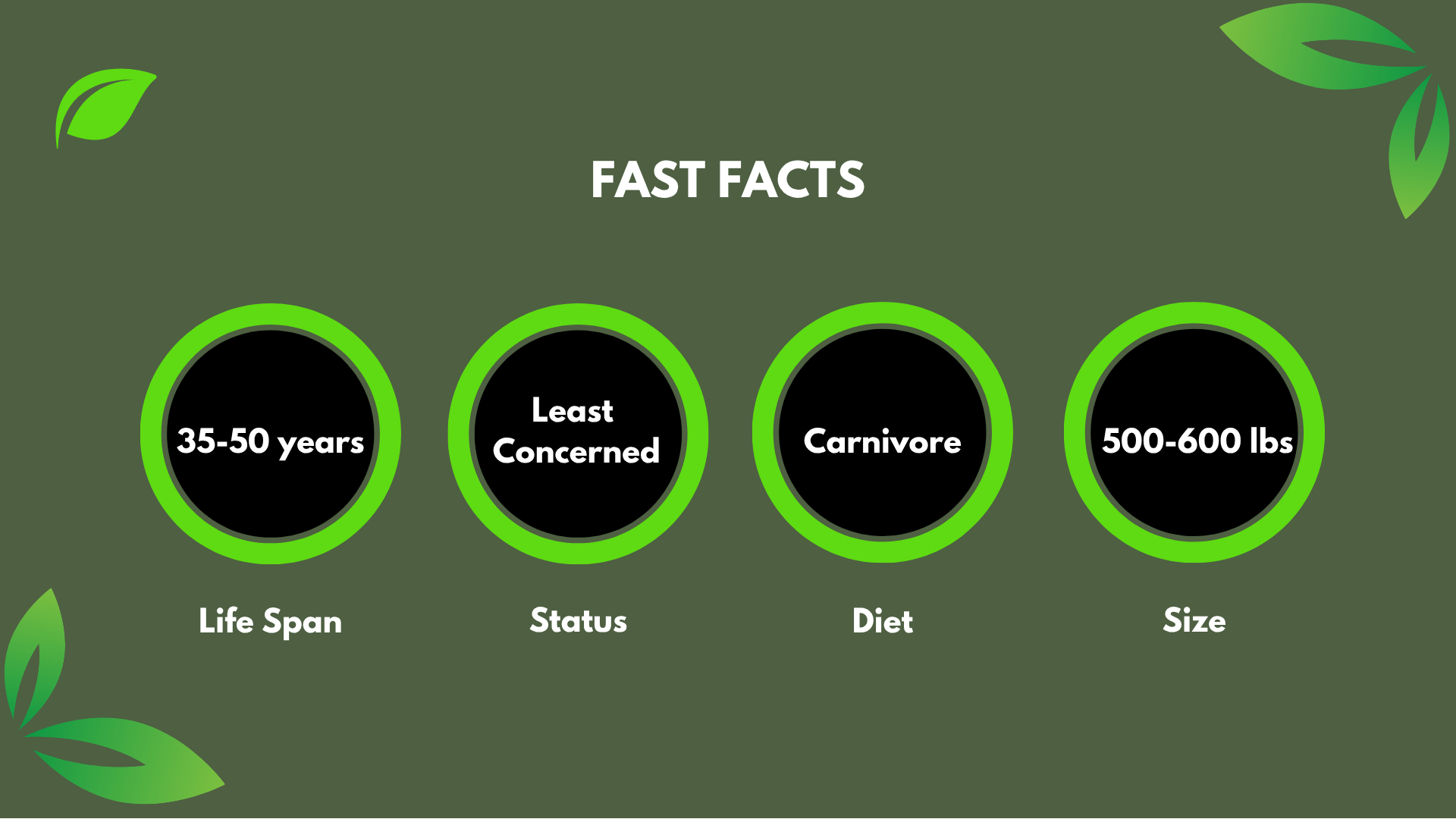
Alligators were once on the endangered species list in 1967. Legal protection worked and just 20 years later, they were taken off the list. Today, hunting wild American alligators is tightly regulated, and alligator meat and hides come from alligator farms. There are over one million alligators living among us today.
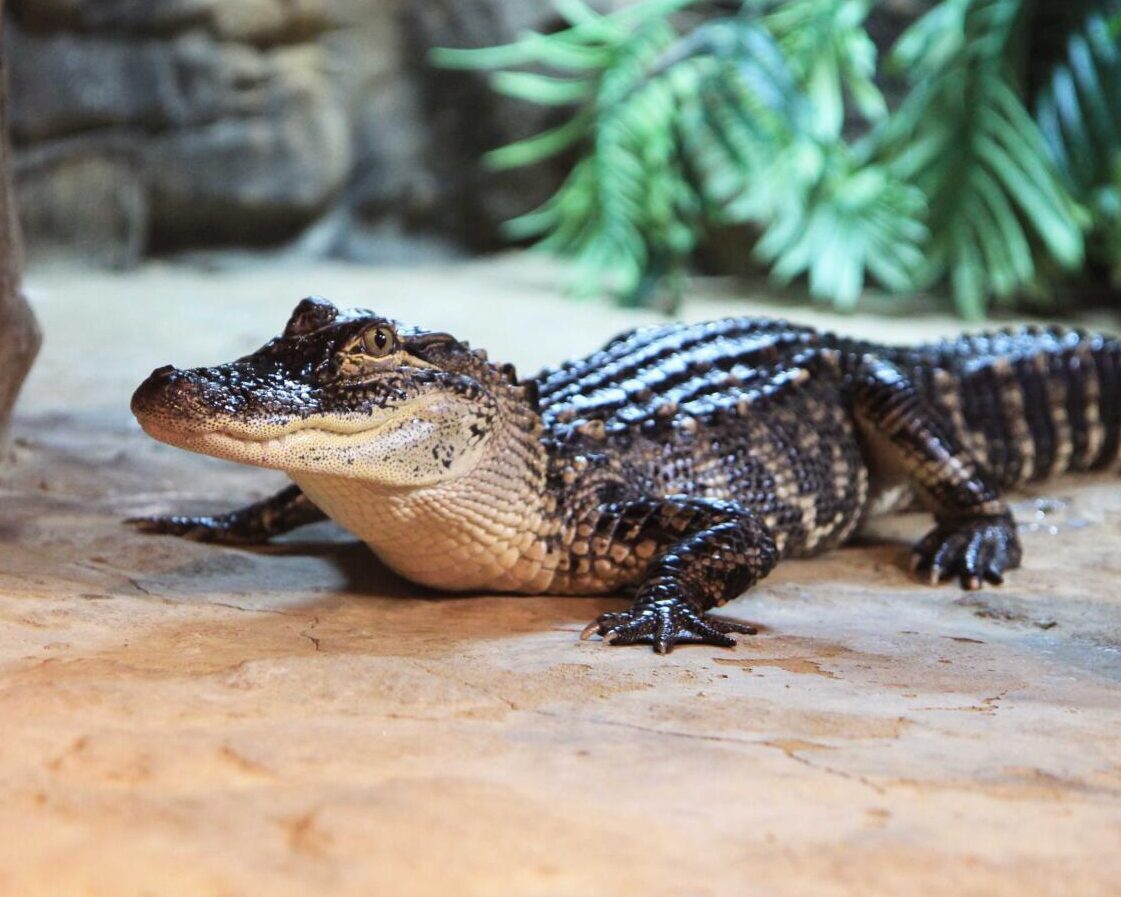
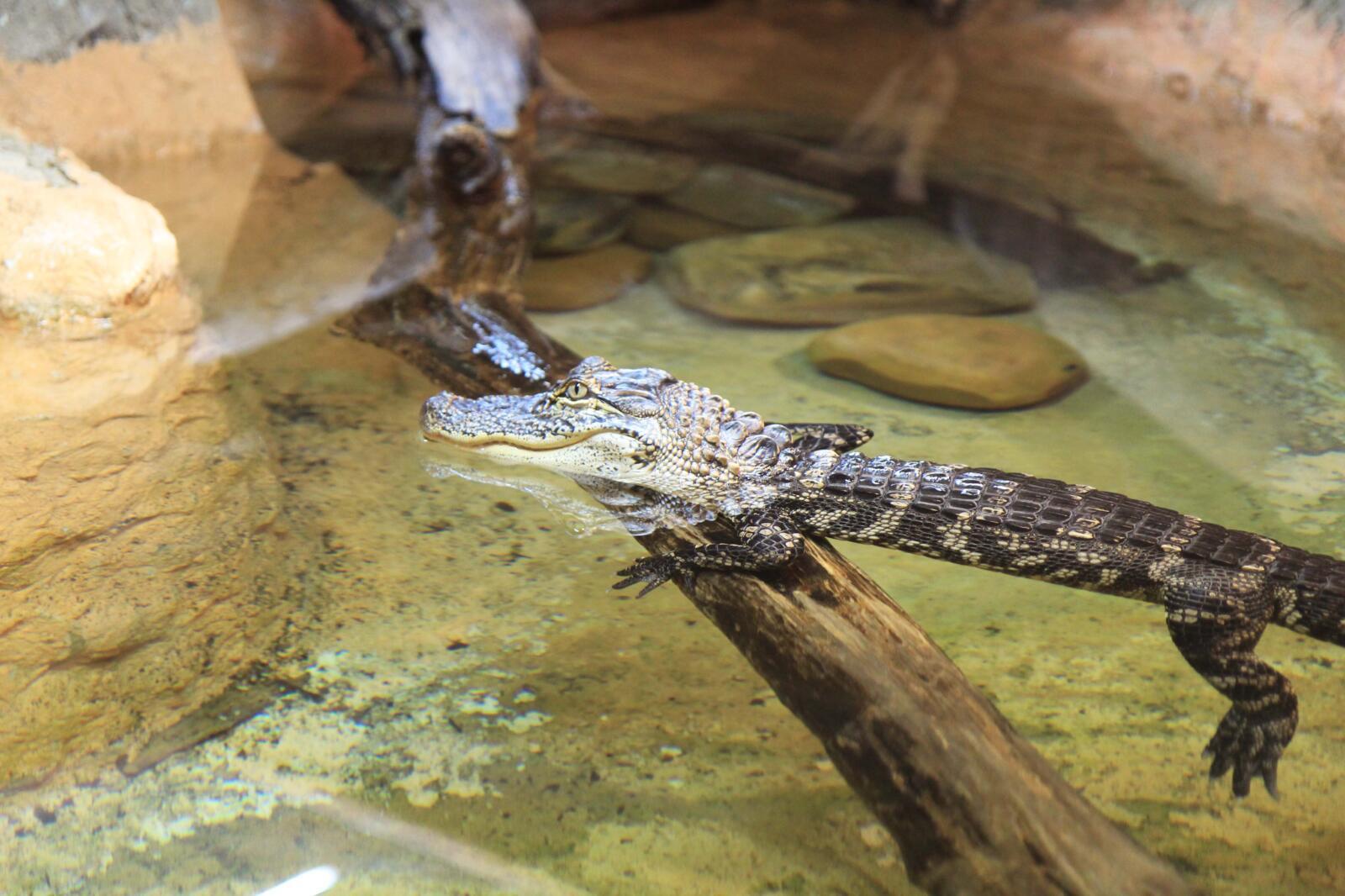
Alligators are fascinating creatures that have been around for millions of years. They are large reptiles that live in freshwater environments like rivers, lakes, and swamps. They are cold-blooded, which means they often bask on the shoreline early in the day to raise their body temperature. However, they spend most of their time in the water and are well adapted to an aquatic lifestyle. Eyes, ears, and nostrils are located on top of the head, so they can see, hear, and breathe while almost their entire body is submerged in the water.
Alligators have strong, muscular bodies covered in thick, scaly skin. They are usually dark gray or black (never green), which helps them blend in with their swampy surroundings. Babies have yellow markings that help them camouflage at the grassy edge of the water. They have powerful tails that they use for swimming and catching prey by knocking it into the water and then grabbing it with their sharp teeth. They are carnivores and feed on anything in the water or near the waters edge like birds, turtles, or small mammals. They are also ambush hunters, meaning they stay very still in the water, with just their eyes and nostrils above the surface. When their prey comes close, they use their powerful jaws to grab it, then drag it underwater to drown. A spinning maneuver called a “death roll” is sometimes used to subdue and dismember larger prey.
Baby Gator
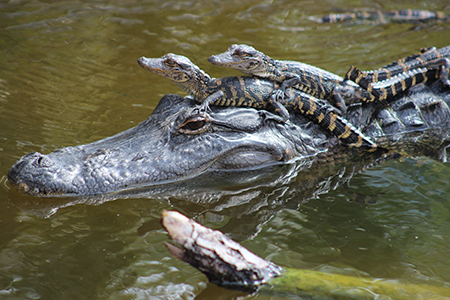
After mating has taken place, the female builds a nest of vegetation. The nest can measure seven to 10 feet in diameter and two to three feet high. Around late June and early July, the female lays 35 to 50 eggs. The eggs are then covered with vegetation and hatch after a 65-day incubation period. Temperatures within the nest determines whether an alligator is male or female. Low temperatures tend to produce females, and high temperatures tend to produce males. Toward the end of August, the young alligators begin to make high-pitched noises from inside of the egg. This lets the mother know that it is time to remove the nesting material. A tiny point on the tip of the snout, called an “egg tooth,” helps an baby alligator break out of its leathery shell.
Newly hatched alligators live in small groups, called "pods." Some 80 percent of young alligators fall victim to predators such as birds, raccoons, bobcats, otters, snakes, large bass and larger alligators. Females aggressively defend their young during these first few years. Crocodilians (of which alligators belong) are one of the only orders of reptiles that offer maternal care to their young. The juveniles grow about a foot a year.
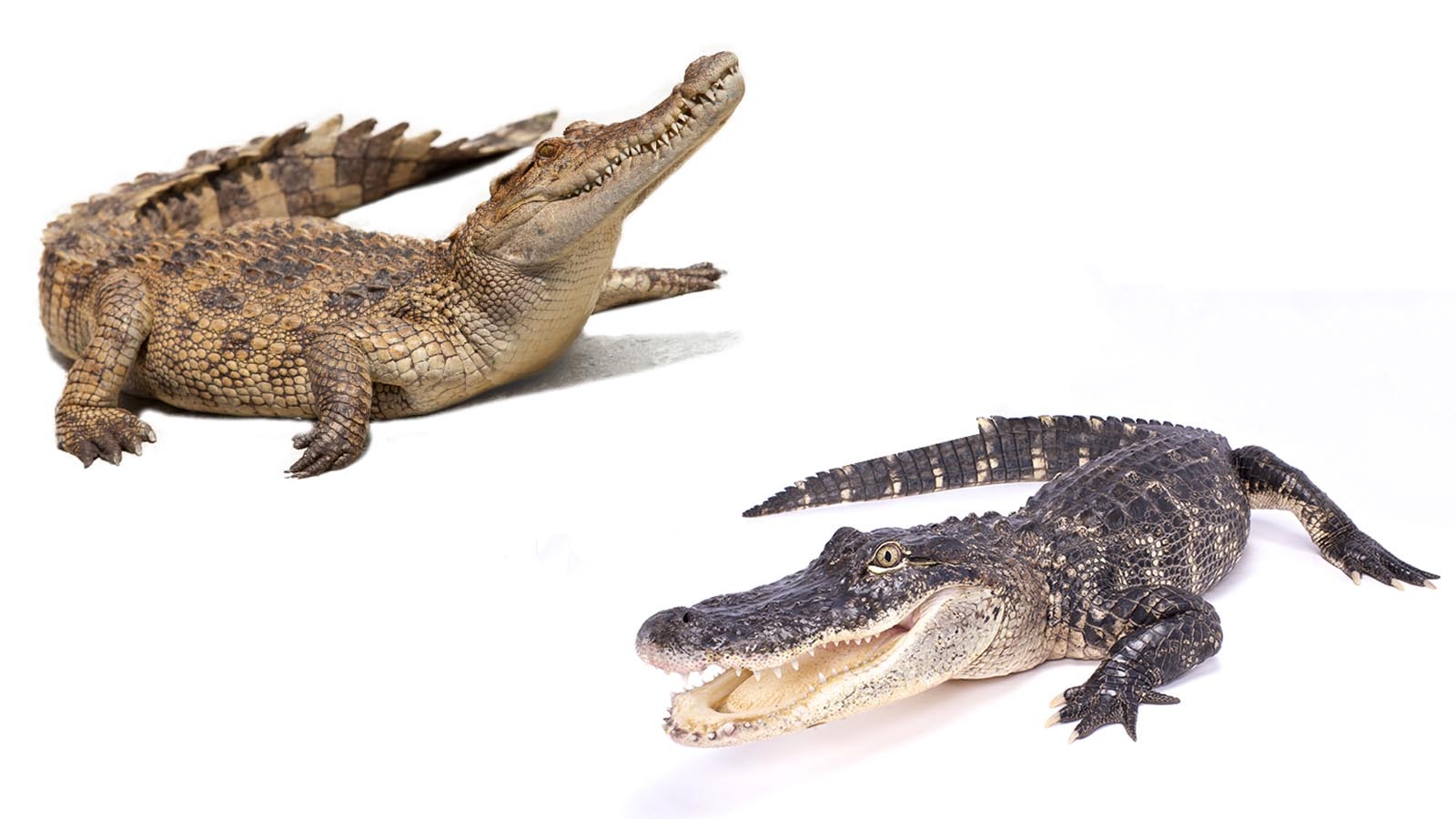
Croc or Gator?
So, is it an alligator or a crocodile? There are several ways to tell. The first is the shape of the snout. In alligators it’s broad and U-shaped, while in crocodiles it’s narrow and V-shaped. Next are the teeth. In the case of alligators, the lower teeth are typically not visible when the mouth is shut. In crocodiles, however, some teeth in the bottom jaw appear, most notably the large fourth tooth that fits into a groove in the upper lip. Another difference is color. Gray or black? It’s probably a gator. Olive or tan? A crocodile.
Why are alligators important?
American alligators are considered keystone species due to the holes they dig. Although alligators do not hibernate, they undergo periods of dormancy (brumate) when the weather becomes cold. They may leave their body and head under water, leaving just their nostrils above water during this time. In areas where water level fluctuates, alligators dig themselves into hollows in the mud, which fill with water. These tunnels are often as long as 65 feet and provide protection during extreme hot or cold weather for not only the alligators, but many other species such as fish, frogs, and turtles. Gator wallows are used by many animals in their habitat and may be the only source of water during a drought.
How you can help American alligators
- Don't purchase products made from alligator meat, hides or alligator parts. Always check to make sure any product made from their hide has been sustainably made.
- Visit the American alligator at the Chattanooga Zoo. By supporting Chattanooga Zoo, you are our ally in saving and protecting wildlife worldwide.