Gombe Forest
East African Crowned Crane

Did you know...
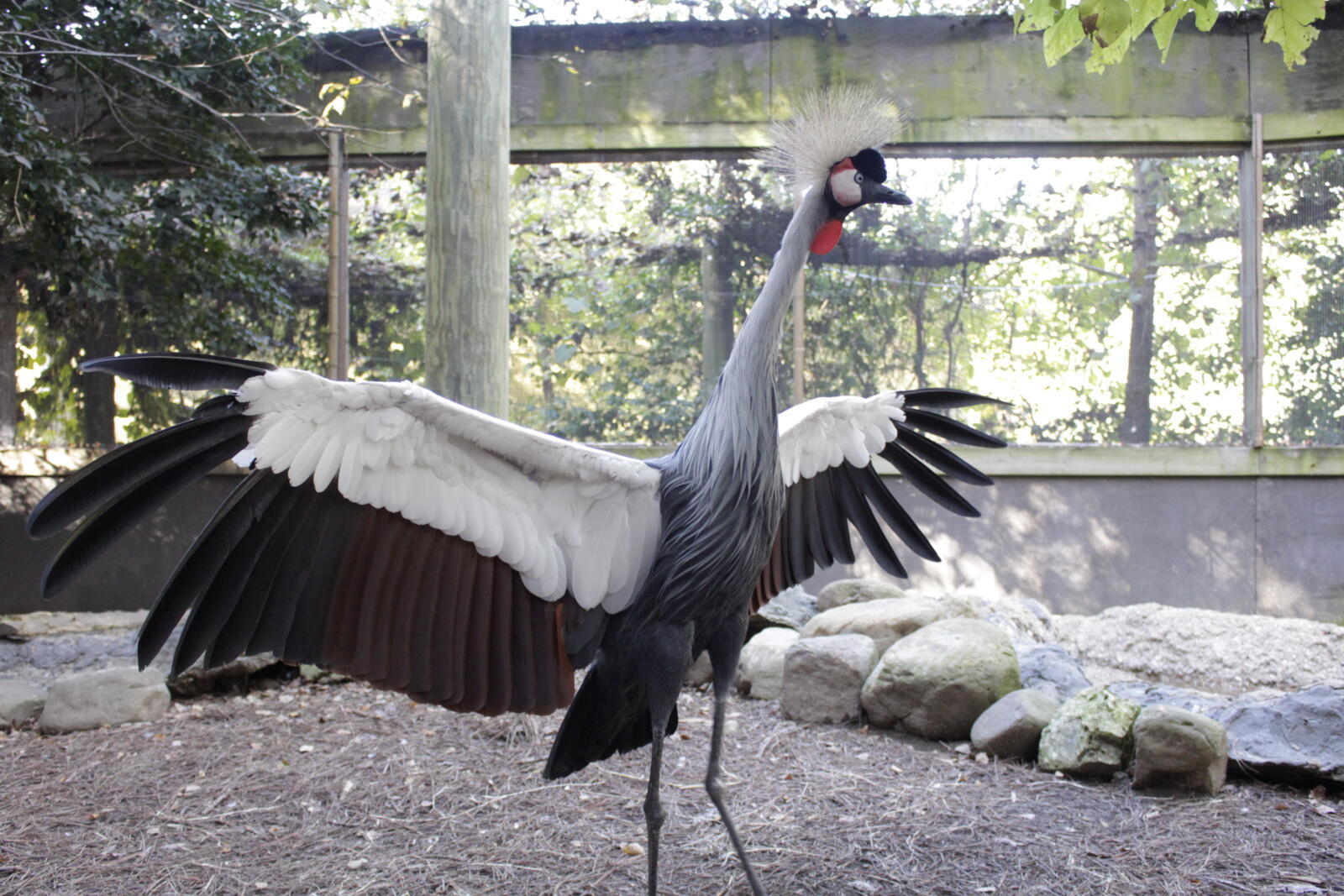
East African crowned cranes have a wingspan of six and a half feet.
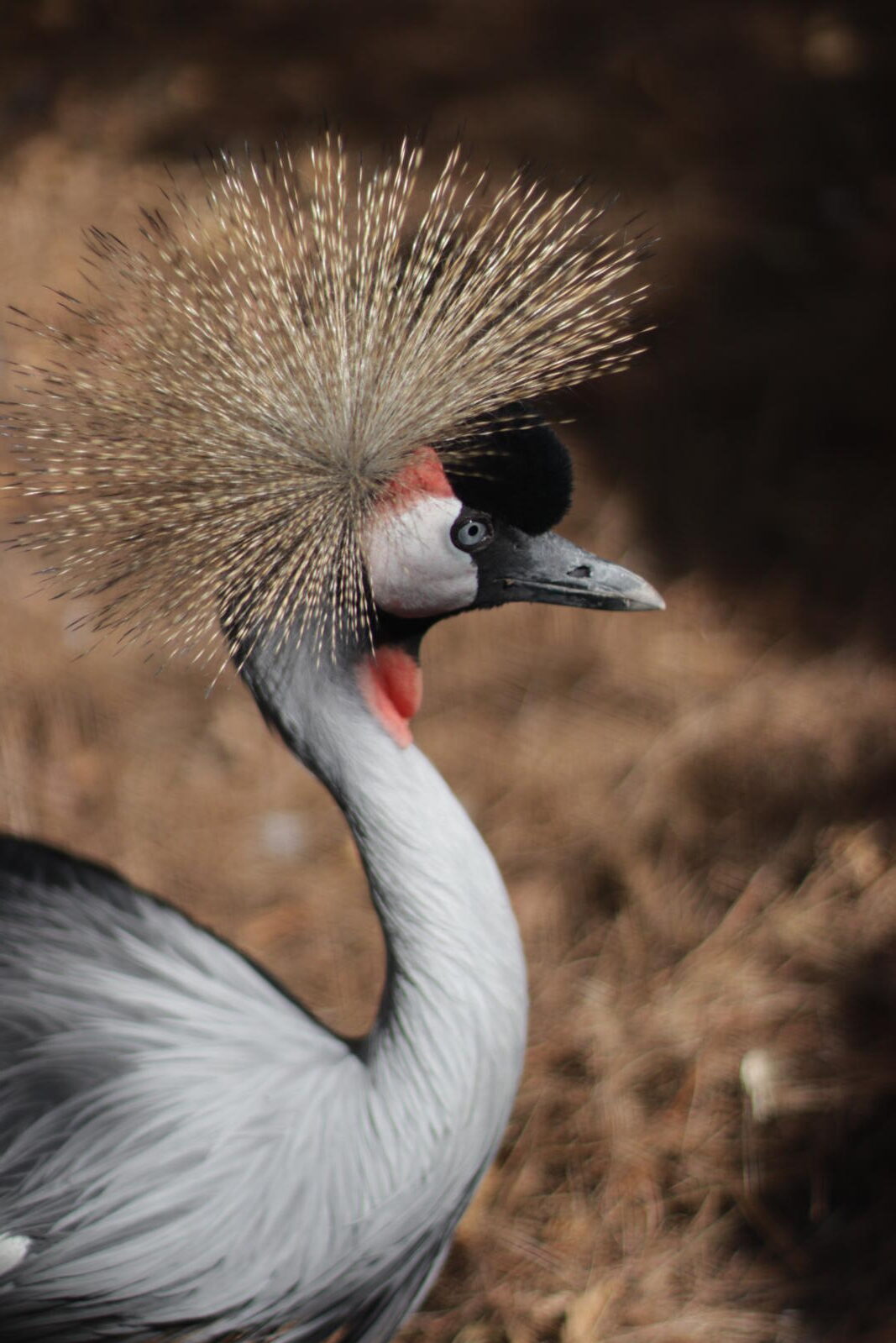
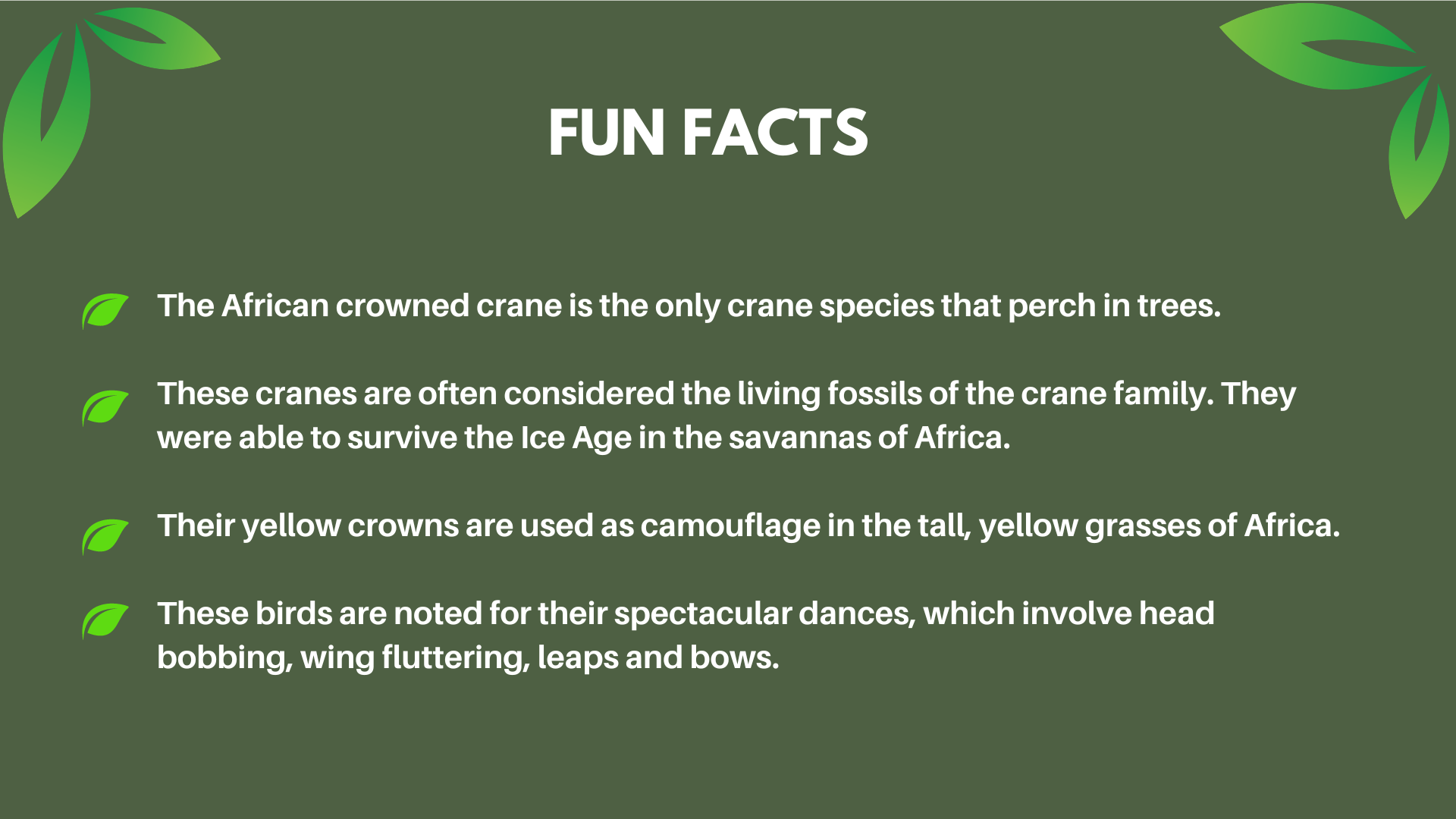
East African crowned cranes are named for the striking, straw colored bristle-like feathers on the top of their heads. This "crown” is a key adaptation. It allows them to blend in with the tall grasses, making avoiding predators and catching prey a much easier task.
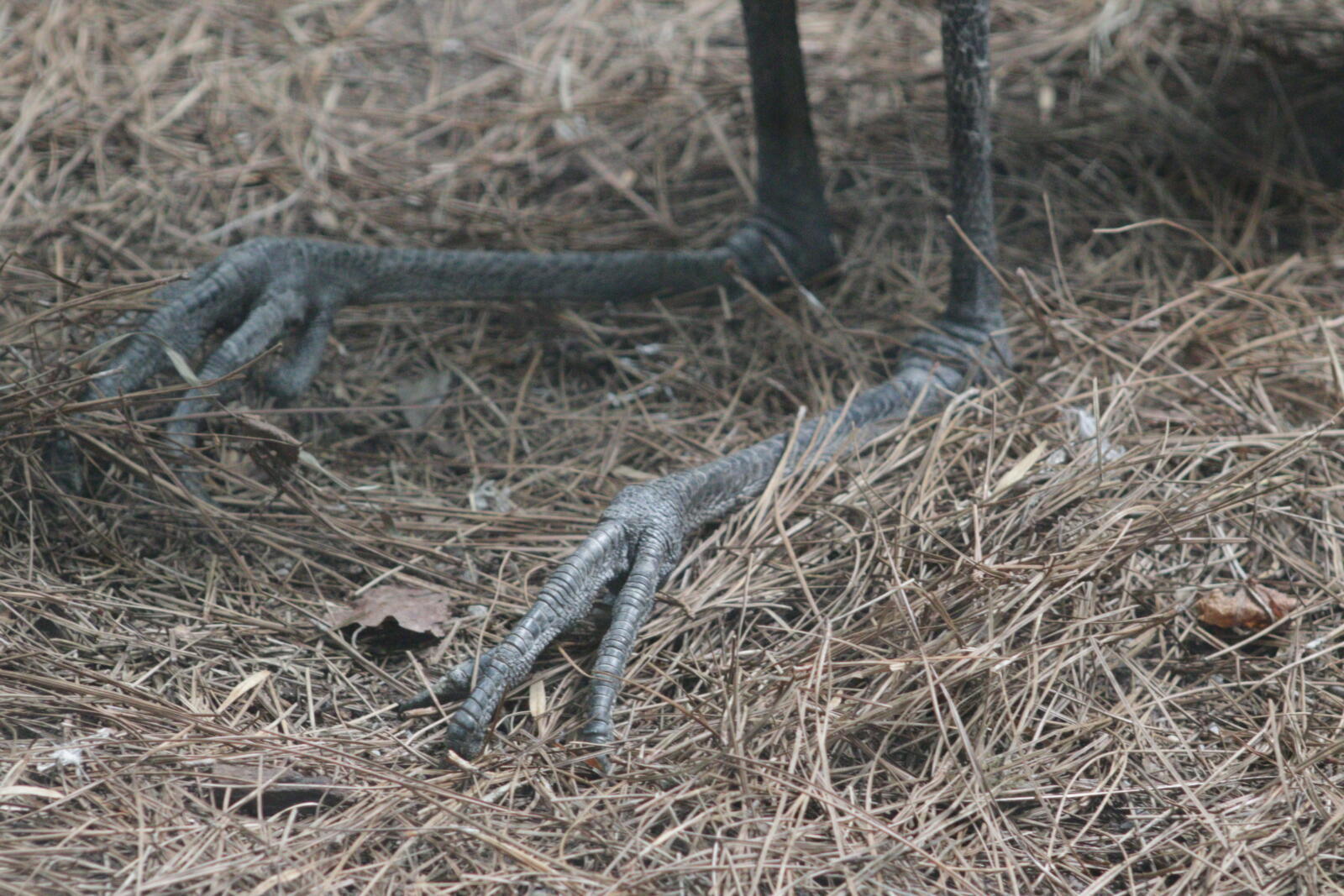
They are mostly slate gray with bold black and white wings and a black head. The legs and bill are black, eyes are light grey, facial skin is white and red, and throat fold is scarlet. These cranes have large white cheek with a small red patch at the top. The bill is proportionally shorter than in other cranes. They have long legs for wading through the grasses. The feet are large, yet slender, adapted for balance rather than defense or grasping. Their long legs and excellent peripheral vision help them spot predators in the tall savanna grasses.
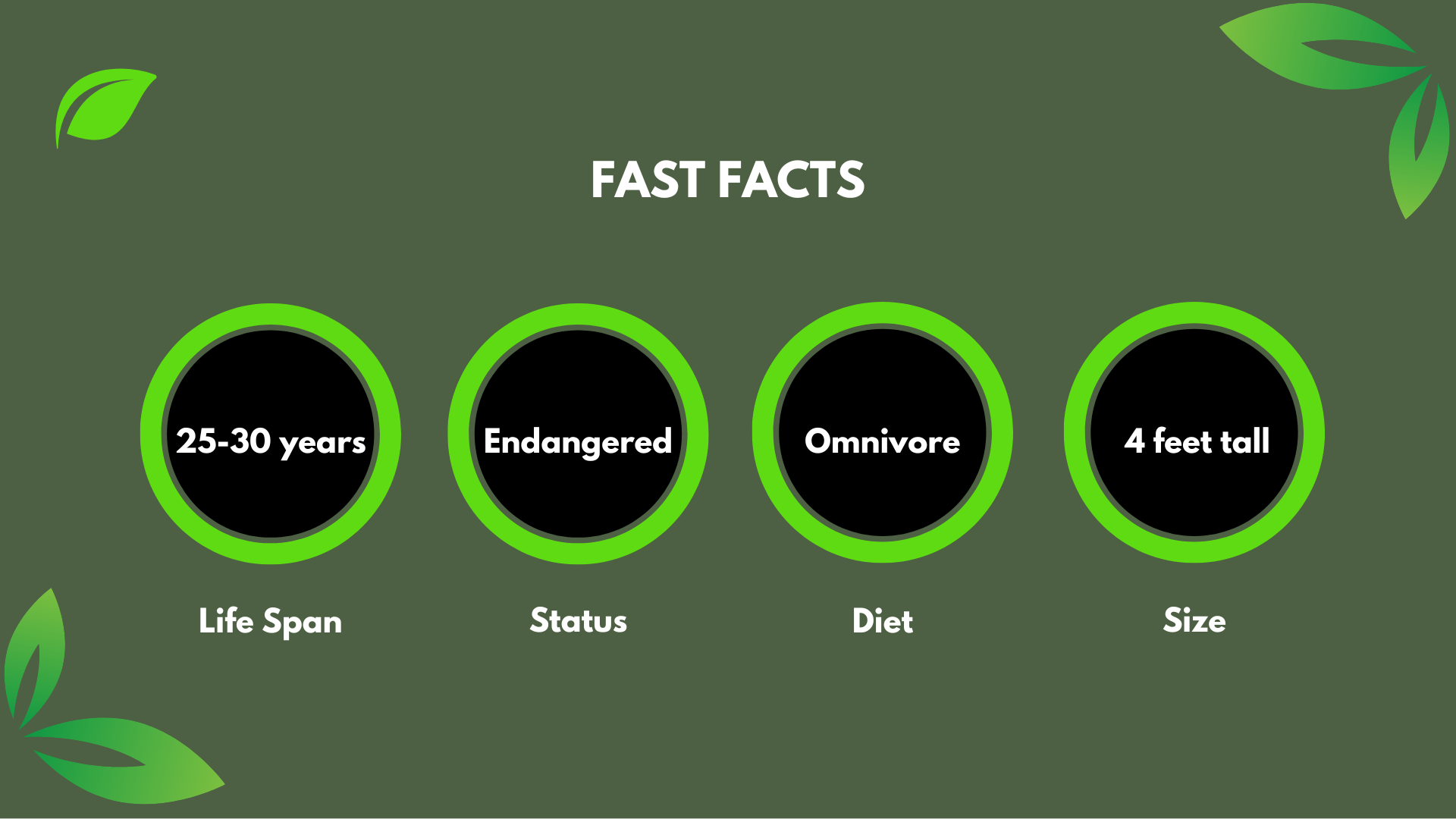
Like other cranes, they are omnivores, eating plants, seeds, grain, small fish, insects, amphibians, worms, small reptiles and the eggs of aquatic animals. Stamping their feet as they walk, they flush out insects which are quickly caught and eaten. They also follow grazing herbivores benefiting from the ability to grab prey items disturbed by antelopes and gazelles.
_____________________________________________________________________________________________________________________________________________________
Where can I see the East African crowned crane?
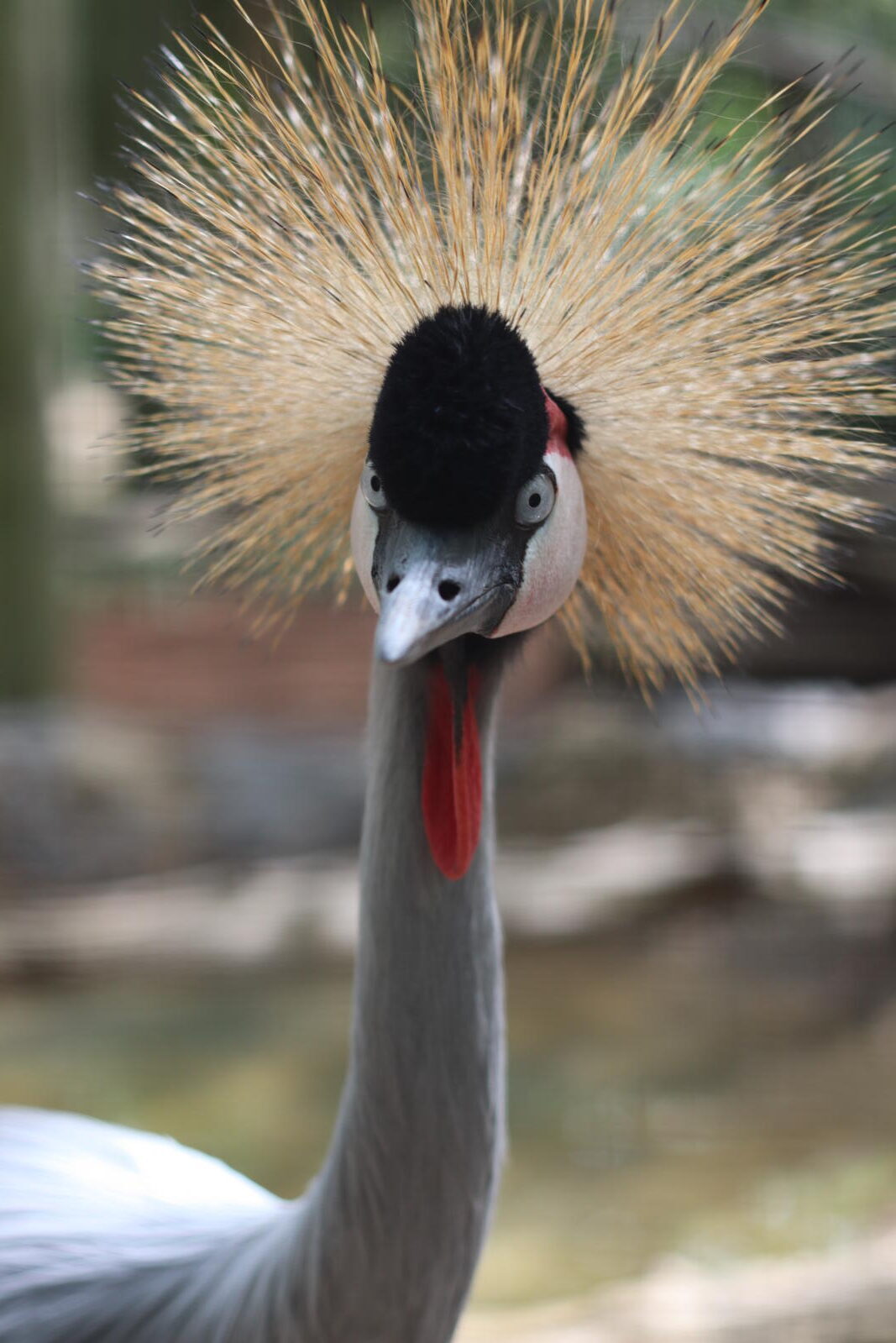
In the Gombe section of the Zoo as you walk through their viewing tunnel.
__________________________________________________________________________________
How East African Crowned Cranes are doing in the wild
Cranes need large areas of habitat but rapidly increasing human populations in Africa have converted crane habitat for farms and housing. They are listed as endangered by the IUCN. They are threatened by habitat loss as swamps and marshes are drained or dammed for agriculture. Crowned crane eggs are collected and chicks are often victims of illegal trade as well.
Even the marshlands needed for nesting sites are being drained for agricultural purposes. Other threats to the birds include heavy pesticide use, livestock overgrazing, live trapping for the export trade and hunting. Conservation measures have been undertaken to protect cranes and in 1973 the International Crane Foundation was established to oversee the survival of crane species worldwide.
What can you do to help crowned cranes?
- Support the conservation efforts of organizations like the International Crane Foundation and the Association of Zoos and Aquariums accredited zoos working to save these incredible birds.
- Accredited zoos like Chattanooga Zoo are working together to conserve this species through managed breeding programs. Our crane is part of a Species Survival Plan (SSP) to support healthy populations of East African crowned cranes.
- Every time you visit you help animals. By supporting Chattanooga Zoo, you are our partner in saving and protecting wildlife worldwide.
- Volunteer at the Chattanooga Zoo and help spread the word about how incredible these birds are.
.