Gombe Forest
African Spurred Tortoise
Did you know..
The African spurred tortoise is the third largest tortoise, surpassed only by the Galapagos and the Aldabra.

*The scientific illustration above was created by Roger Hall. Learn more here.
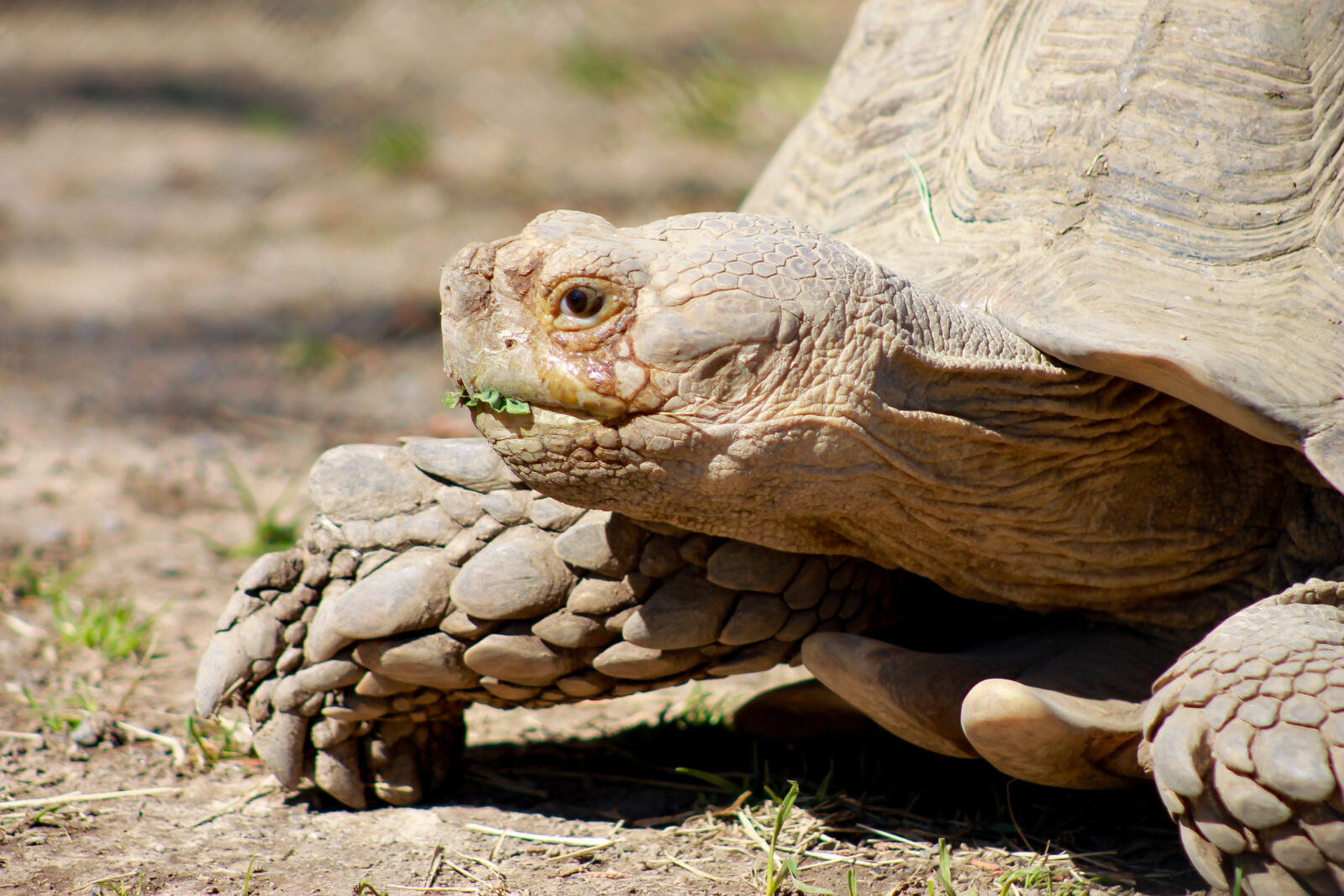
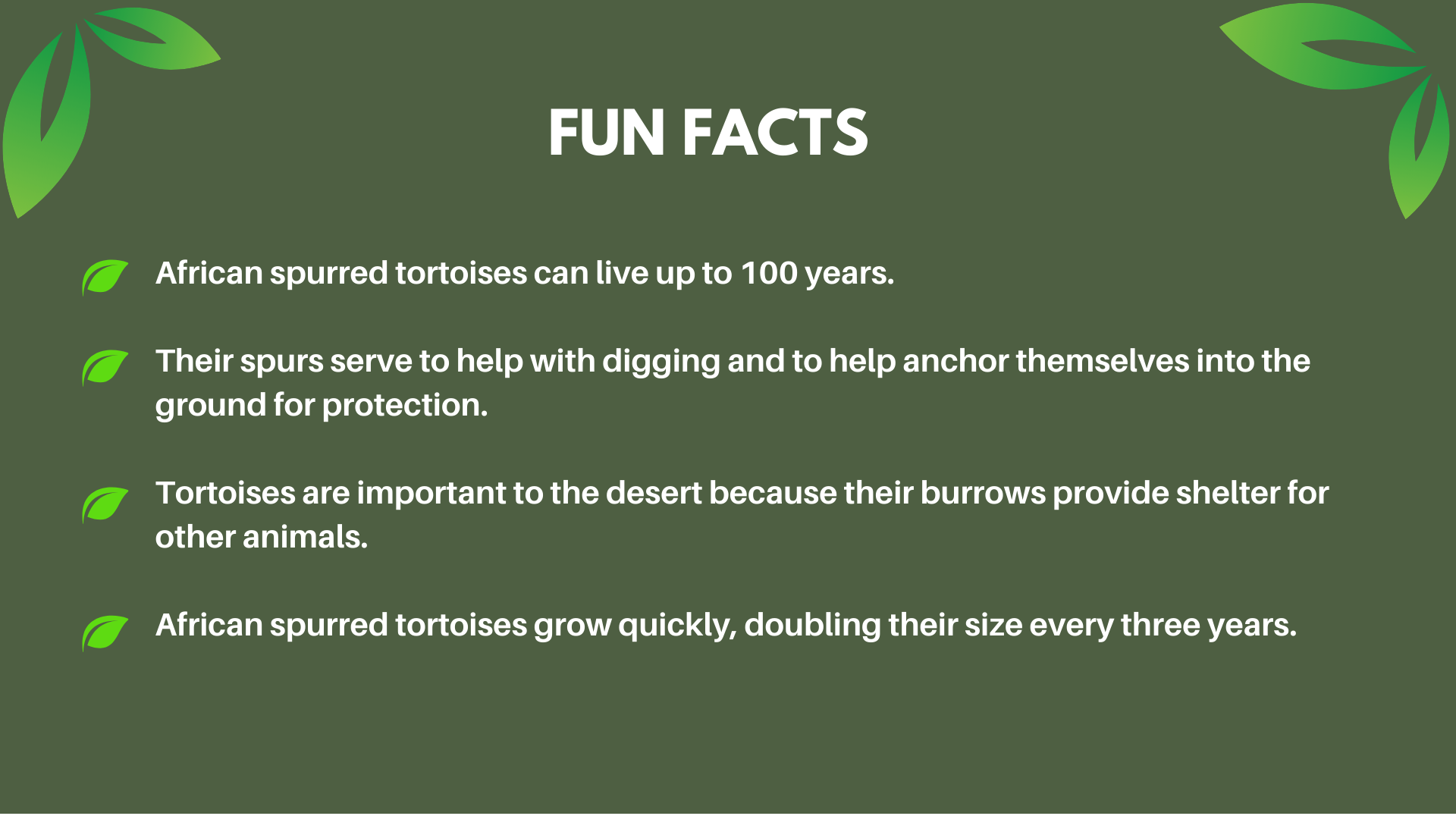
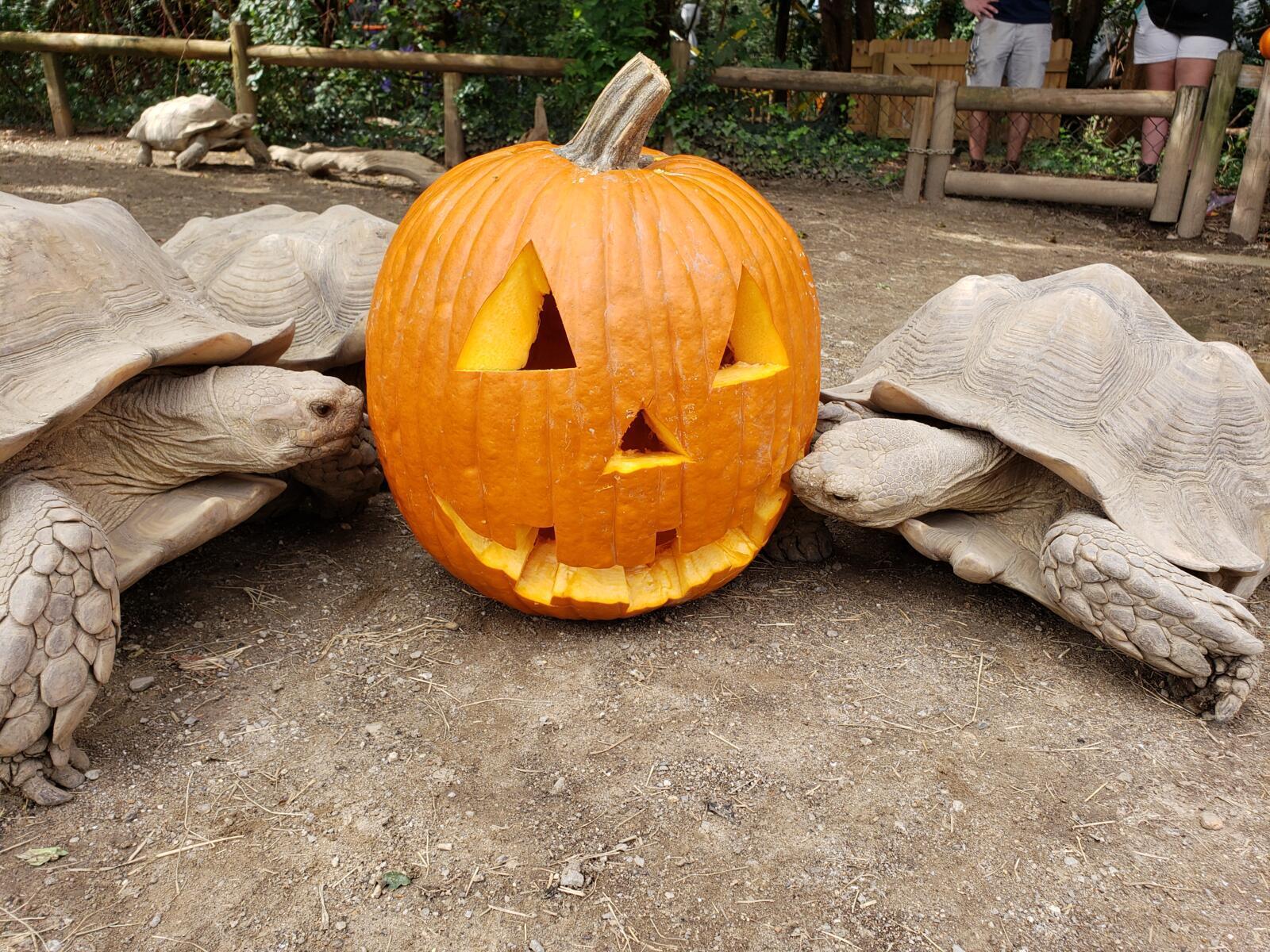
The African spurred tortoise, also called the sulcata tortoise or the spur-thighed tortoise, inhabits the southern edge of the Sahara desert, in northern Africa. In these arid regions of the desert this tortoise will burrow into the ground to submerge itself into areas of higher moisture. They get their name from their large, overlapping scales covering the front surface of their forelimbs, while their back thighs bear two or three large conical spurs. Females are smaller than males.
Like most tortoises, this species is an excellent digger. While their burrows are rarely deeper than three feet, they can be many yards in length. In the dry season, they aestivate (warm weather hibernate) inside these burrows to prevent dehydration and predation.
A tortoises shell is made up of 59 to 61 bones covered by plates called scutes, which are made of keratin like our fingernails. They cannot crawl out of their shell because it is permanently attached to the spine and the rib cage. The shell’s top is called the carapace, and the bottom is the plastron. They can feel pressure and pain through their shells, just as you can feel pressure or pain through your fingernails.
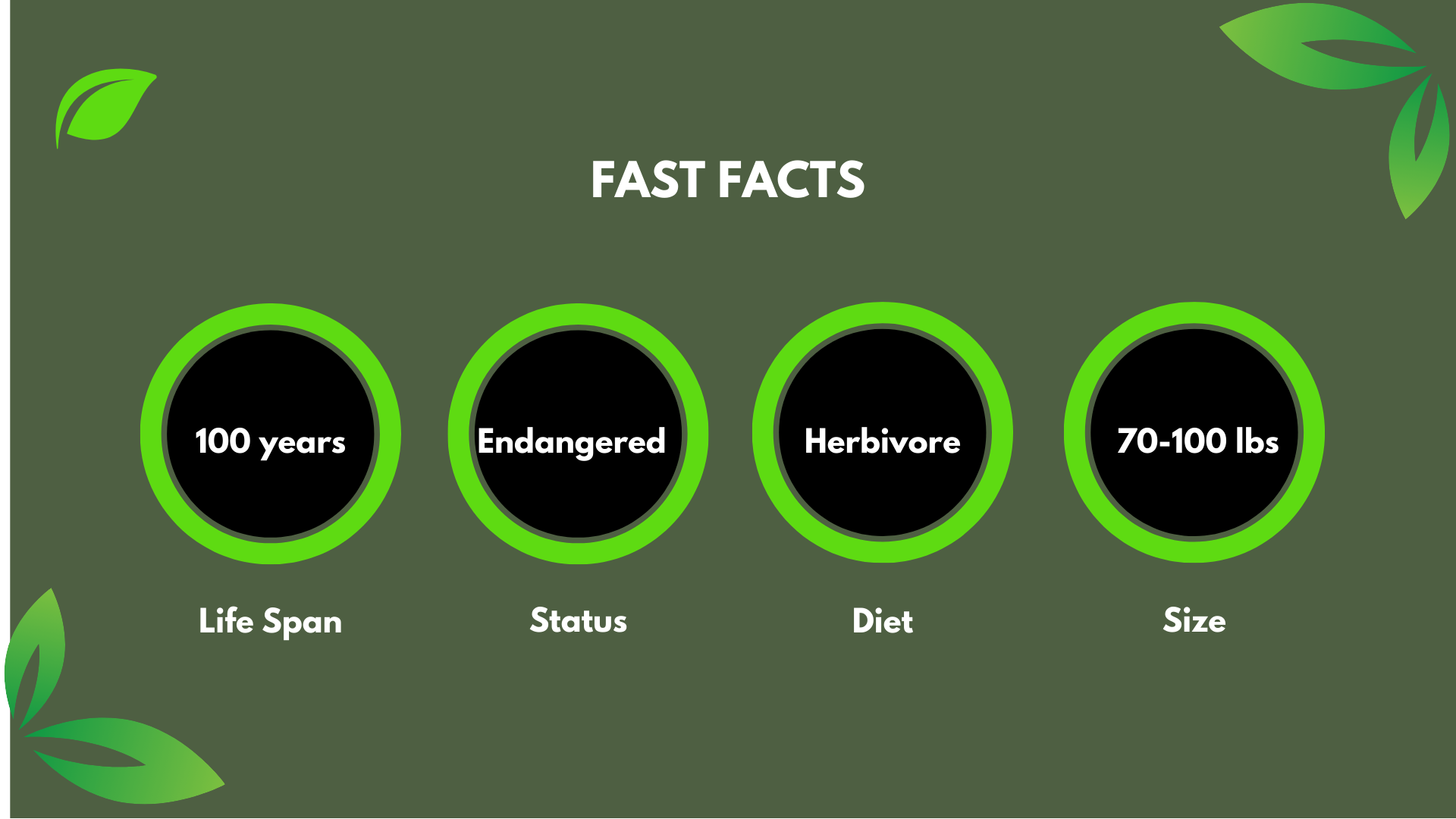
African spurred tortoises move slowly to conserve energy. They can survive for weeks without food when they need to. When it finds a water source it can drink up to 15 percent of its body weight. This is very important for animals that live in the largest desert in the world.
_____________________________________________________________________________________________________________________________________________________

Pet Precaution
This tortoise is a popular pet. It is bred and sold throughout the U.S. but as cute as the babies are, they grow quickly and, as mentioned, get extremely large. They can also outlive you so finding a future home for it to go to is important. Many owners find them to be unmanageable and too heavy and in need of a new home. If you are interested in having one as a pet, do your research first to find out what they need for a habitat, what they eat, their husbandry needs, and most importantly--a veterinarian near you that is knowledgeable and trained to care for an African spurred tortoise and recognize what their diet deficiencies look like and other common medical issues. Also you will need to figure a way to get your 100 pound pet tortoise to the vet.
________________________________________________________________________________________________________________________________________
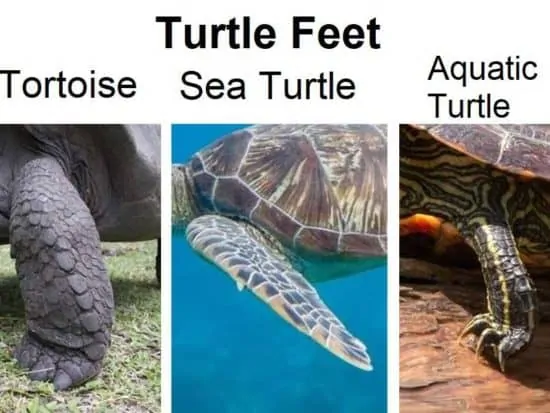
Turtle or tortoise?
It depends on who you ask or where you are in the world, but most people recognize tortoises as terrestrial or land-loving animals with stubby feet (better for digging than swimming) and a heavy, dome-shaped carapace. Aquatic and semi-aquatic turtles are known as turtles. Turtles tend to have more webbed feet (but not always) and their shells are more flat and streamlined. It is extremely important to know the difference before helping a turtle or tortoise by taking them to the nearest water source and dropping them in. Some tortoises will immediately sink and not swim like the gopher tortoise, a protected species. When in doubt, look at the feet; does it have webbed feet or stocky, chunky feet. When unsure, you can always play it safe and place the animal near the water instead of "in" the water and let it be.