Gombe Forest
Black Crested Mangabey
Did you know...
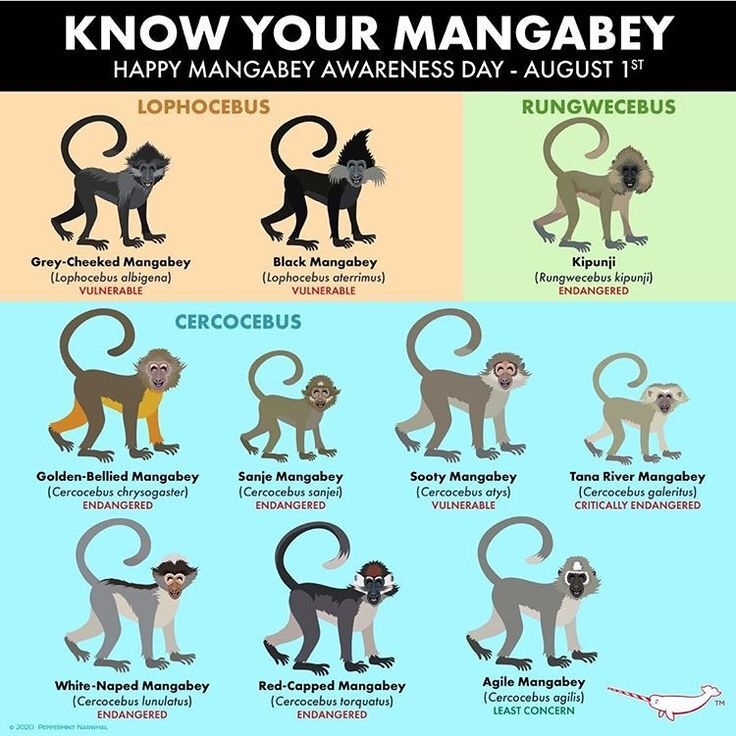
The three genera of mangabeys—Lophocebus, Rungwecebus, and Cercocebus—were once thought to be very closely related, so much so that all the species were in one genera. However, it is now understood that Lophocebus and Rungwecebus species are more closely related to baboons, while the Cercocebus species are more closely related to mandrills. In 2006, the kipunji mangabey was moved from Lophocebus to a new genus, Rungwecebus, the first new primate genus in 83 years.
.
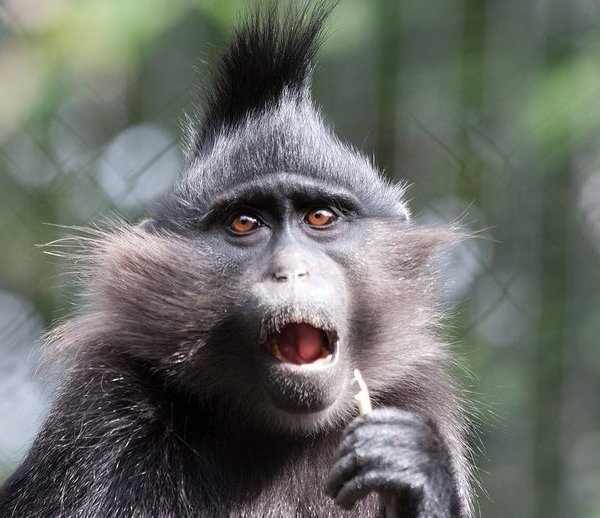
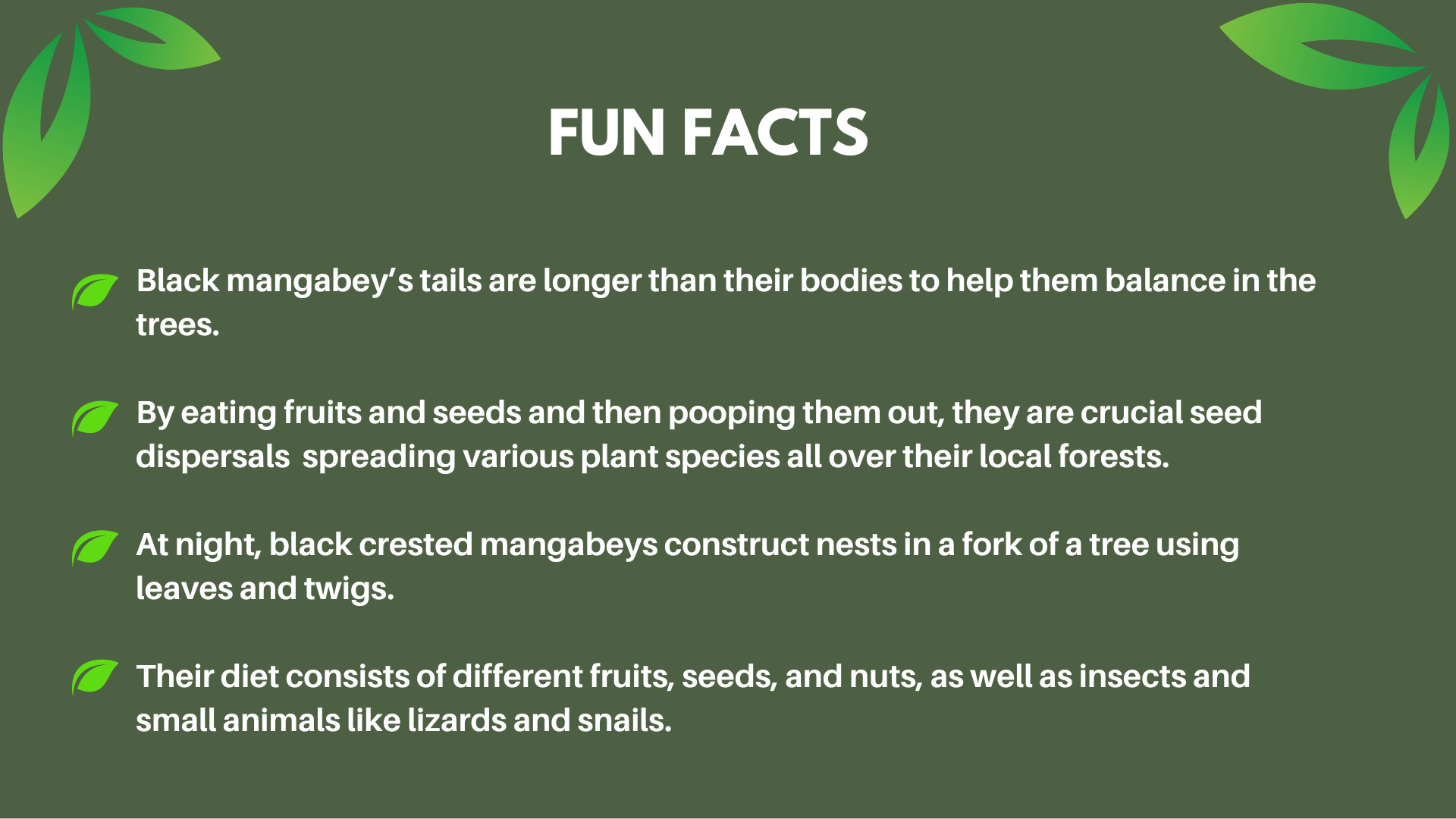
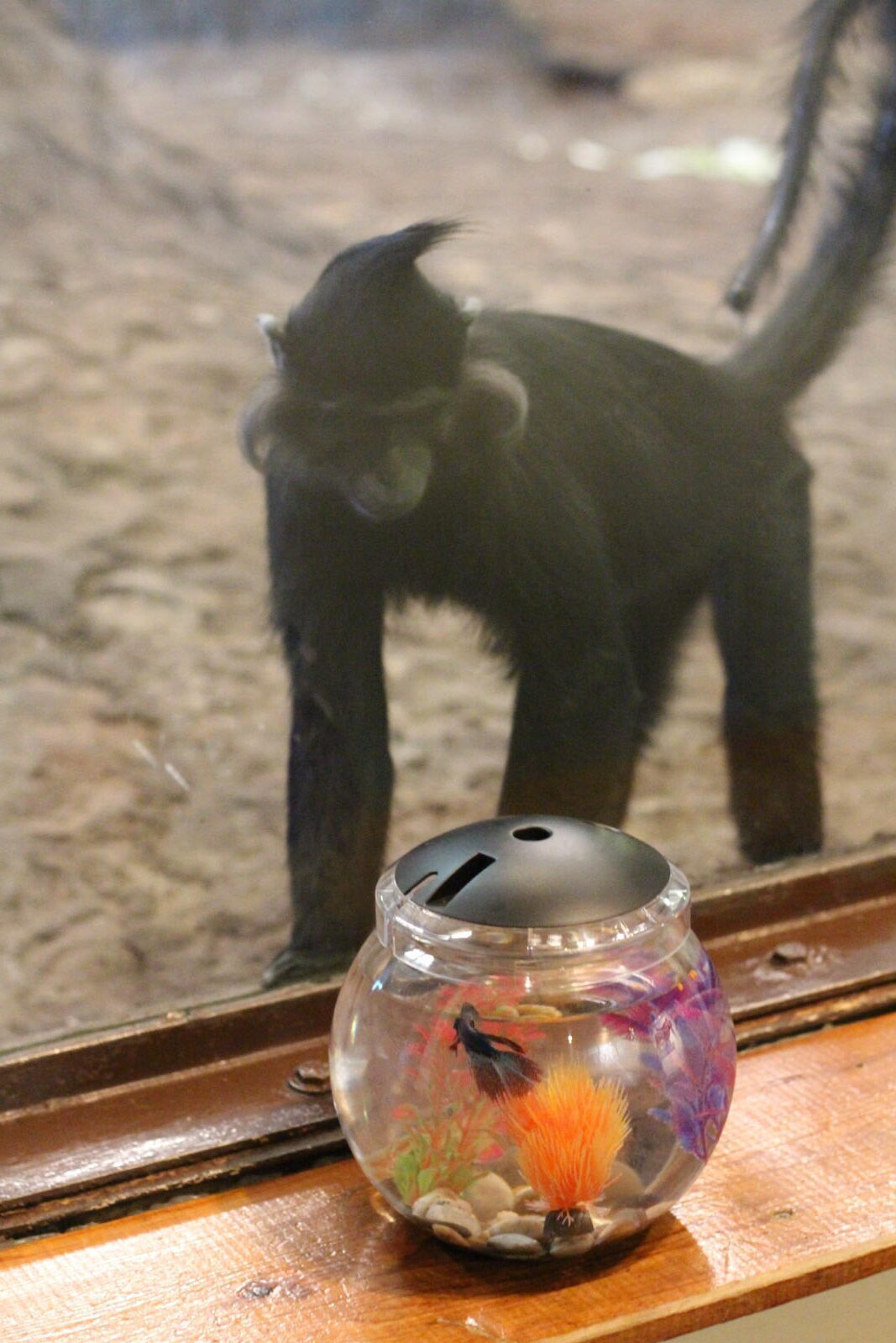
Black crested mangabeys, aka black mangabeys, get their name from the tuft of hair that protrudes from the top of their heads. Curly white whiskers frame their generous cheek pouches, in which they sometimes store food while foraging. They resemble little black versions of the Grinch. Their slender frames, paired with long arms and legs and opposable thumbs, are well-suited for rummaging through the trees, as are their sizable tails, which often stands upright like a question mark to assist with balance.
Black crested mangabeys communicate vocally using specialized vocal sacs. The sound from these sacs, especially those made by males, can be very loud.
Certain vocalizations are used by all members of a mangabey group, while others are limited to particular individuals. One group wide vocalization is a short bark, which primatologists sometimes compare to the braying of a donkey. They also bark when they see predators and may continue for up to 15 minutes. Facial expressions provide another form of communication. For instance, head bobbing or staring with an open mouth seems to signal aggression.
They also react to the alarm calls of other nearby primate species.
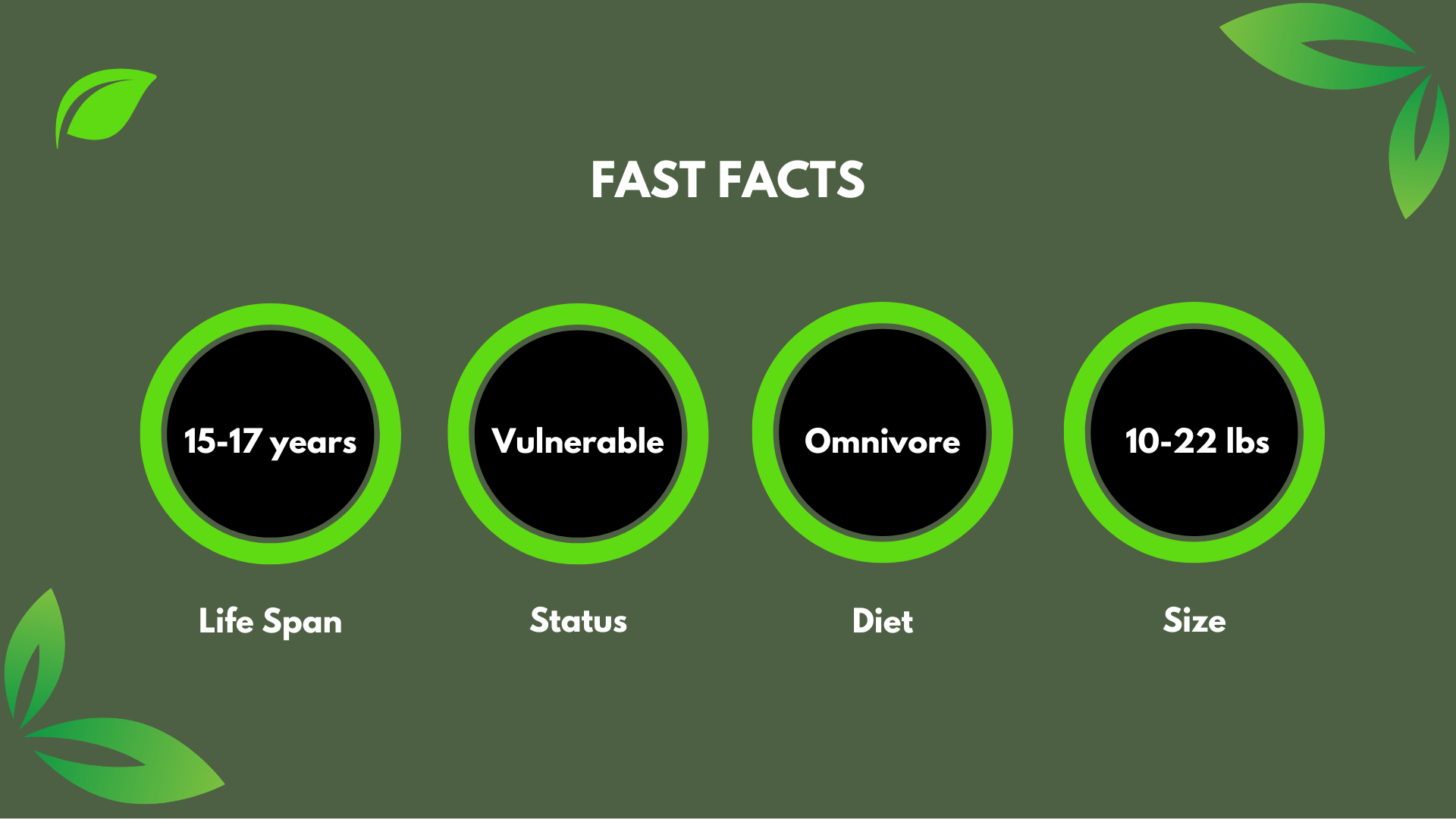
_____________________________________________________________________________________________________________________________________________________
How mangabeys are doing in the wild
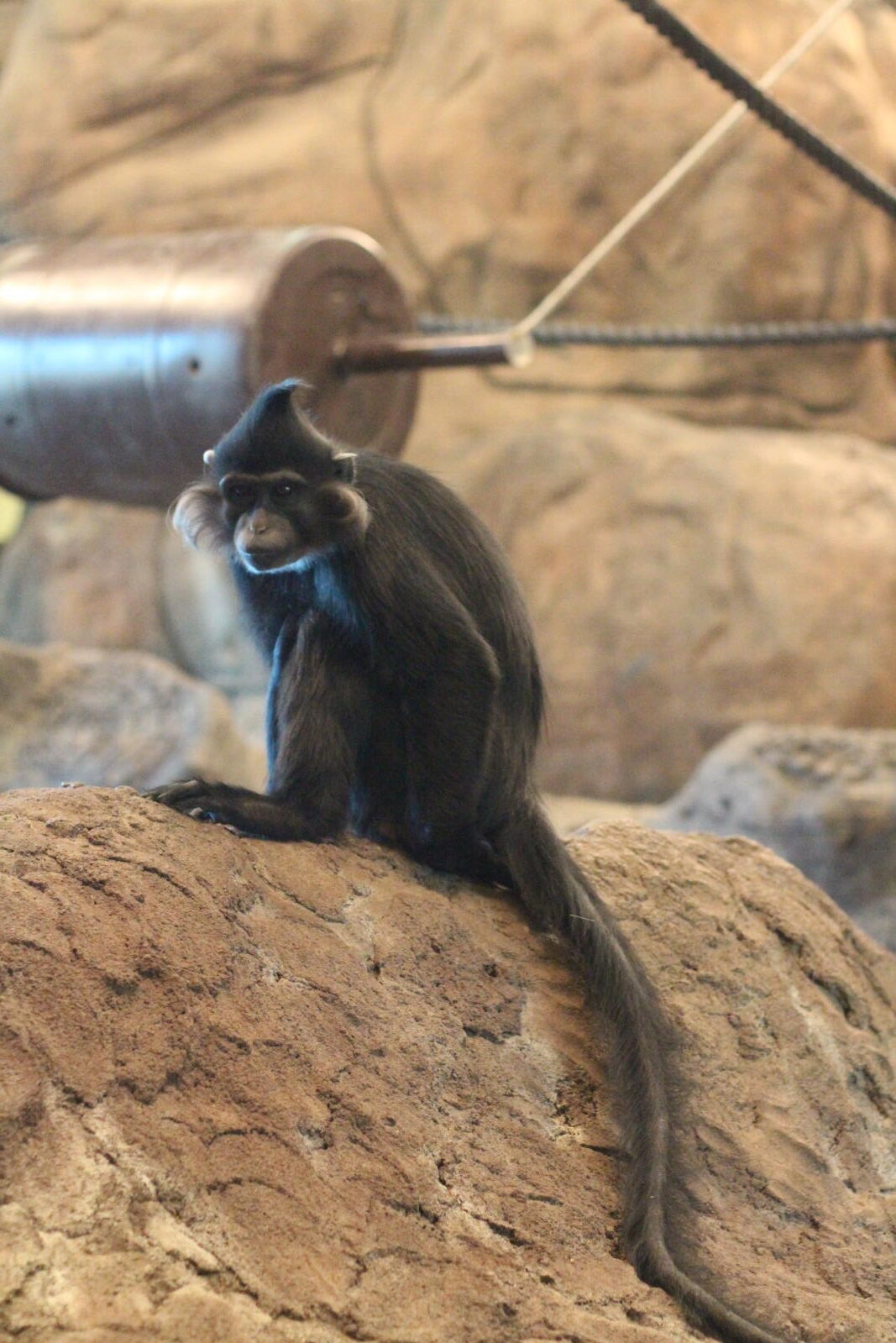
Intense, uncontrolled hunting is a threat to black crested mangabeys. Because of their relatively large body size, they are more attractive to hunters than the smaller guenon monkeys with which they share their range. Poaching has intensified as well and much of the forests in their range have lost large mammals to hunting.
Habitat loss is another threat to black crested mangabey populations. Since they spend most of their time in the trees, logging strands them in increasingly small areas of forest, as they cannot survive in the earth bound savannahs and agricultural regions generated in the wake. The number of mangabeys that a forest can sustain thus decreases, leading to local extinctions in some areas. For instance, the remaining population in Angola, is on the edge of extinction.
Over the past 30 years, the mangabey population has dropped by 30%. Establishing protected areas, as the United Nations has in places like Salonga National Park, allows mangabey populations to regrow and prevents further encroachment on their habitats by logging and other agricultural efforts. Other organizations like Endangered Species International empower nearby human communities to restrict hunting and create economic alternatives to the widespread bushmeat trade. Education is critical—people in the Congo often engage in destructive slash-and-burn agriculture simply because they have not learned of other approaches. The African Wildlife Foundation intervenes by funding sustainable schools in agricultural communities.
How you can help mangabeys
- Donate or volunteer at organizations like World Wildlife Fund, or the above organizations that work with local communities to protect mangabey habitat and ban the hunting and poaching of mangabeys.
- Volunteer at Chattanooga Zoo. By talking with our Zoo guests about our black crested mangabeys, you are building an awareness and appreciation for them in hopes our guests will want to learn more about how to protect them in the wild.
- Don't support the primate pet trade by purchasing monkeys as pets. Don't share, like or create social media content that depicts cute primates as pets.
- The Association of Zoos and Aquariums has Species Survival Plans (SSP) for mangabeys which help to maintain genetic diversity in zoo populations. By supporting Chattanooga Zoo, you are our partner in saving and protecting wildlife worldwide.