Makazi Ya Twiga
Blue Duiker

Did you know...
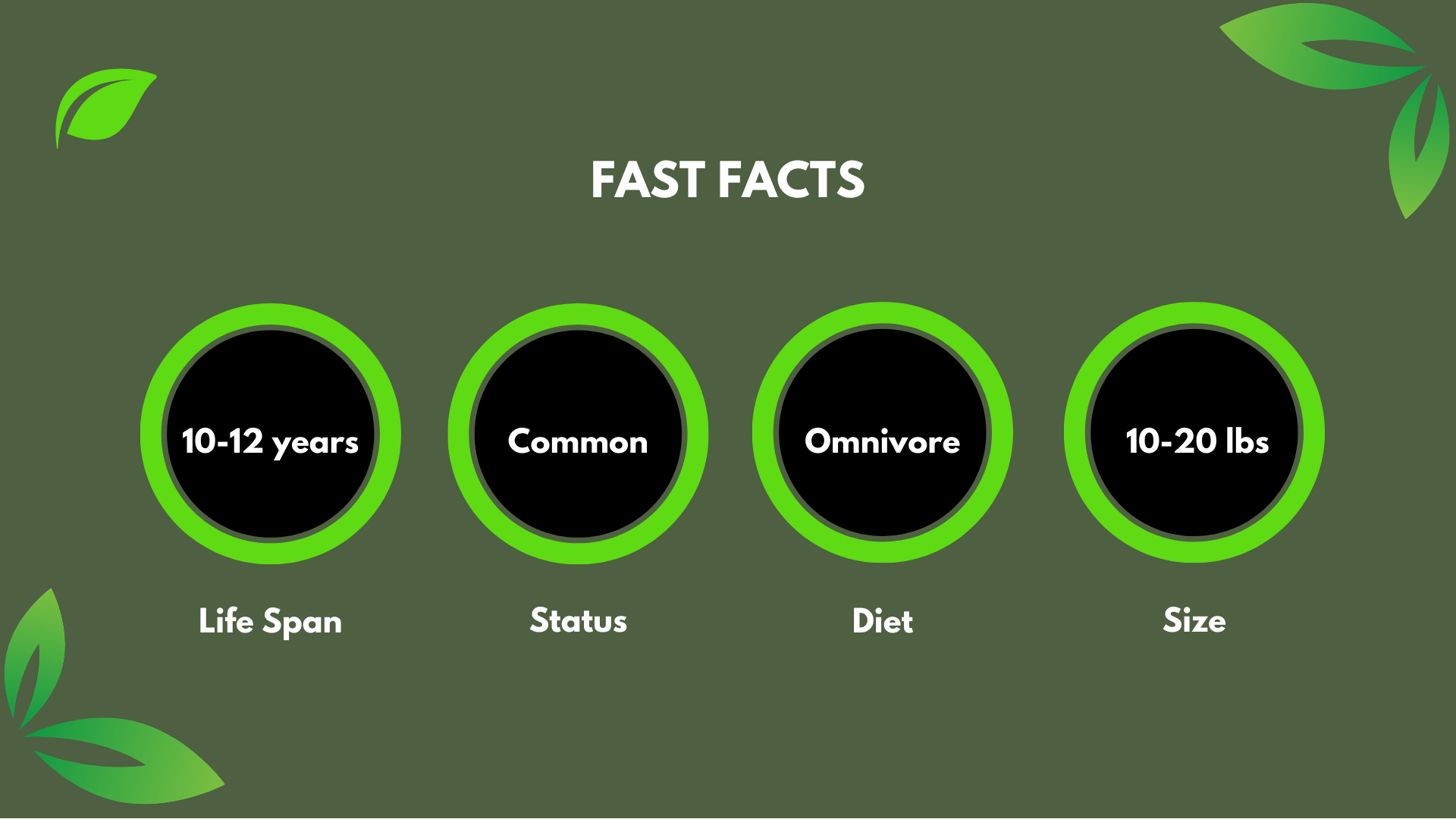
The blue duiker is the smallest of the 21 duiker species.
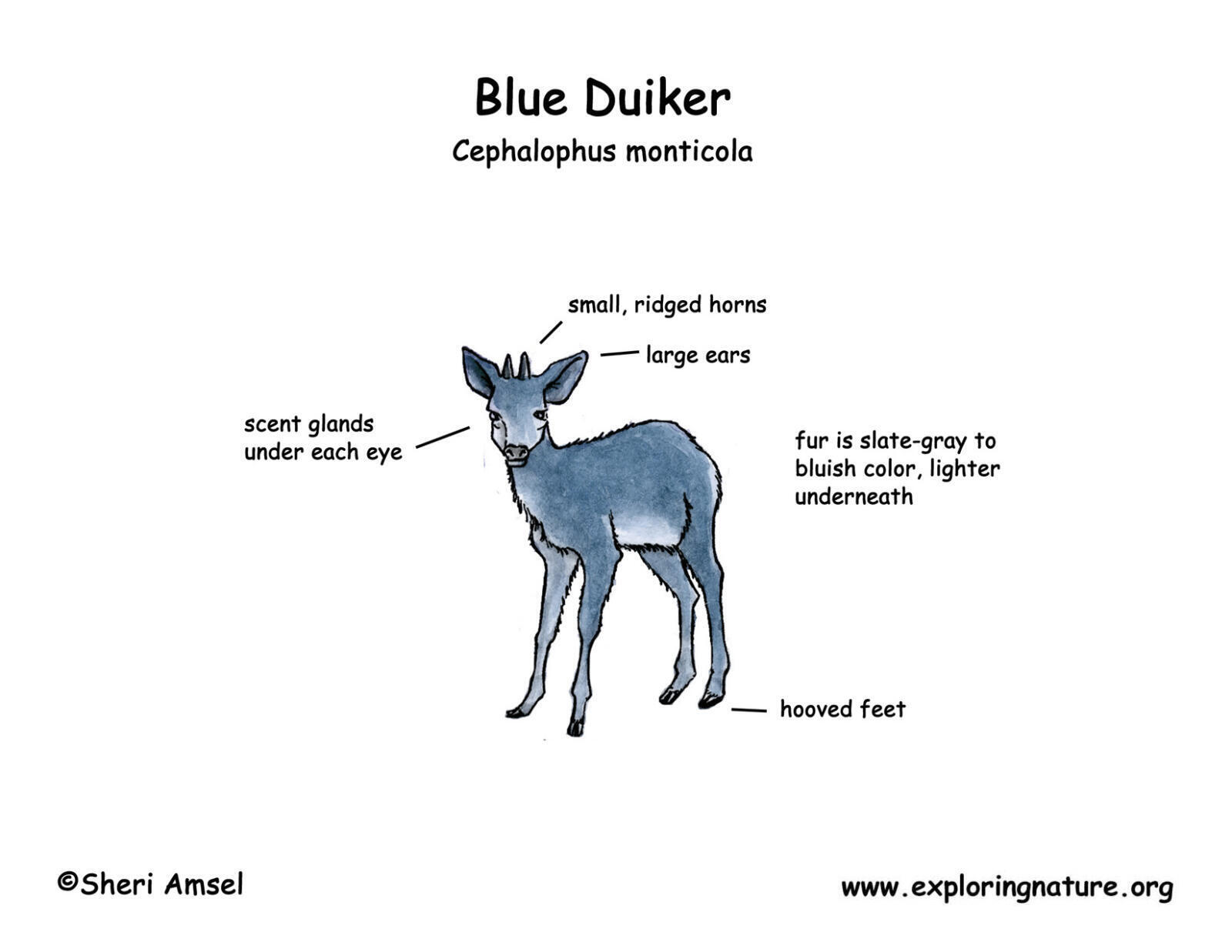
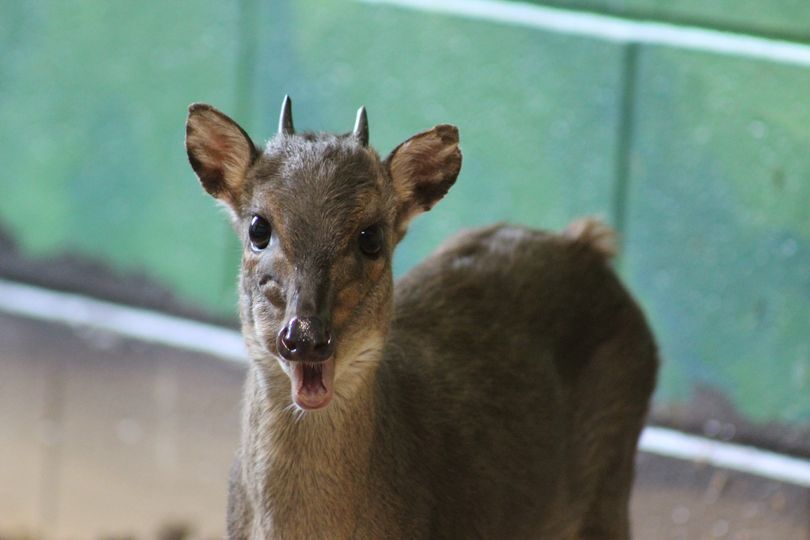
Duikers (pronounced die-ker) are African antelopes, and blue duikers are the smallest of all duiker species. The main difference between deer and antelopes is the protrusions on their head. While deer have branched antlers that are shed and regrown annually, antelopes such as the blue duiker have non-branched, permanent horns. Both males and females have short, sharp horns (although not always present in the females). Scent glands are located near the rear hooves and below each eye.
Blue duikers get their name from their coloration, as their coats appear almost blue in the shady habitats they are found in.
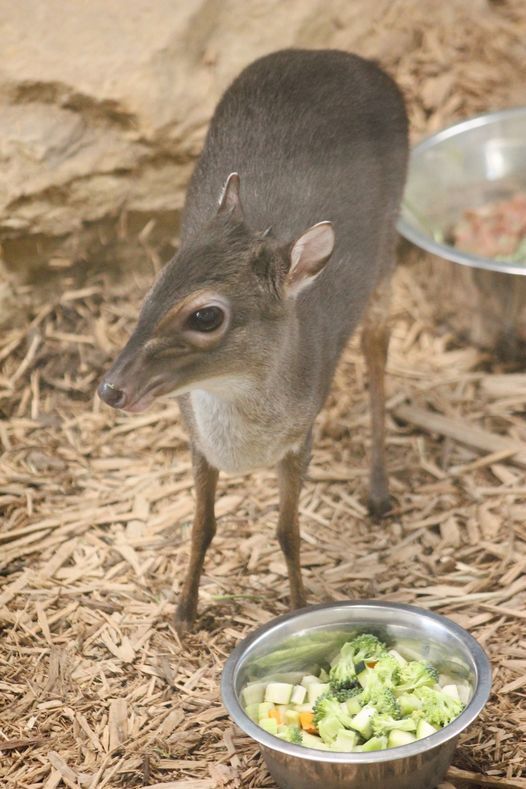
The majority of a blue duiker’s diet is leaves. They will also eat fruit, berries, and flowers, as well as the occasional insect or egg. Most of their water needs are met by the food they eat, so they are rarely observed drinking water even when it is available. Because birds and monkeys eat similar foods to what blue duikers eat, they sometimes follow these other animals leading them to food. They are crepuscular, which means they are mostly active at dawn and dusk. This behavior allows them to rest and ruminate, or chew their cud, during the hottest part of the day.
________________________________________________________________________________________________________________________________
Where can I find the blue duikers?
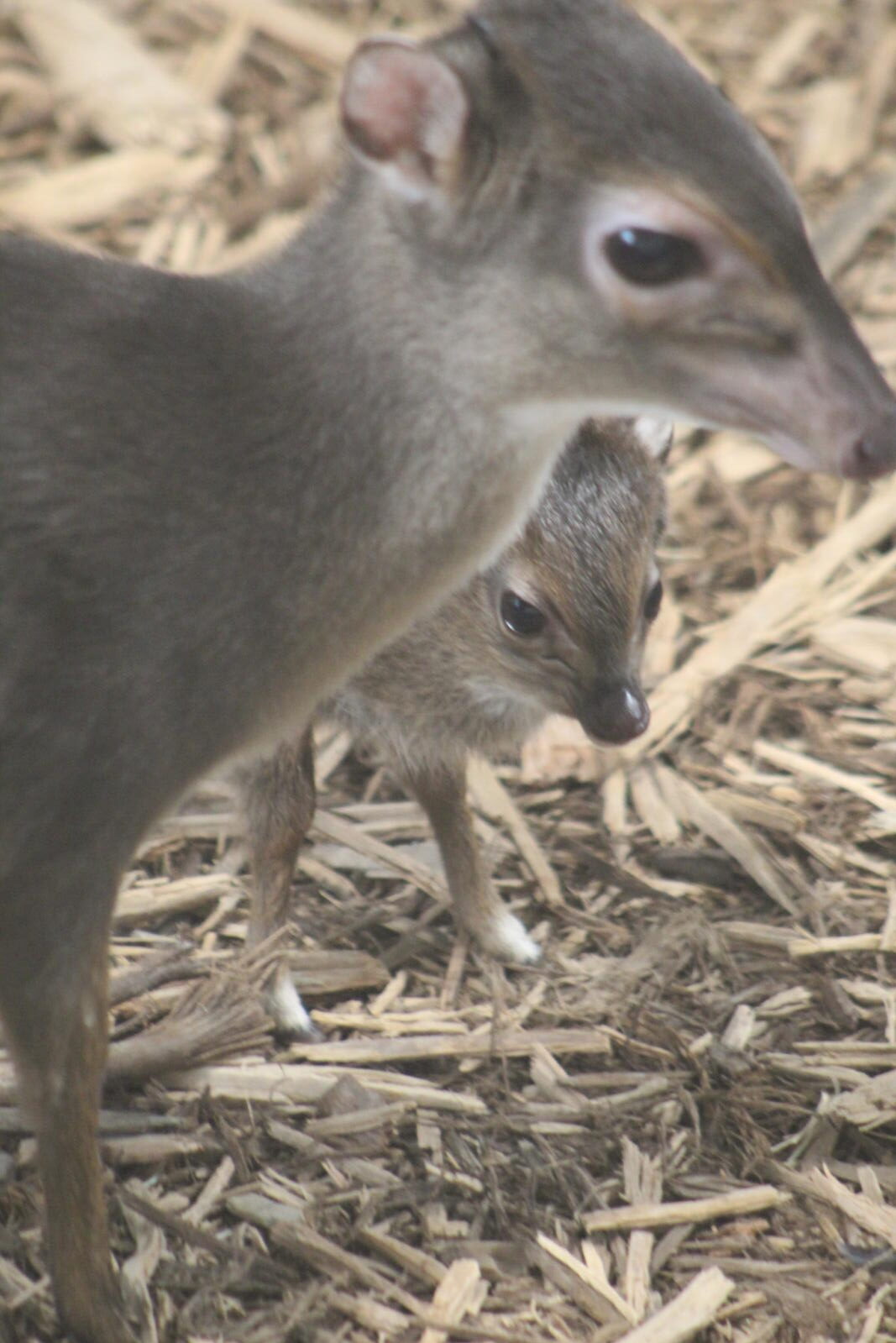
Our blue duiker family is housed in the giraffe barn in their own habitat. Be sure to ask if they currently have a baby in there with them. The babies love to hide for their protection.
_______________________________________________________________________________________
Threats
Because they are so small, blue duikers are easily preyed upon by many animals, including hyenas, wild dogs, African golden cats, leopards, crocodiles, baboons, pythons…and the list goes on. They also are widely hunted by humans. When threatened, they will sound an alarm cry and flee as quickly as possible.
With a growing human population, blue duiker habitat has been fragmented and increasingly urbanized. Healthy, intact forested areas are most important for blue duikers, though they can sometimes be found at the edge of urban areas or in farmland. With increased proximity to humans, human-wildlife conflict also increases. Blue duikers are also hunted for bushmeat throughout their range as they are an important source of protein and income for many local communities.
How you can help blue duikers
- Donate or volunteer at organizations like African Wildlife Foundation which works with local communities to protect blue duiker habitat.
- Chattanooga Zoo participates in the Association of Zoos and Aquariums' Species Survival Plan (SSP) for blue duikers. The mission of an SSP program is to cooperatively manage threatened or endangered species populations within managed-care facilities. By supporting the Zoo, you are our partner in saving and protecting wildlife worldwide.