Warner Park Ranch
Dromedary Camel
One hump. Two humps. No hump.
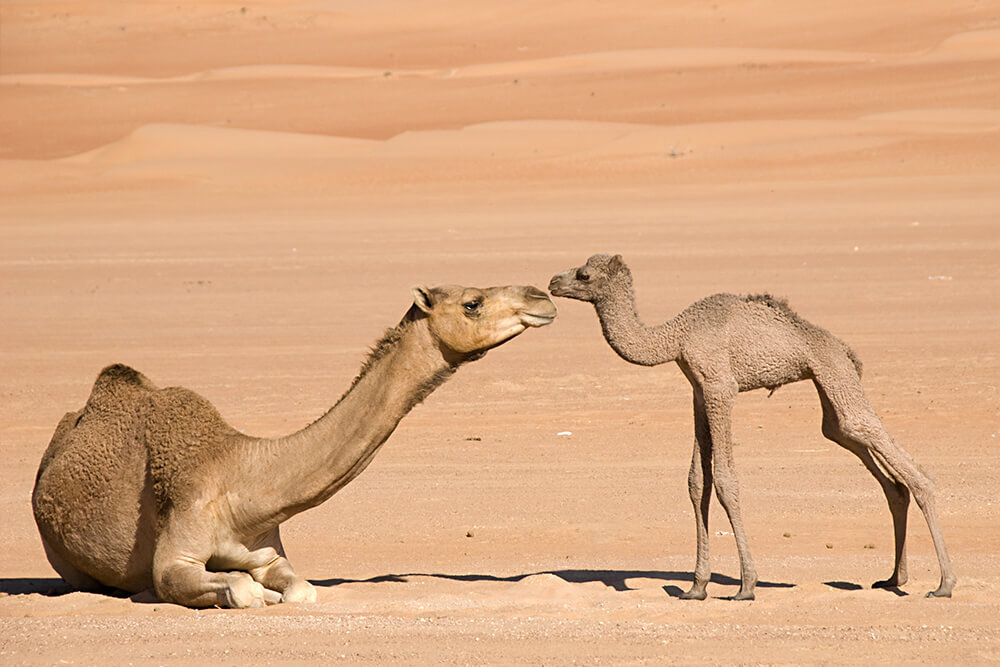
Dromedary camels have one hump. Bactrian camels have two humps. Babies, called calf's, have no humps but small peaks of hide, topped with a spot of curly hair to indicate where the hump will form.
There are three types of camels in the world: dromedary camels (or Arabian camels), Bactrian camels (or Asian camels), and wild
Bactrian camels (Camelus ferus). The majority of camels are domestic. The only wild camel species, wild Bactrian camels, are only found in just a few locations in China and Mongolia. At the Chattanooga Zoo, you can see dromedary camels. They are the tallest of the three species of camel. Dromedary camels exist today only as a domesticated animal. They have not occurred naturally in the wild for nearly 2,000 years. The earliest evidence for dromedary domestication dates to about 4,000 years ago on a small island off the Abu Dhabi coast. Northern Arabian tribes began to use dromedary camels as riding animals around 3,100 years ago. About 90% of the world’s camels are dromedaries.
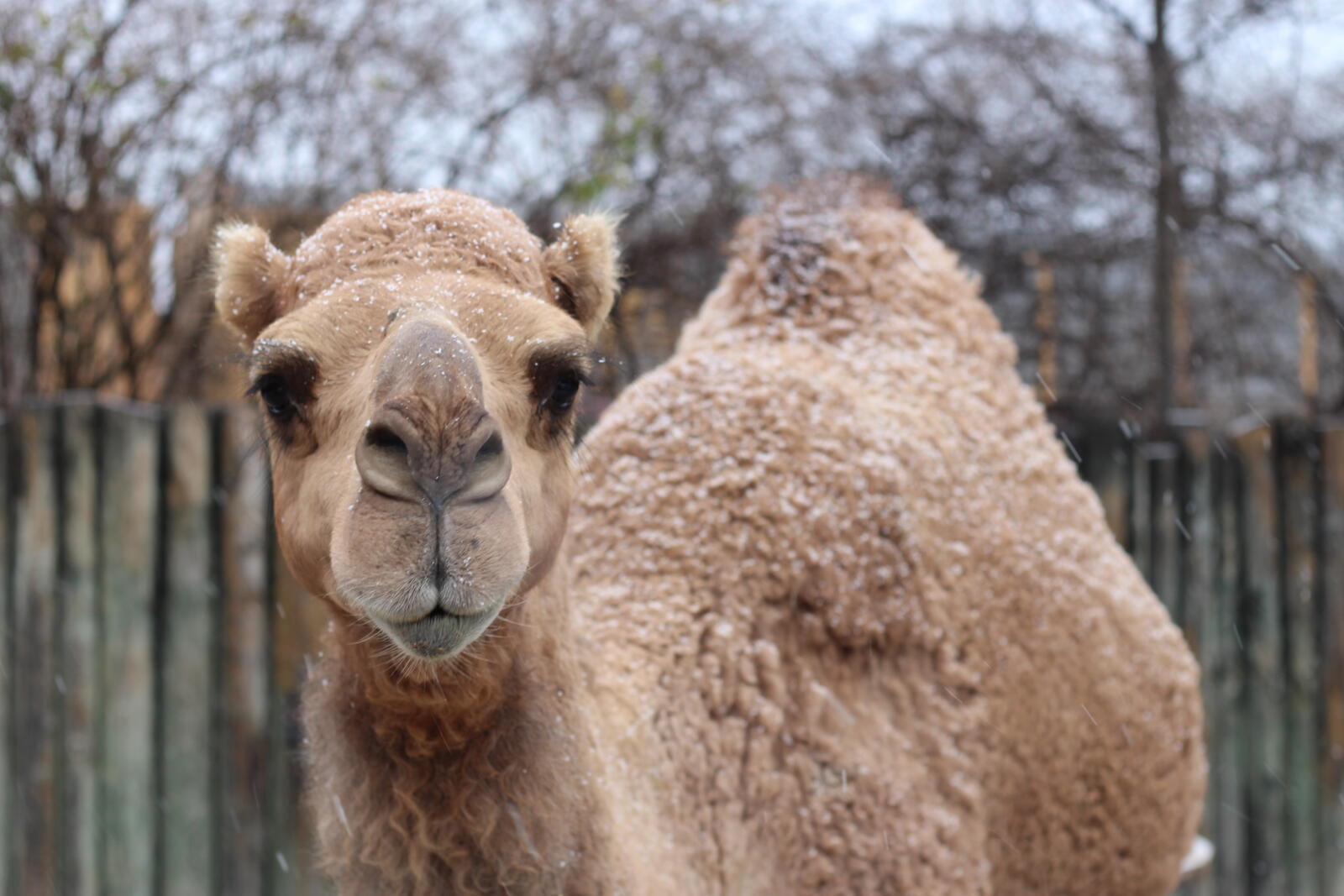
The camel's hump is its most notable feature. However, contrary to popular belief, a camel's hump is not filled with water or used to store water. Instead, it is filled with fat (up to 80 lbs) that is metabolized for energy and water when needed. As the fat is used up the hump will become flabby and flop onto its side. By storing most of its fat in one place, a camel is not covered in insulating fat and thus can stay cooler in the desert heat.
Camels have a remarkable ability to survive for long periods (months) without any water. When camels drink, they can drink up to 35 gallons of water at a time, a feat which would be lethal to any other mammals. To keep moisture in their body, camels do not sweat very much, and they also have very concentrated urine. They are made for desert conditions with long eyelashes in double rows and a third eyelid which acts like a windshield wiper to wash sand or dirt out of their eyes. Their nostrils can close to provide protection from blowing sand. Their broad, flat feet have leathery pads and two toes on each foot which helps prevent them from sinking into sand or snow. Their body temperature fluctuates throughout the day from 93°F to 107°F.

________________________________________________________________________________________________________________________________
Can I ride a camel at the Zoo?
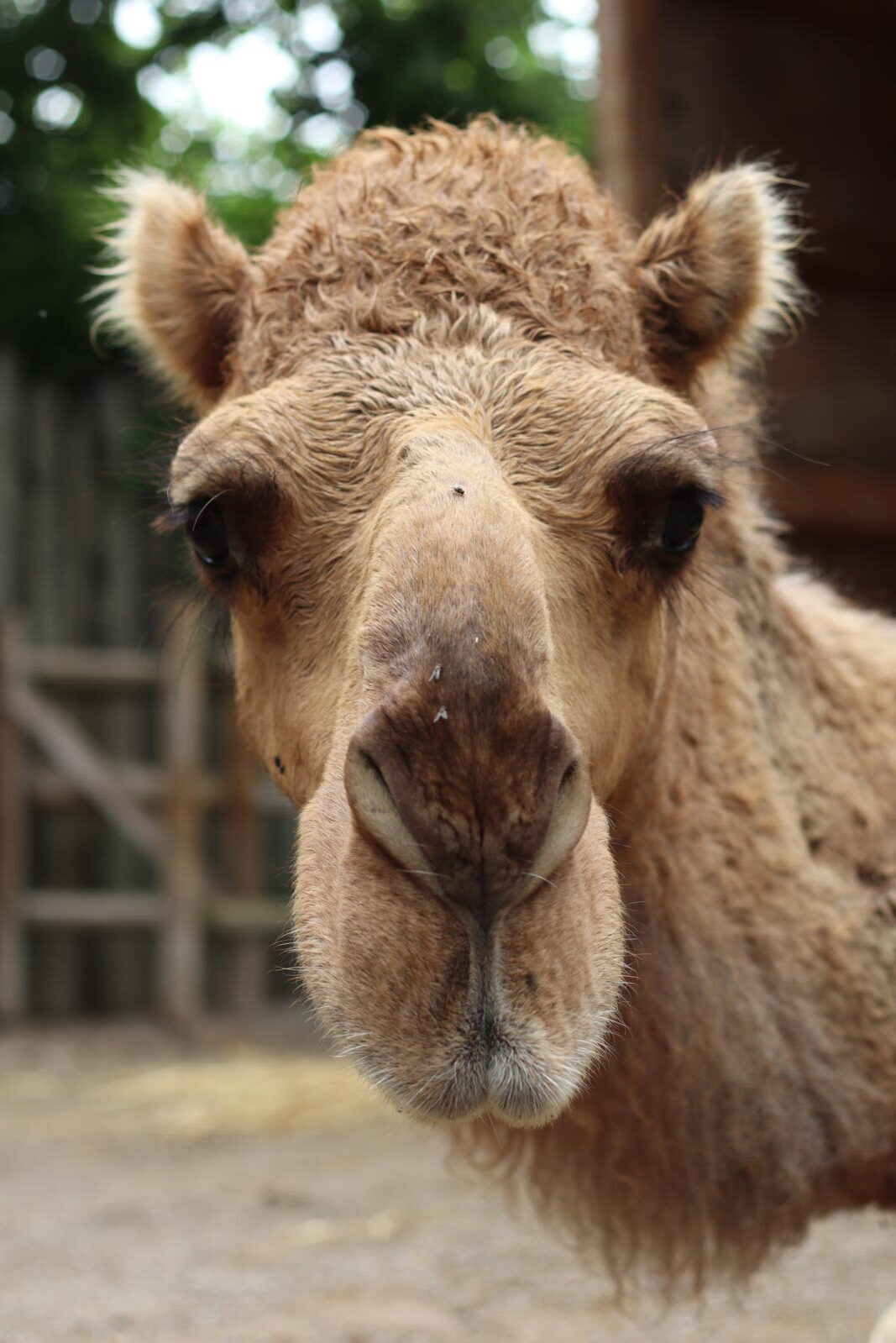
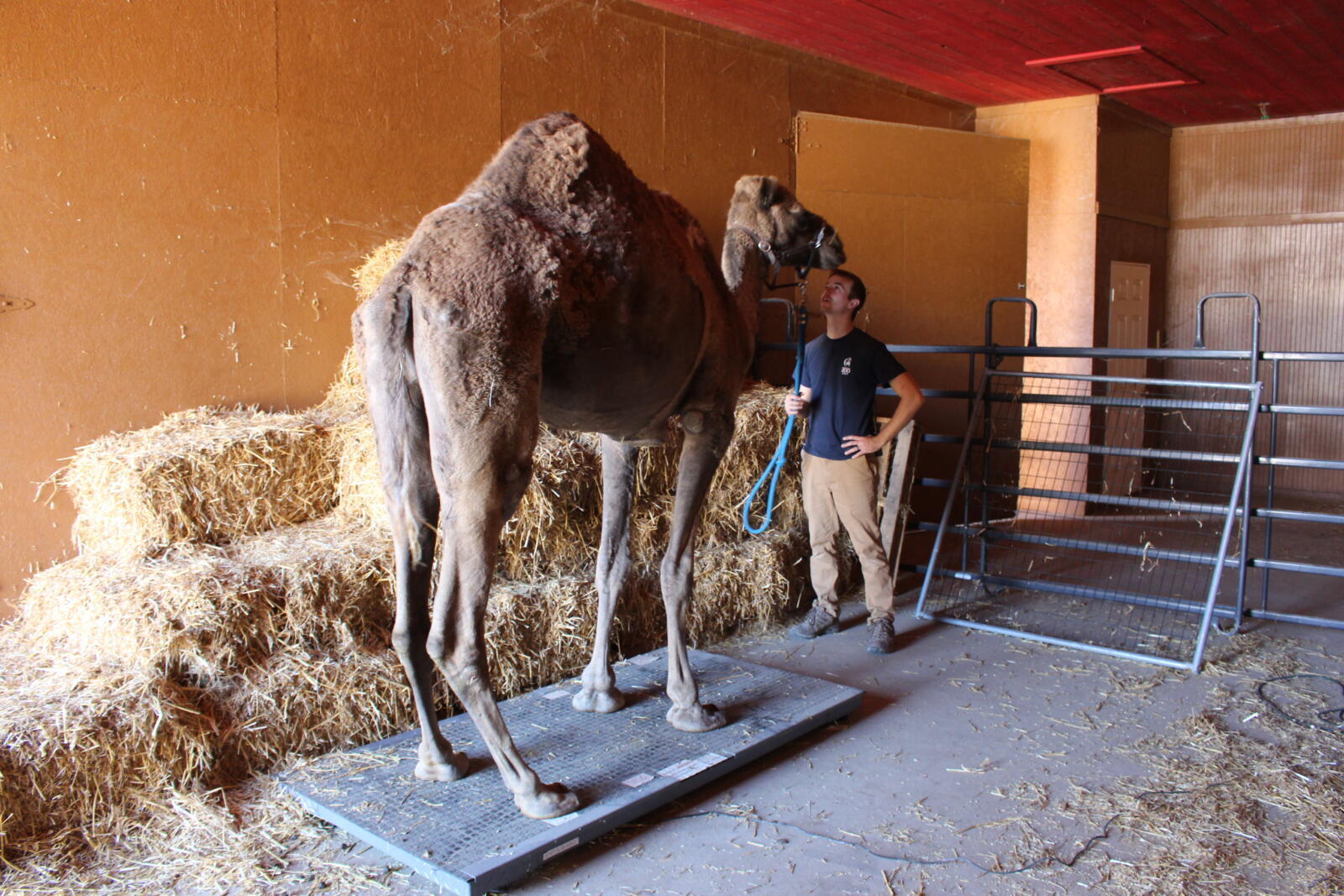
While at one time, you could ride a camel at the Zoo, our camels have now officially retired and are enjoying their days in their new enclosure next to the big red barn.
__________________________________________________
Why they matter
Dromedary camels are used as beasts of burden by humans and also provide humans with milk, meat, wool, leather, and fuel from dried manure. Through these services, dromedary camels have enabled humans to inhabit extremely arid regions. Dromedary husbandry is increasing today, and is being recognized as an ecologically-sound method of producing protein rich food in arid areas.
Wild Bactrian camels, however, are at critical risk, facing a decline as they are hunted for sport or killed because they compete with domestic camels and livestock for grazing and watering spots. They are also hunted for their meat. Their habitat is also being taken over by illegal mining operations. There are currently about 650 Bactrian camels in China and about 450 in Mongolia. Wild Camel Protection Foundation was established in 1997 and has set up a natural reserve in China for Bactrian camels.
How you can help camels
- Donate or learn more about organizations like Wild Camel Protection Foundation, which work with local communities to protect wild Bactrian camels and their habitat.
- Chattanooga Zoo partners with many organizations that support the plight of wildlife in the wild. By supporting Chattanooga Zoo, you are our partner in saving and protecting wildlife worldwide.