Cape of Africa
Caracal
Did you know...
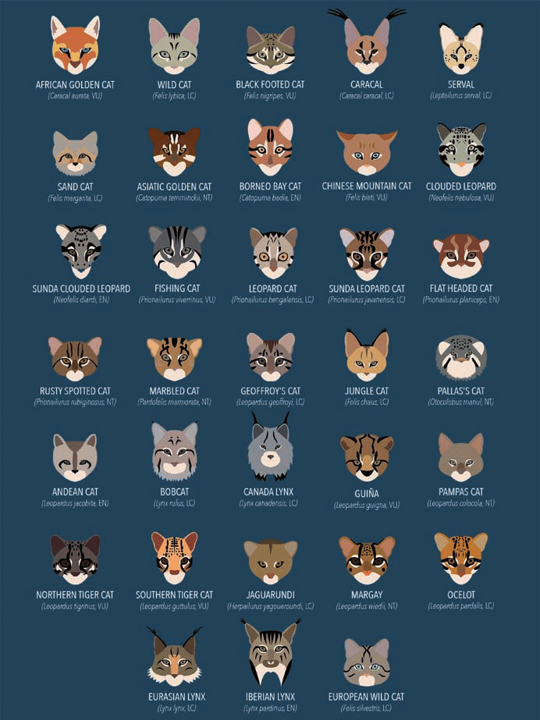
Caracals are one of 33 species of small wild cats.
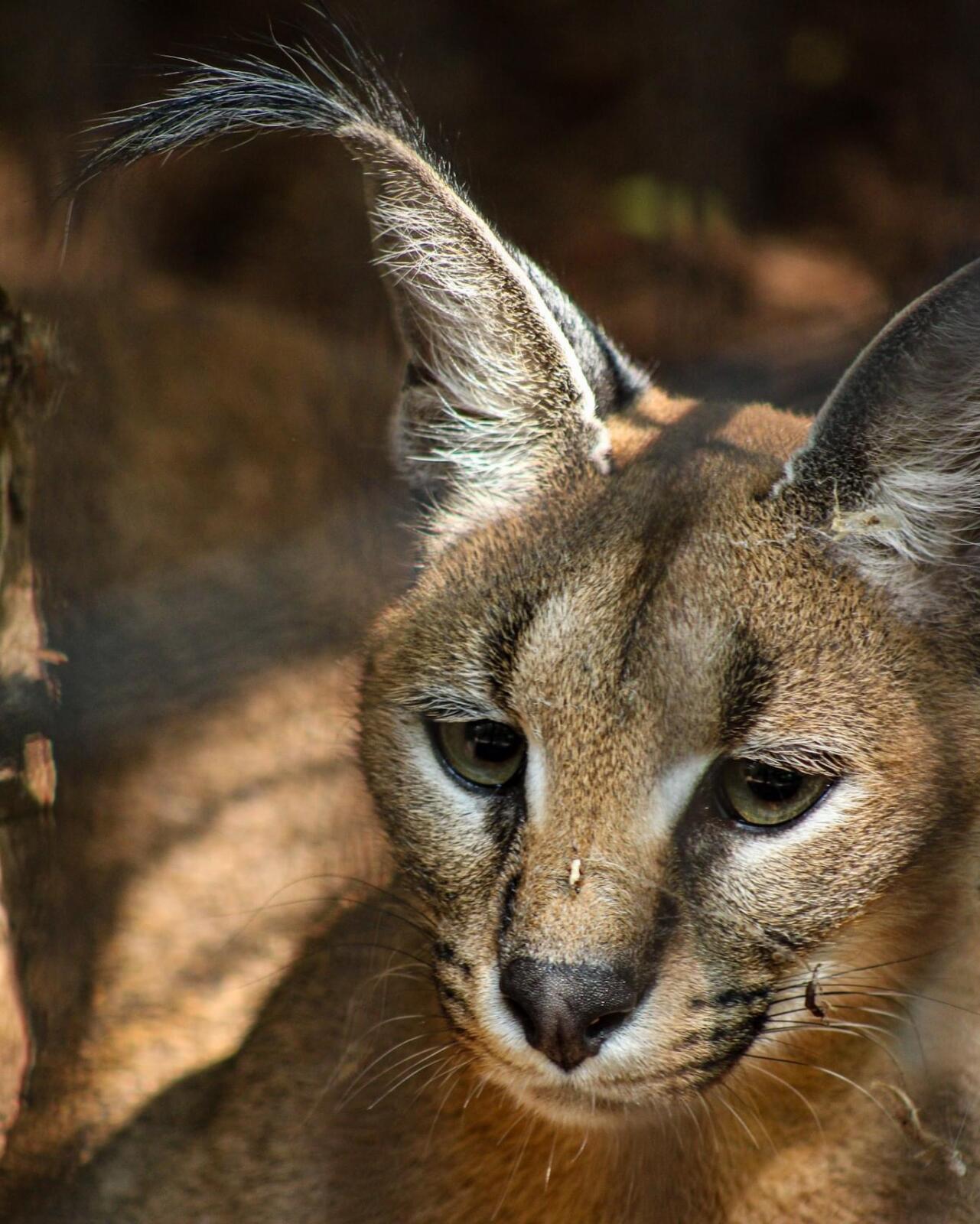
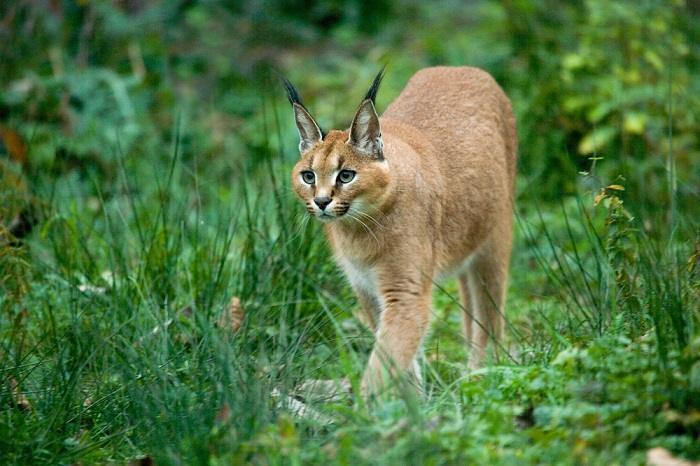
Caracals have a streamlined body, short, reddish gold coat, and dramatic markings on the face. They are medium-sized cats with no spots or stripes and have long legs and a slim body. Their face has black markings on the whisker pads. Most notably, long tufts of black fur top the caracal's ears, which are long and slender. Their legs are relatively long and the hind legs are disproportionately tall and well muscled. Their tail is short.
Caracals are the heaviest and also the fastest of the small cats and are the largest of the small cats in Africa. The caracal ranges across Africa and the Middle East to India. They have adapted to the potentially harsh environments of the savanna, semi-desert, dry woodland, arid hilly steppe, and dry mountains.
They are closely related to the serval and golden cat. The caracal is found in habitats that are different from its feline cousins. Servals and caracals are similar in size, but servals hunt in wetter habitats, whereas caracals stick to the drier areas of Africa and the Middle East.

_________________________________________________________________________________________________________________________________

All Ears
There are 20 separate muscles in a caracal's ears capable of moving in many directions to sense prey as well as communicate to other caracals. This allows them to move and tilt their ears independently to adjust them to listen to sound waves from their prey. Humans in comparison have just 6 muscles in their ears.
The most noticeable feature of their ear is the long, black ear tufts, or tassels on the tops of their ears. There are many theories about the function of the ear tufts. The tufts may help keep flies out of the cat’s face or help to camouflage the caracal in tall grass by breaking up the outline of the cat’s head. However, the most widely accepted theory is that the cat twitches its ear tufts as a way to communicate with fellow caracals.
______________________________________________________________________________________________________________________________________
Leaps and Bounds
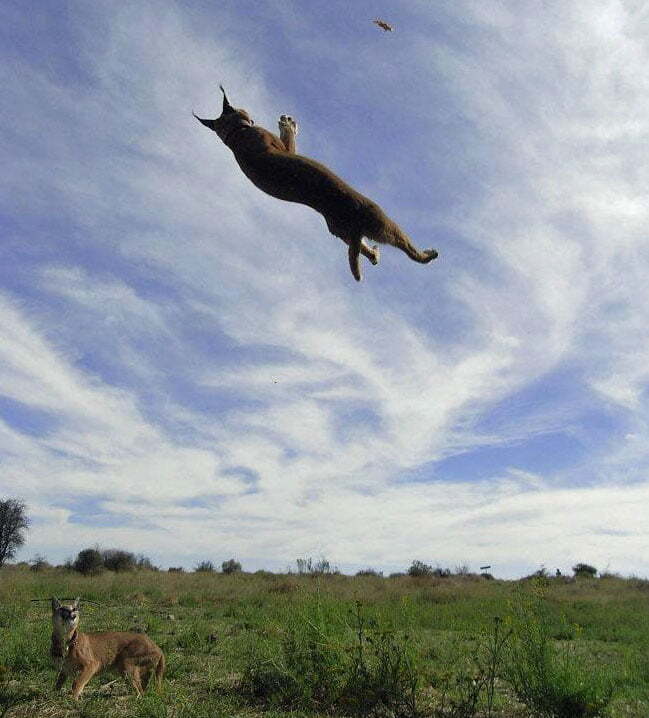
These agile cats have amazing jumping abilities, leaping up to 10 feet to swat a flying bird. As the bird takes off, so does the caracal. She leaps up and swats her prey with her paw, causing it to fall to the ground. Then the cat scoops up the bird in her mouth and trots off to eat it.
Caracals have several adaptations to be successful hunters. They are the fastest felids of their size. Their body is built for sneak attacks with footpads cushioned by stiff fur that allow them to make practically no noise as they sprint toward targets. Their strong hind legs allow them to jump acrobatically the height of a tall adult human. Those adaptations, as well as their excellent sense of hearing makes them incredible hunters.