Corcovado Jungle
Giant Anteater

Did you know...
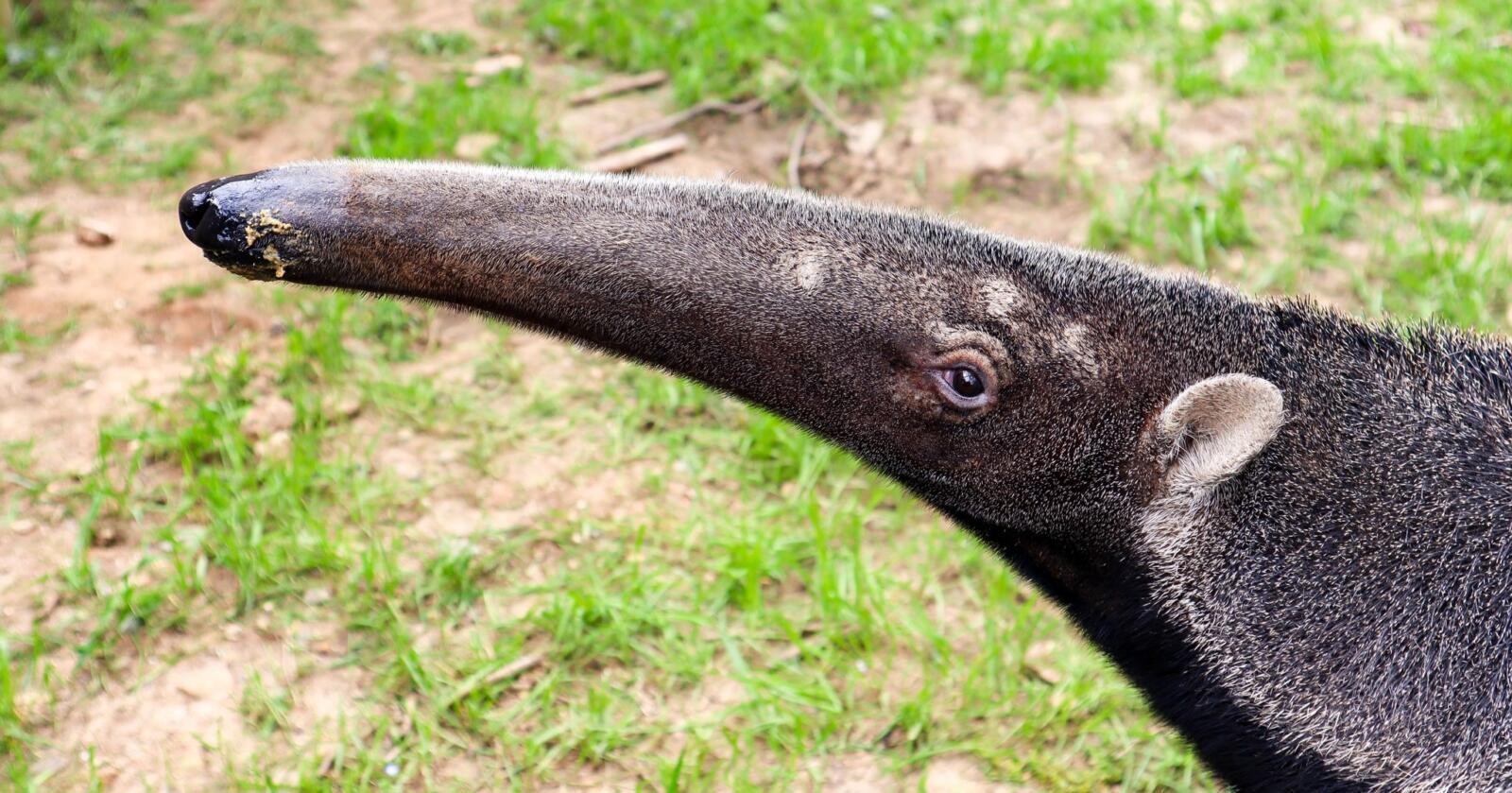
giant anteaters are the largest of the four species of anteaters. All four species are found in Central and South America.

Giant anteaters have no teeth. But they have a special tongue that allows them to eat up to 30,000 ants and termites each day. Their narrow tongue is about two feet long and shaped like a strand of spaghetti. It has tiny backward pointing spines covered in sticky saliva that aid in the insects sticking to it. They rely on their acute sense of smell to detect an ant or termite mound in which they swiftly rip into it with their sharp claws. They then dart their tongue inside up to 150 times per minute collecting the insects. They only feed at one mound for about a minute or so before moving on. There are two reasons for this:
1) This prevents the total destruction of the mound and therefore wiping out a food source.
2) They are not immune to ant bites so they feed for just a minute or so before moving on.
Once they have a mouthful of insects, they crush them against the roof of their mouth, and their muscular stomach further pulverizes the food. They may also lick at fallen fruit and eat soft grubs.
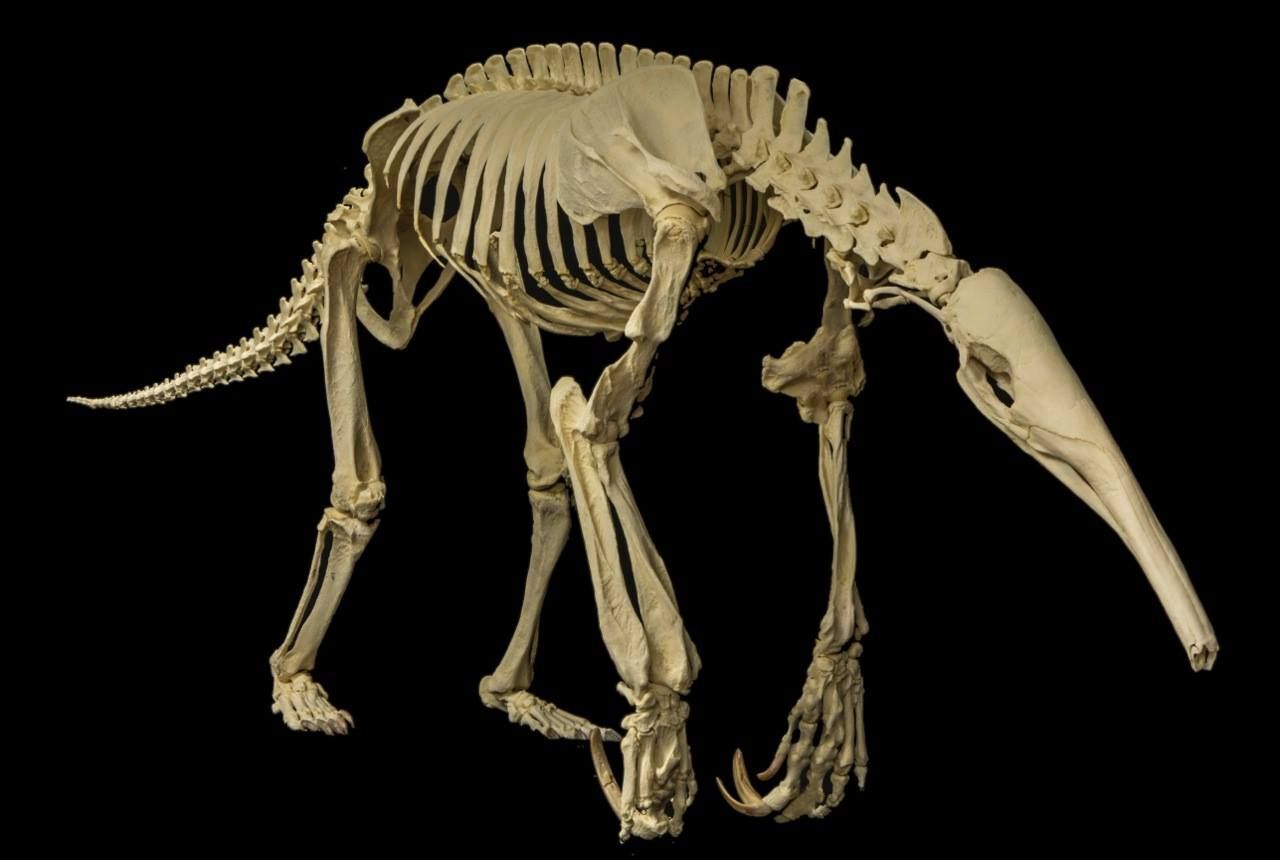
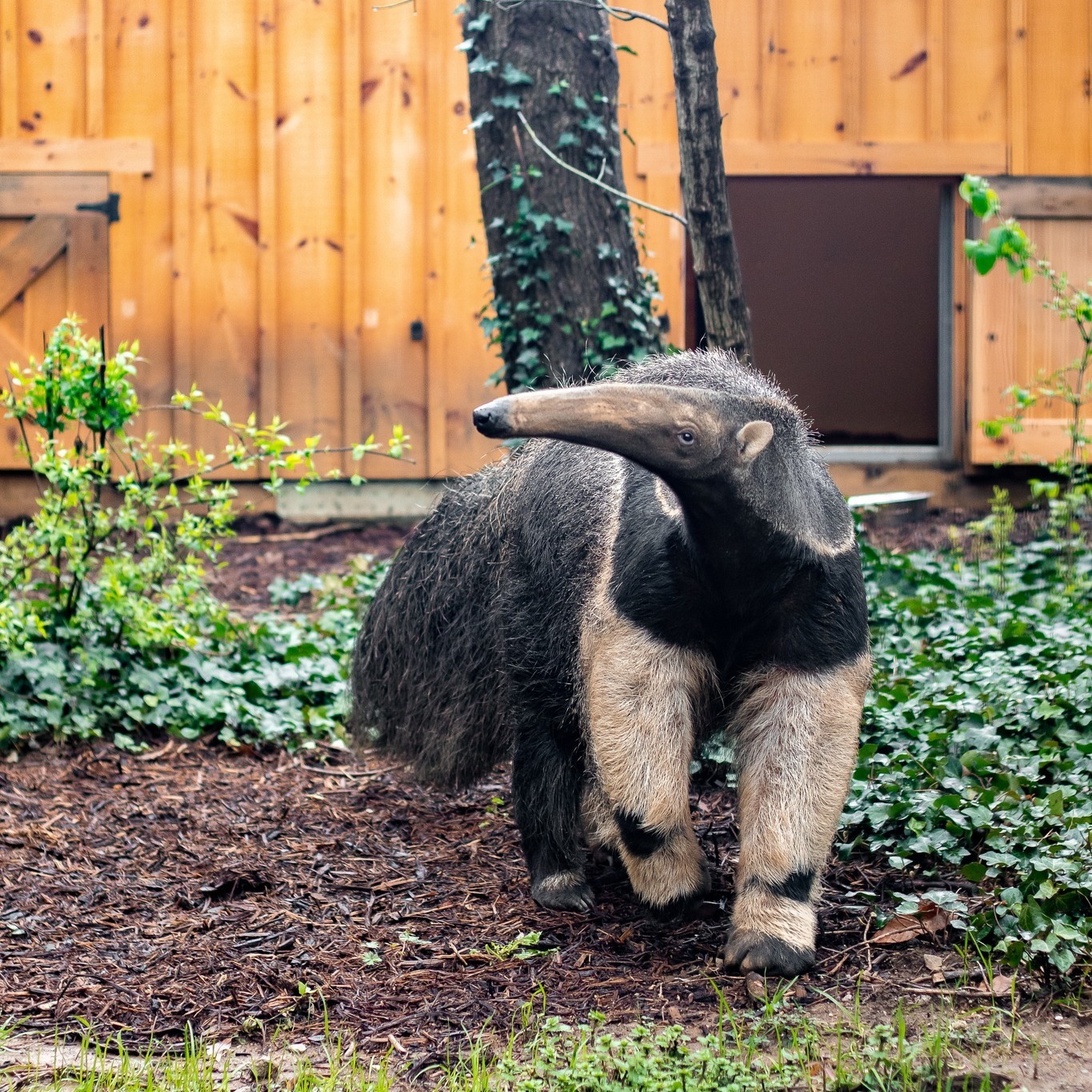
Giant anteaters walk on their knuckles, curling their front feet into fist like balls to keep the claws protected and prevent dulling. Even their skeletons show their front feet curled.

How giant anteaters are being helped in the wild
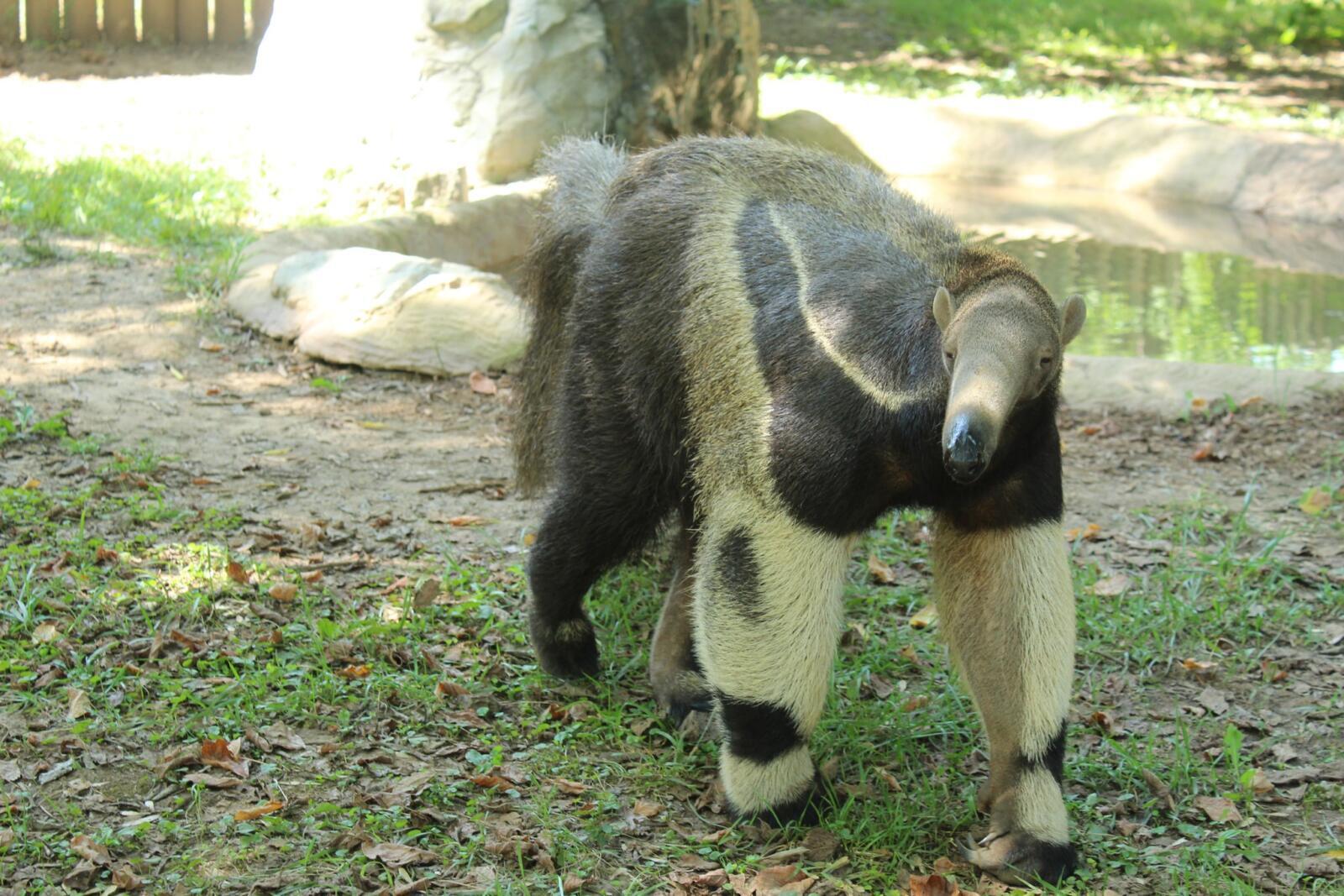
Giant anteaters are vulnerable due to habitat loss, especially from fires in grassland regions, hunting for food and are often hit by vehicles while crossing roads. The giant anteater’s range is bisected by highway BR-262, that cuts across the Brazilian state of Mato Grosso do Sul as it winds from the Bolivian border to the Atlantic Ocean. Along the way, the road knifes through two ecosystems: the Pantanal, Earth’s largest tropical wetland, and the Cerrado, the savanna that covers more than 20 percent of Brazil. Eucalyptus, iron, and cattle are transported in trucks frequently making roadkill a huge problem for giant anteaters. Researchers who have tallied BR-262’s roadkill consider the highway Brazil’s deadliest and one of the worst in the world.
The Institute for the Conservation of Wild Animals (ICAS) manages the "Anteaters and Highways" program in an effort to help reduce roadkill numbers. ICAS actively monitors and studies the populations of anteaters and works closely with local organizations and truckers to save this species. To learn more, click on their website.
How you can help giant anteaters
- Volunteer at the Chattanooga Zoo and help inform our Zoo guests about these wonderful animals. Spreading the word about how incredible these animals are helps people to be aware of their plight and want to help too.
- Visiting the Chattanooga Zoo is an easy step to saving giant anteaters. A portion of our budget supports conservation efforts around the globe. Your admission ticket helps the Zoo provide more conservation dollars.
- Choosing products that are sustainably sourced and have a reduced impact on the rainforests where anteaters live, like sustainable palm oil, lumber, and coffee.
- Chattanooga Zoo participates in the Association of Zoos and Aquariums' Species Survival Plan (SSP) for giant anteaters. The mission of an SSP program is to cooperatively manage threatened or endangered species populations within managed-care facilities. By supporting the Zoo, you are our partner in supporting giant anteaters.