Corcovado Jungle
Tamarins
Did you know...
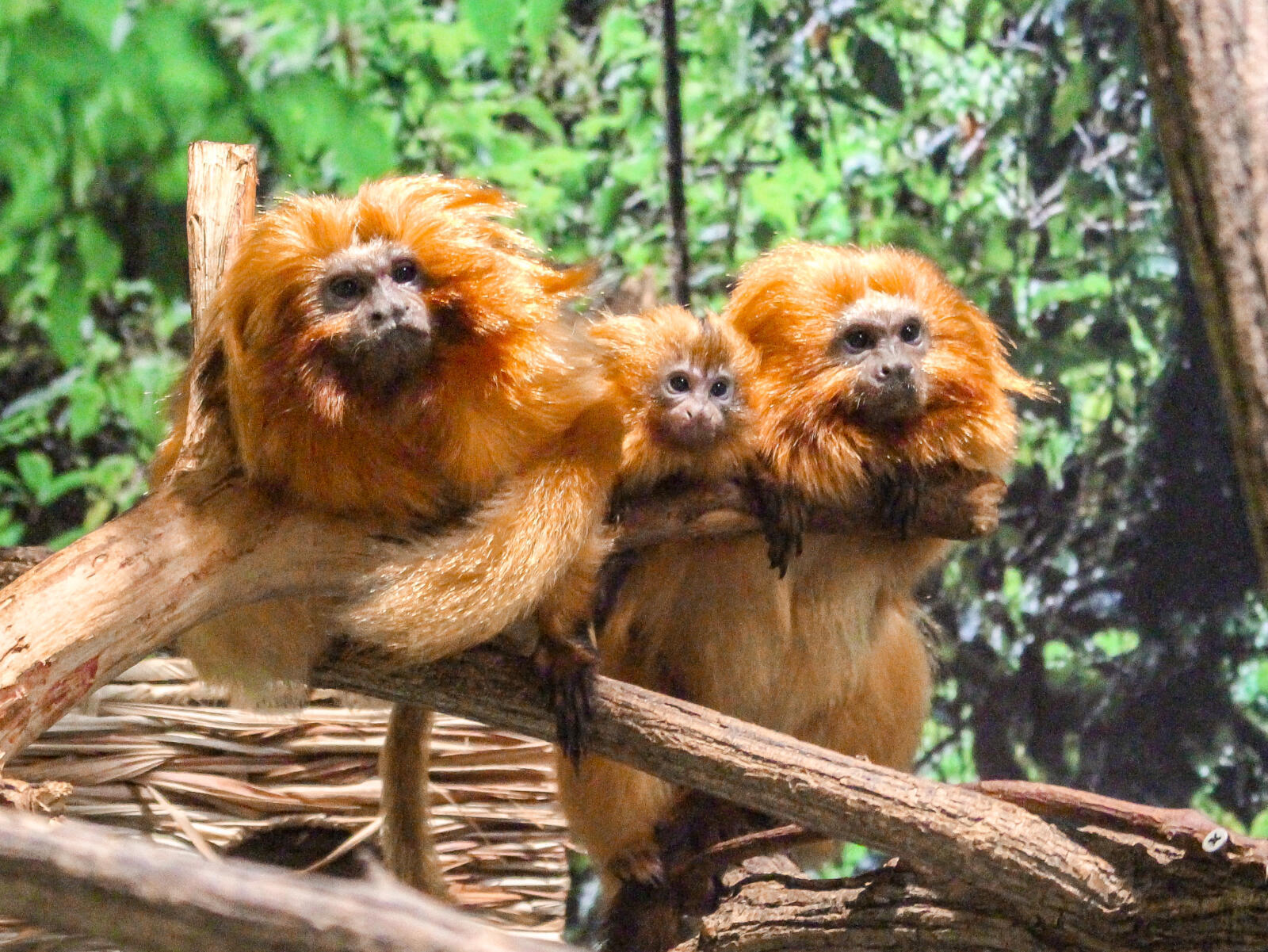
tamarins help forests grow. After consuming fruits, tamarins will excrete seeds through their feces and spread them through the forest. The excrement acts as a nutritious fertilizer for the seeds, which will germinate and develop into new trees.

Golden Lion Tamarin
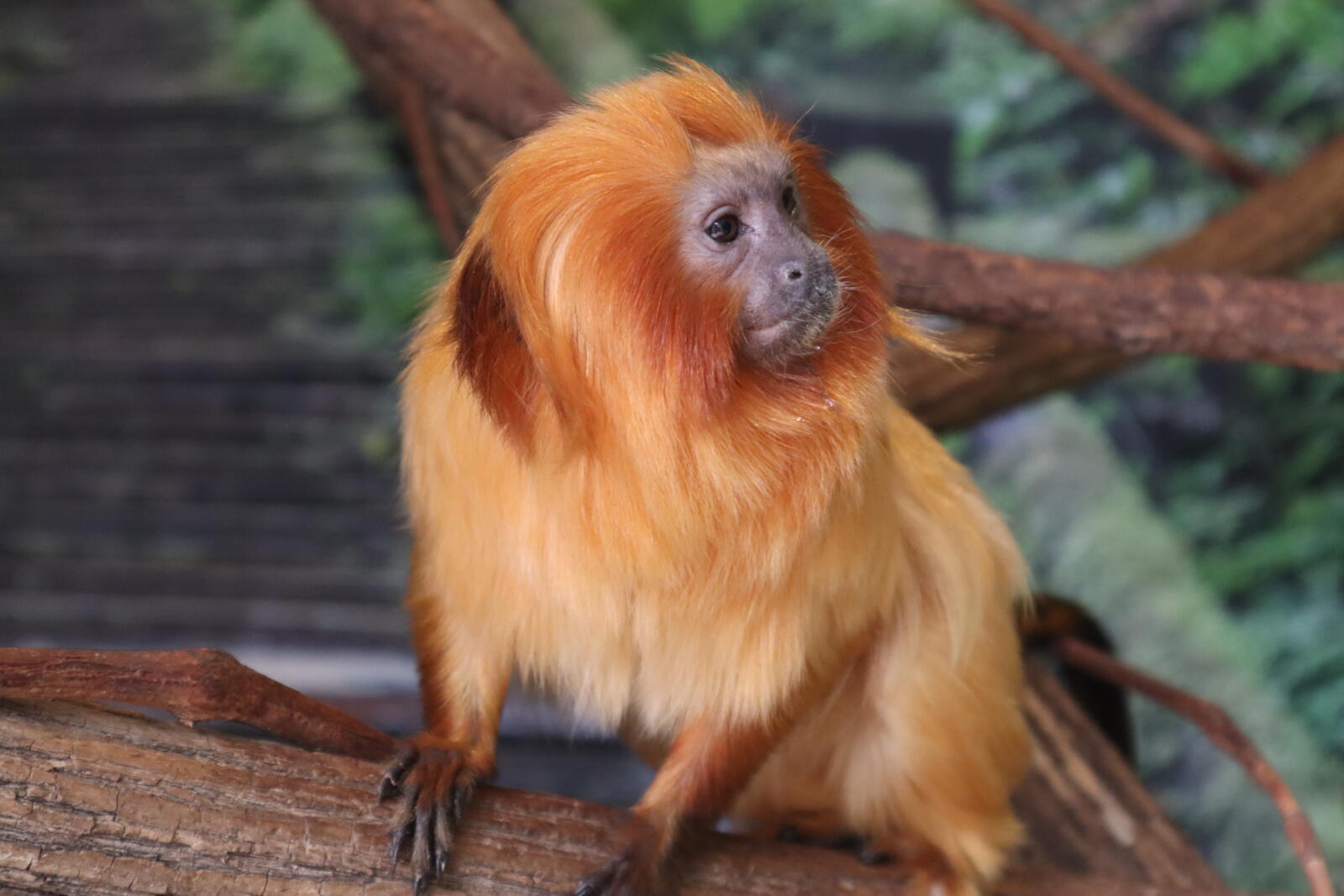
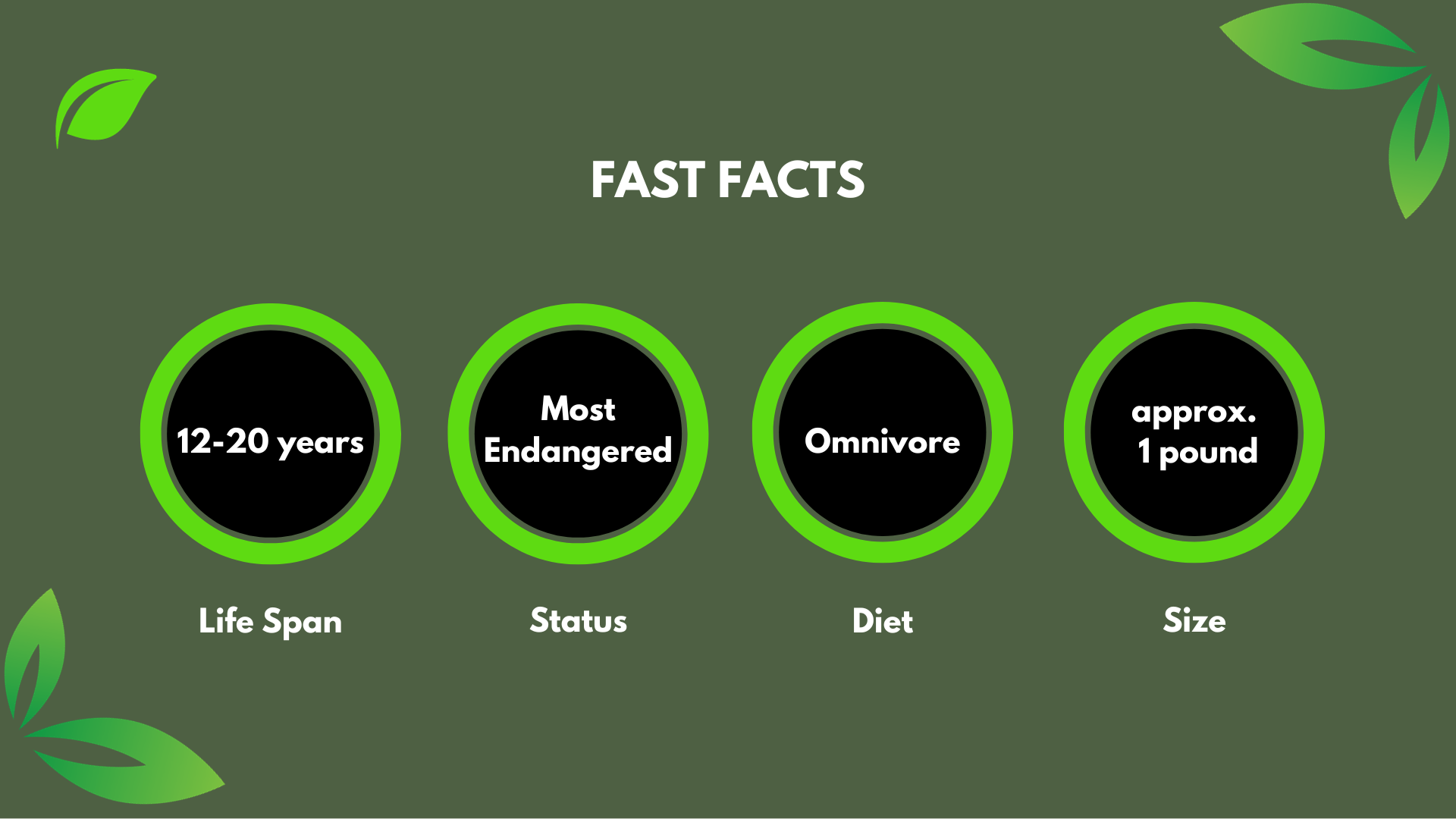
Endangered.
Golden lion tamarins’ branch-hopping agility and acrobatics have drawn comparisons to that of squirrels. An arboreal species, these tamarins spend the vast majority of their time in trees, rarely descending to the ground. They move through the forest canopy by leaping, bounding, running, or walking along tree branches, using their feet and hands. It is thought that they get their hair color from sunlight and from carotenoids (the yellow to red pigments) in its food. The Atlantic forest of southeastern Brazil is home. Once found throughout the lowland coastal regions of the states of Rio de Janeiro and Espirito Santo, centuries of deforestation and encroaching urban development have wiped out 98% of its original habitat—nearly causing the species’ extinction.
According to population biologists, to prevent this species from becoming extinct, a population of 2,000 golden lion tamarins living in the wild requires 62,000 acres (25,000 hectares) of protected and connected forest. If the forests disappear, then so will the golden lion tamarin. In the 1970's, severe habitat loss and fragmentation reduced their populations to a mere 200 individuals. Over 30 years of global conservation efforts successfully increased their wild population to todays still-fragile 2,500 individuals.
Emperor Tamarin

Least Concerned. Because of its widespread distribution and no imminent threats, the emperor tamarin is classified as Least Concern by the International Union for Conservation of Nature (IUCN, 2015), Emperor tamarins are nicknamed “mustache monkeys.” They reside just south of the equator within the southwestern Amazon River Basin in eastern Peru, northern Bolivia, and the northwestern Brazilian states of Acre and Amazonas. They are the size of an eastern gray squirrel, with a long torso and long limbs proportionate to its tiny size. These miniature monkeys are active during daylight hours and spend most of their time in the trees. Emperor tamarins are incredibly agile, hopping or running quadrupedally (on all four limbs) from tree branch to tree branch as they travel, gracefully through the forest. Their ability to move quickly through their trees helps them to elude predators. Slender branches support their light body weight, permitting them to reach for food that is inaccessible to heavier animals. Clutching a branch with a clawed grip, they extend their free arm and retrieve a piece of fruit with their other hand.
Vocalizations are key to tamarin communication. Emperor tamarins use vocalizations to send messages to fellow troop members, to other-primate-species affiliations, and to intruders.
Cotton-Top Tamarin

Endangered. Cotton-top tamarins are strikingly colored and appropriately named, with a soft plume of white hair that encircles their small grey and silver faces in a bright halo. They are native to a very small region of northwestern Colombia which accounts for a main reason for being endangered. They spend a lot of time grooming each other, leaving their coats clean and soft. They have claw-like nails, which help them leap, climb, and cling to trees.
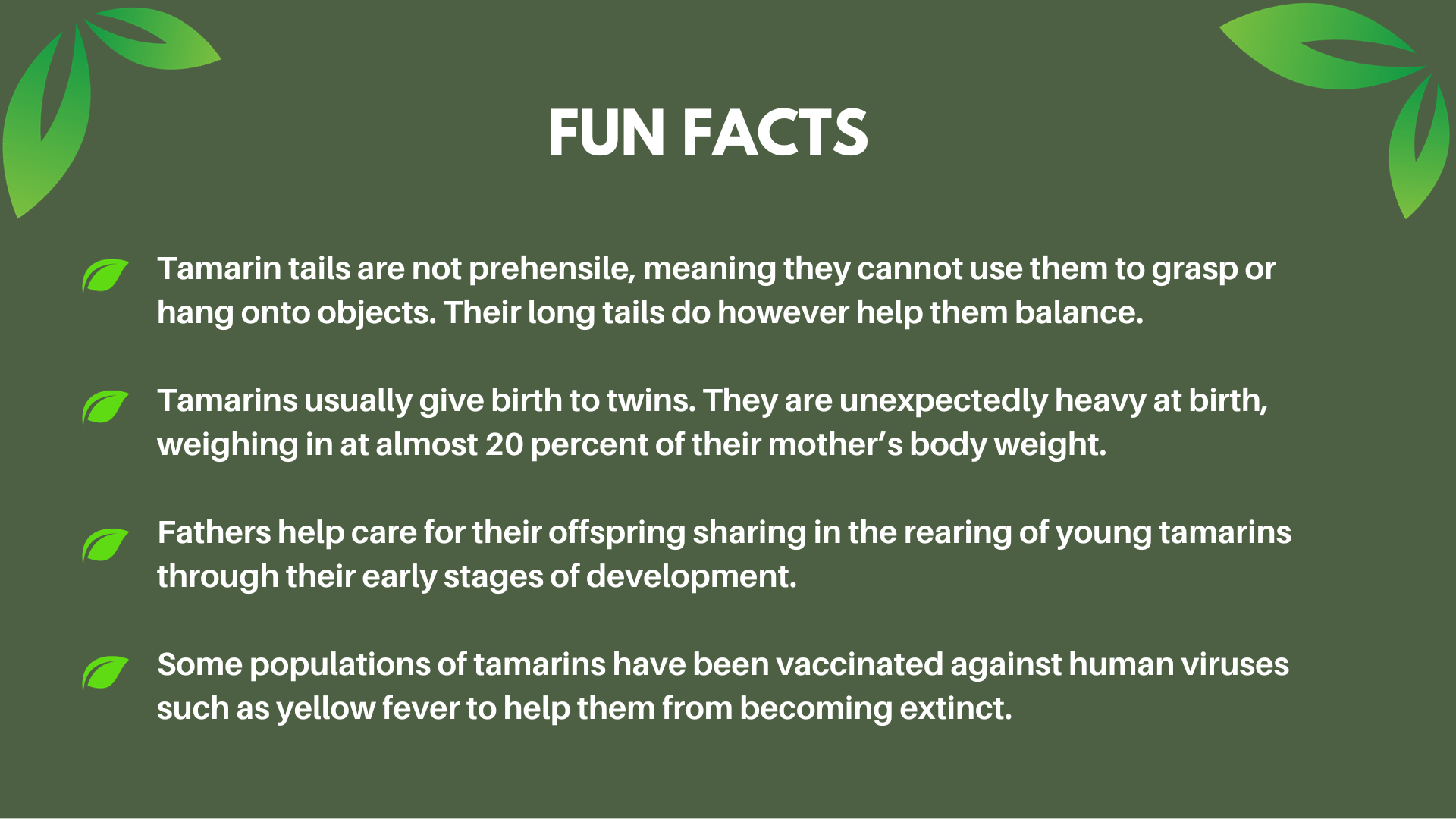
Due to the small size of their digestive tract, cotton-top tamarins must only consume the highest quality food to stay healthy. Insects and fruits make up the bulk of their diets. In most cases, cotton-top tamarins give birth to twins. Because raising two infants at once can be challenging, they raise their young in groups allowing inexperienced tamarins to learn from watching others. Adults carry the infants on their backs, but proportionally they are each quite heavy, weighing 15-20% of their mother’s weight. To put this into perspective, a newborn human weighs only 5% of its mother’s body weight. During the first week of the infants’ lives, the mother is primarily responsible for their care. Once the first week of life passes, other group members, especially males, help carry the twins and exchange food with the infants. By 10 weeks, the twins can be more independent and are only carried 50% of the time, and at 14 weeks they are no longer carried.
Pied Tamarin
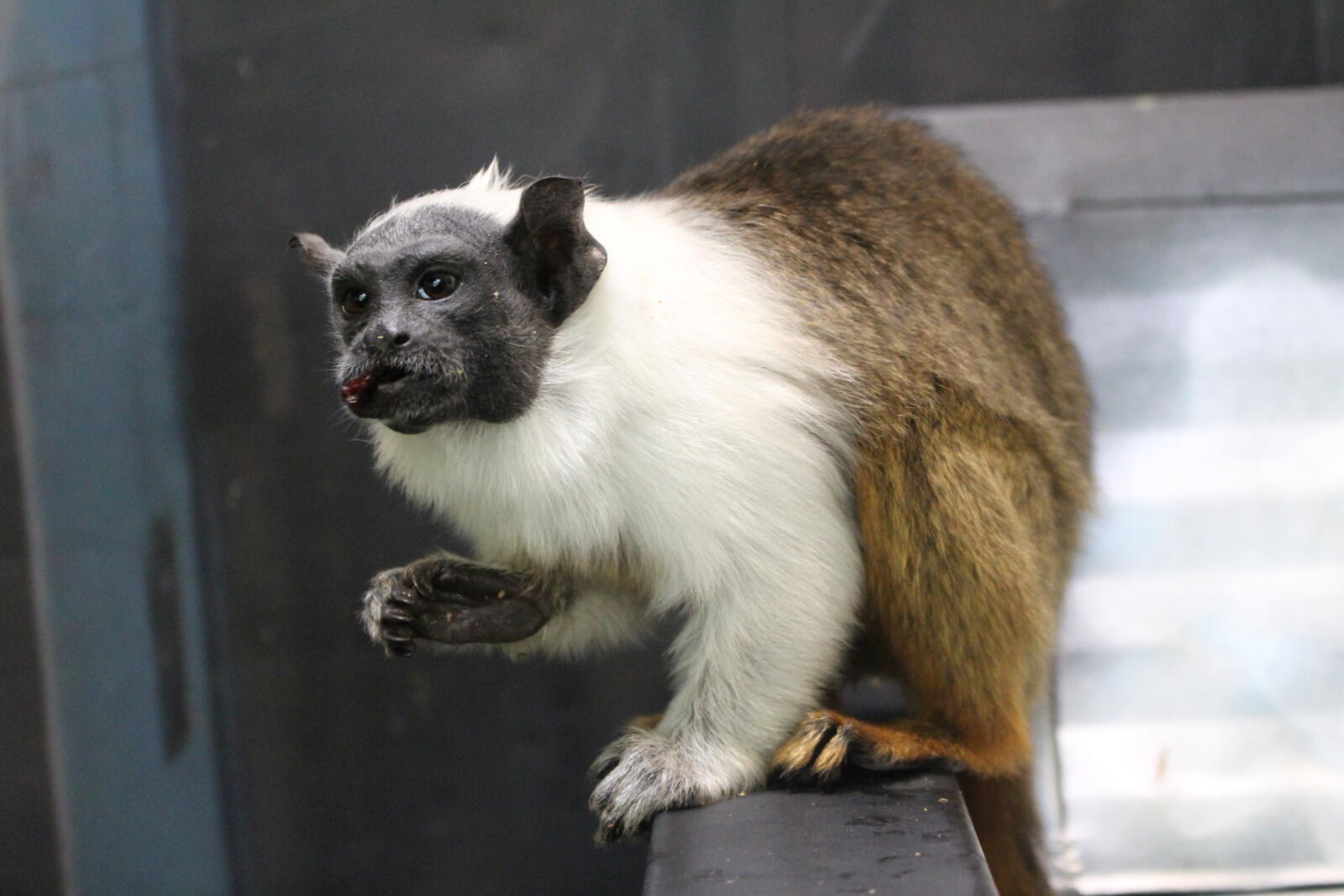
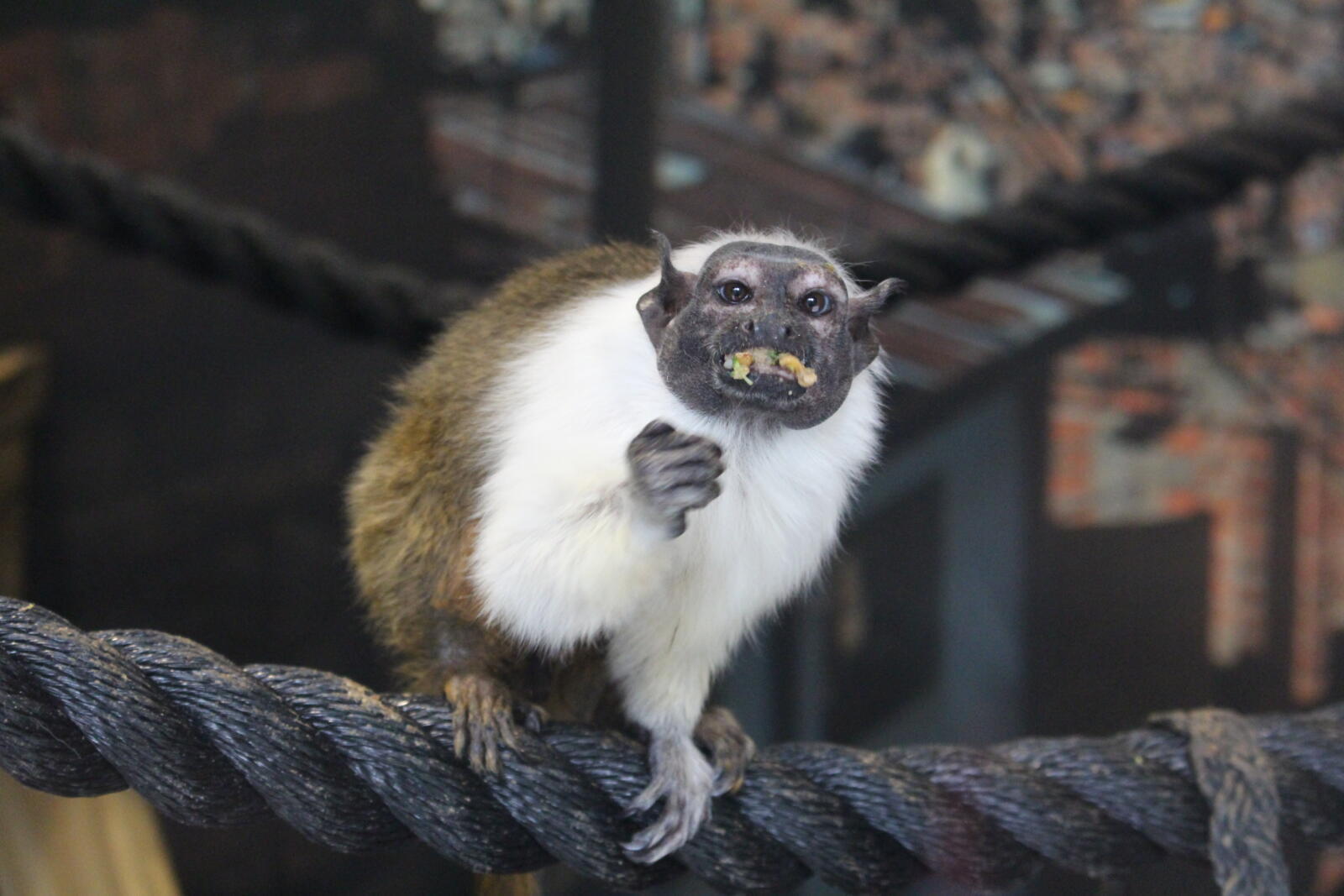
Critically Endangered. The pied tamarin, also known as the Brazilian bare-faced tamarin or pied bare-faced tamarin, and has one of the smallest ranges of any primate in the world. They are found in and around the Amazonian port city of Manaus. Pied tamarins thrive best in continuous old-growth forest. But many are currently forced to make do with the small patches of heavily degraded and severely fragmented forest left within a bustling city that won’t stop expanding. Pied tamarins are highly susceptible to stress and much less adaptable to changes in their environment than other tamarins.
Their diet includes fruits and flowers, and also sugary tree saps and gums. They can easily get to these by digging into trees with their sharp and nimble claws. Some of the gums they eat come from the seedpods of the tree as well. During the dry season, when these niches become more scarce, pied tamarins take up hunting small animals like insects, frogs, and lizards. They may also eat eggs and young birds.
_____________________________________________________________________________________________________________________________________________________
Can I feed a tamarin at the Zoo?
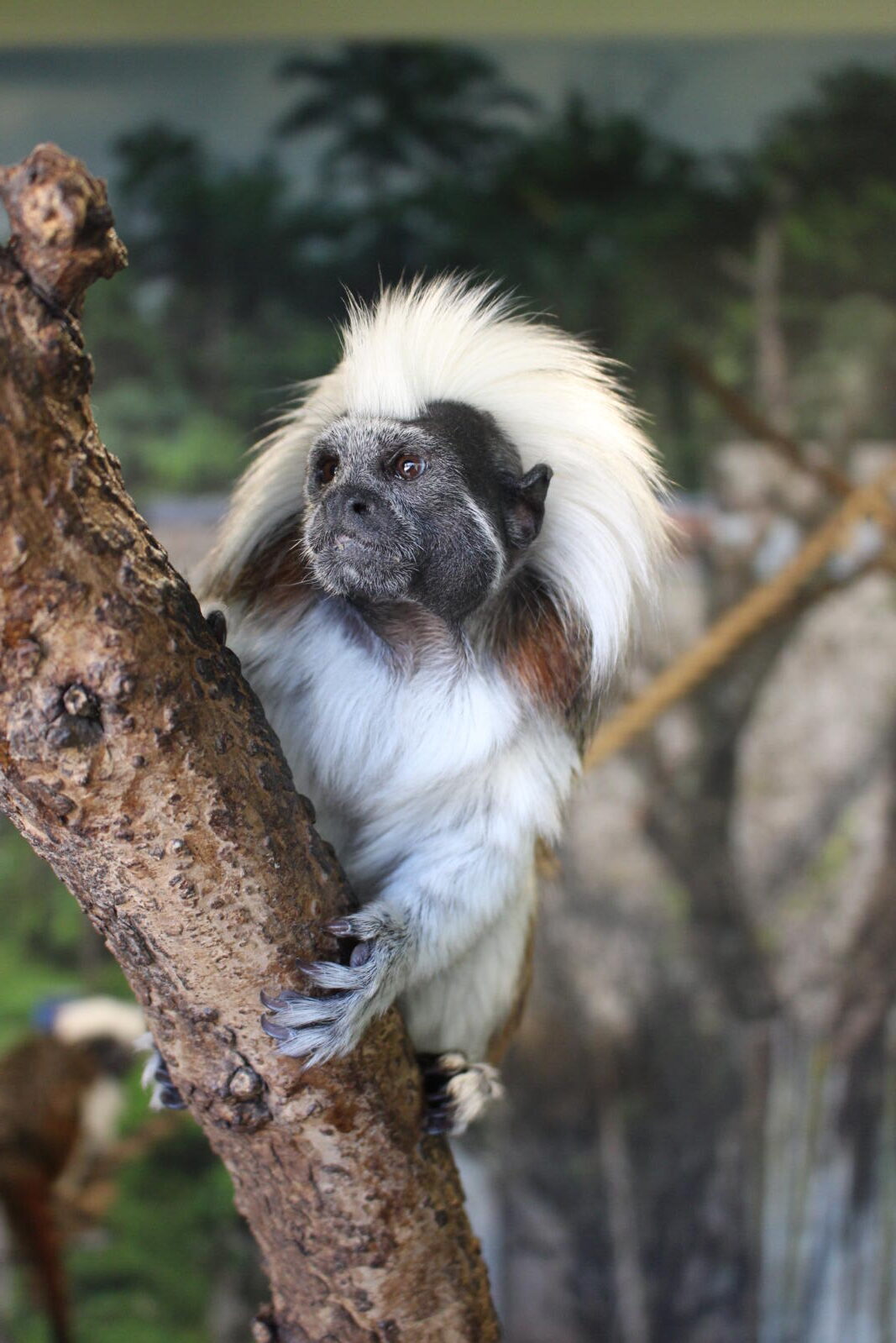
Yes, sign up for a cotton-top tamarin wild animal encounter and go behind the scenes for an up close visit. Click here to learn more.
__________________________________________________________________________________
How tamarins are being helped in the wild
Cotton-top tamarins are classified as Critically Endangered by the International Union for Conservation of Nature (IUCN, 2020), appearing on the IUCN Red List of Threatened Species. Their habitats continue to face rampant deforestation. From 1990-2000, 31% of their habitat was lost to deforestation due to agriculture, logging, and urban expansion. It is estimated that 80% of their population, or more, could be lost by 2036. This decline is due to a combination of factors: a continuation of forest loss, unsuitability of remaining forest habitat, and an ongoing, unregulated pet trade of significant proportion.
Parque Nacional Natural Paramillo, Santuarío de Fauna y Flora Los Colorados, and Reserva Forestal de Montes de Maria are protected areas in Colombia that serve as a refuge for cotton-top tamarins. In 1996, biologist Anne Savage and her team began researching the La Reserva Forestal Protectora Serranía de Coraza-Montes de Marìa for conservation. In addition, many local Colombians do not know that cotton-top tamarins are endangered, and a conservation project called Fundacíon Proyecto Tití is working to inform the public of their endangered status. The foundation is also working with NASA to identify which habitats are best to protect.
Pied tamarins are classified as Critically Endangered by the International Union for Conservation of Nature (IUCN, 2015), appearing on the IUCN Red List of Threatened Species—an increased threat level from its previous 2008 evaluation as Endangered. Unfortunately, due to its rapid population loss in the last decade, this species was added to Primates in Peril’s 2018–2020 List of the 25 Most Endangered Primates. Their situation is perhaps one of the direst of all the world’s primates—so much so that they are the only tamarin species with its own National Action Plan.
Since 2011, the conservation of pied tamarins has been overseen by the Center for the Protection of Brazilian Primates. This government organization was responsible for formulating the National Action Plan for the Conservation of the Pied Tamarin. This document set a plethora of clearly defined goals to be accomplished over the next five years, calling for more research and surveys of pied tamarins near Manaus, the initiation of reforestation projects in and around the city, and formulating programs to educate local populations about the important of pied tamarin conservation—among many other plans.
Numerous nongovernmental and international organizations have also stepped in to help. The Durrell Wildlife Conservation Trust, for example, supports field conservation programs for pied tamarins. This organization has had earlier successes bringing another tamarin species back from the brink of extinction.
As of 2009, the Brazilian government had also lent 239 institutions worldwide some 172 pied tamarins as part of a captive breeding program. Many of these are zoos that not only breed pied tamarins but also disseminate information about the plight of this species in the wild to an international audience. Many help to fund and support reforestation projects in Brazil as well. Though not ideal, breeding these monkeys with the intention of releasing their offspring into the region once it has been reforested may be the last hope for a species that may become extinct in the wild in the next quarter-century.
Save The Golden Lion Tamarin (SGLT), a U.S.-based nonprofit, provides technical support and raises funds for AMLD. The organization is committed to cultivating worldwide awareness and concern for this tiny primate. A collaborative scientific endeavor by research institutions and several primate conservation groups, including AMLD and SGLT, led to the development of a yellow fever vaccine. In October 2018, the first wild golden lion tamarins were vaccinated, giving them protection against this potentially fatal disease. Golden lion tamarin conservation efforts include education, sustainable agriculture, reforestation programs, the planting of “corridors” that reconnect fragmented environments, and scientific management of the wild population to minimize inbreeding.
How you can help tamarins
- Donate or volunteer at organizations like the ones above that purchase vital tamarin habitat and work with local communities to protect their habitat and ban the hunting and poaching of tamarins.
- Enjoy a Cotton-top Tamarin Wild Encounter at Chattanooga Zoo. A portion of the proceeds supports nonprofit organizations that identifies unprotected tamarin habitat and work with villagers to establish new protected areas.
- Chattanooga Zoo participates in the Association of Zoos and Aquariums' Species Survival Plan (SSP) for tamarins. The mission of an SSP program is to cooperatively manage threatened or endangered species populations within managed-care facilities. By supporting Chattanooga Zoo, you are our partner in saving and protecting wildlife worldwide.
- Don't keep primates as pets. With the influx of humans comes potentially catastrophic diseases. Tamarins and marmosets are susceptible to measles, mumps, and other human diseases that can be fatal to these tiny primates. In captive populations, toxoplasmosis has proven deadly. Promoting or purchasing primates as pets contributes to these tiny primates demise.
.
.
.