Corcovado Jungle
Kinkajou
Are they monkeys?
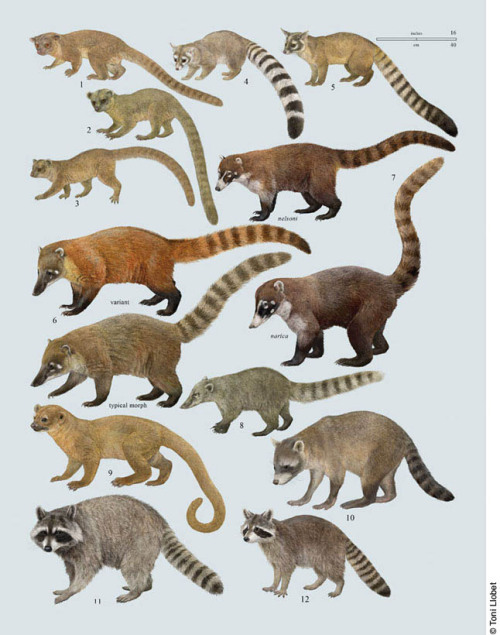
They look like a monkey, and have many traits and features like a monkey. But despite its appearance, kinkajous are not a monkey at all. Monkeys are types of primates. Kinkajous are more closely related to raccoons, coatis, olingos, and ringtails.
.

Kinkajous have a round head, large eyes, a short, pointed snout, short limbs, and a long prehensile tail. The claws are sharp and short needed for their arboreal lifestyle. The fur is short, woolly, and dense acting as a raincoat to help keep them dry. They only grow to about 30 inches head to body, with their tail being almost the same length as their body. Kinkajous have the ability to pivot almost a full 180 degrees between the pelvis and head. They also have the ability to turn their ankles in the opposite direction, so it can easily climb up and down trees head first.
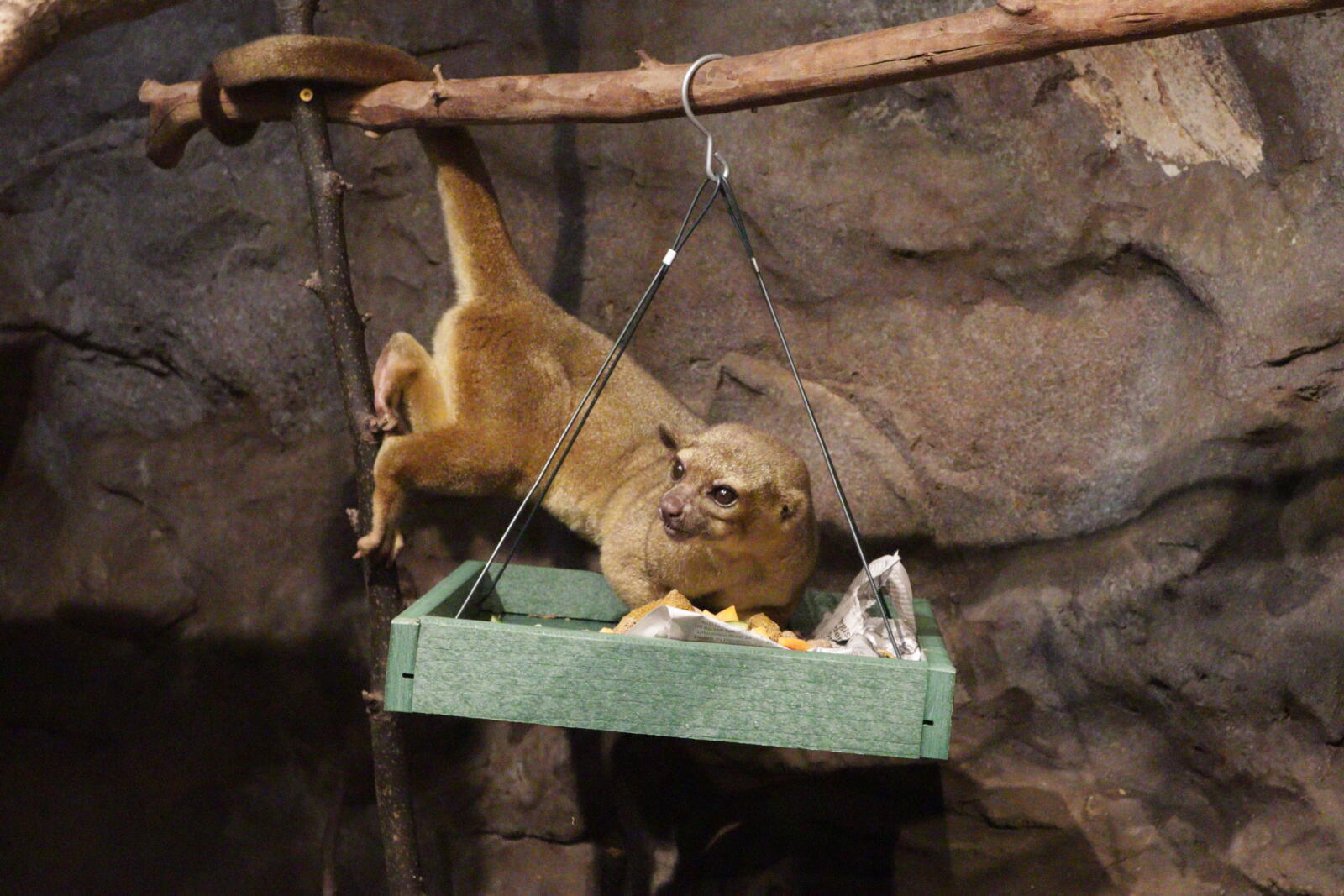
The kinkajou’s most important feature, however, is its long prehensile tail, which acts as a sort of fifth limb that can grip objects or branches. It’s so strong that the kinkajou can hang upside down while feeding. The tail also functions as the main means of balance and a sort of blanket that keeps it warm during cold nights.
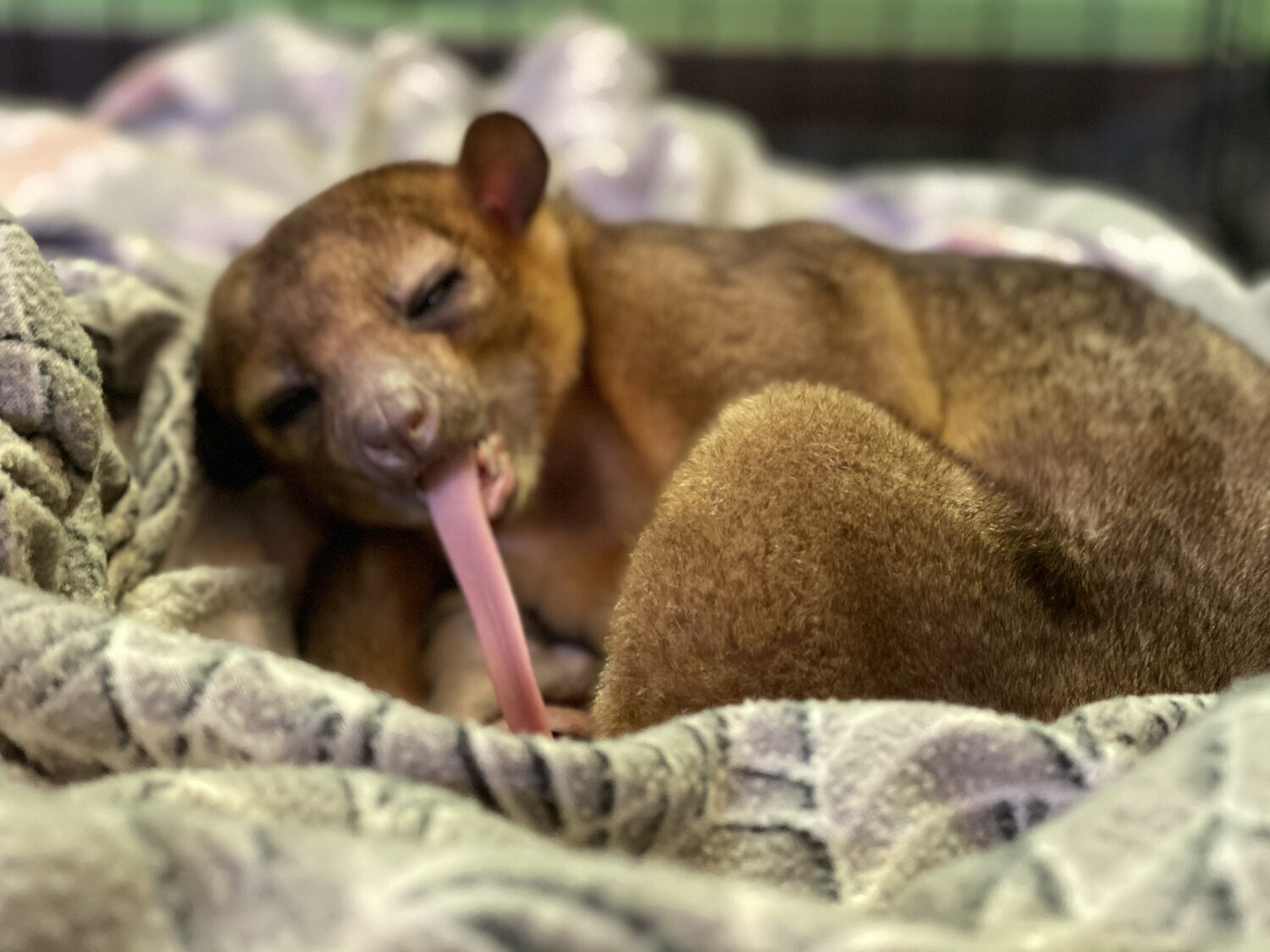
Although the kinkajou is considered to be an omnivorous species, evidence suggests they are really frugivores since most of its diet actually consists of fruit. They have a five-inch tongue they use to get nectar out of flowers. While doing this, kinkajous get pollen on their fur and become pollinators as they move from flower to flower.

________________________________________________________________________________________________________________________________
Why are they always sleeping when I'm at the Zoo?
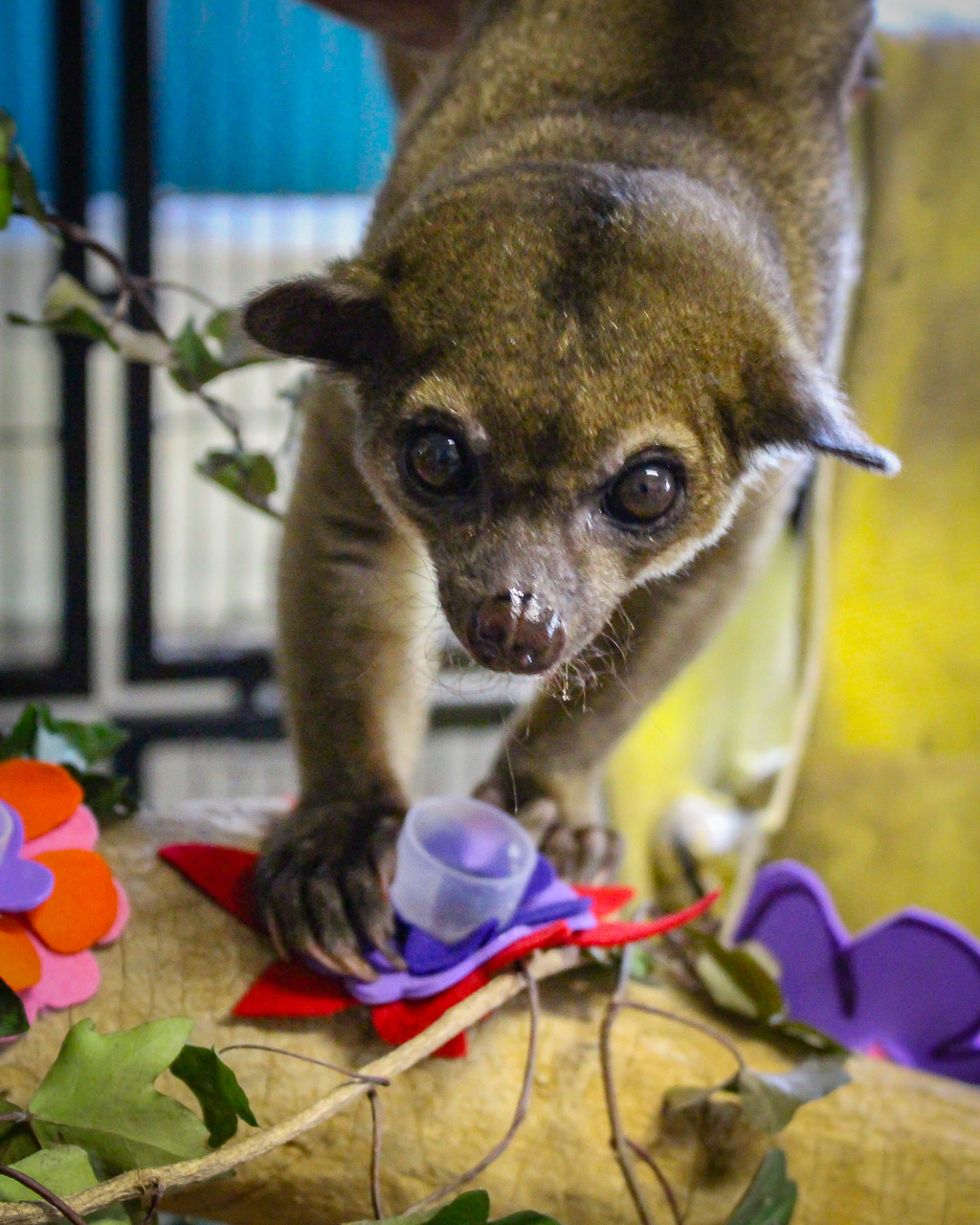
Kinkajous are nocturnal, meaning they sleep during the day. And they sleep really hard. But at night, they are very active, running around, eating, and exploring.
_______________________________________________________________________________________
Kinkajous as pets
Despite their cute looks, kinkajous do not make good pets for many reasons:
- They may be sweet when first born, but once they reach maturity at about 18 months, that can all change. At that point in their life, their adult hormones kick in and they can become aggressive.
- You must find a vet in your area that is experienced and equipped to be able to manage the health of a kinkajou with the necessary shots and vet visits.
- The size of their housing is determined by regulatory agencies, so you must be able to adhere to what they regulate. They are high- energy animals so a lot of space is needed.
- Diets need to be varied and balanced. They can be at risk for obesity and diabetes with an improper diet.
- They can live a long life. Some are documented at 40 years in human care. The average is 20-25 years. Still a lifelong commitment.