Deserts & Forests of The World
More Desert Animals
Desert Horned Lizard
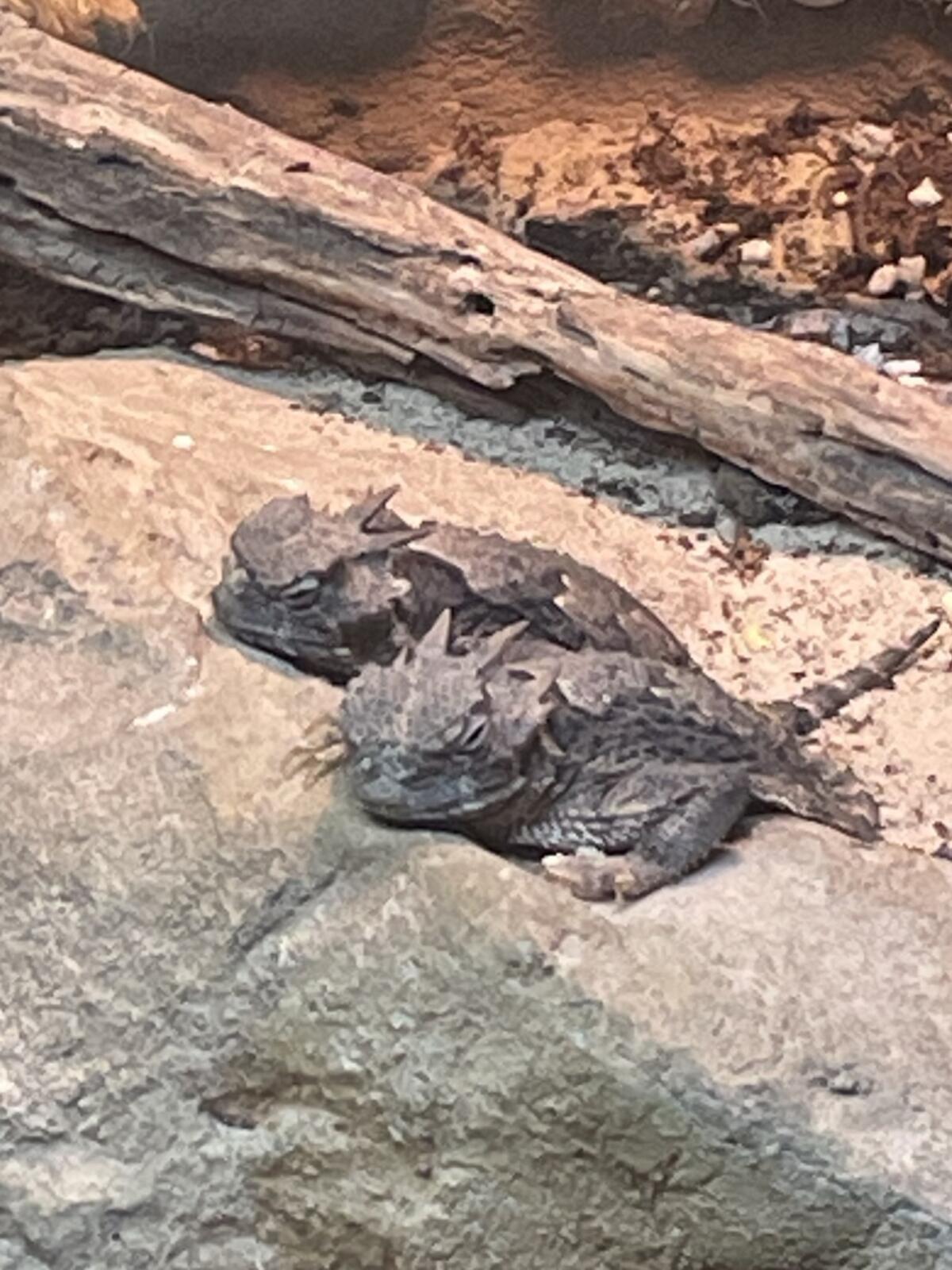
Range: Western United States
Diet: Carnivore
Conservation Status: Least Concern
Up to 10 species of horned lizards occur in the Sonoran Desert region. They have thorn-like projections at the rear of their heads that easily distinguish them from other lizards. They camouflage themselves with the dirt, rocks and sand of the desert floor. Their spiny appearance helps to protect them from predators. Their large, flat body surface works well for temperature regulation--they will orient their body to maximize the amount of exposure to the sun. When it gets too hot, they will burrow into loose soil by shaking their body into the soil until almost none of it is above the surface.
When hunting, desert horned lizards can often be found near ant hills, where they sit and wait for ants to pass by. When they find an area of soft sand, they usually shake themselves vigorously, throwing sand over their backs and leaving only their head exposed. This allows them to wait on unsuspecting prey and also to hide from predators. When threatened, they puff themselves up with air, making themselves look bigger. If spotted near a bush, they will dash into it in an attempt to find cover from any threat. But their most known threat display for some species of horned lizards, is the ability to squirt blood from their eyes at a predator in an attempt to escape the danger.
Western Diamondback Rattlesnake
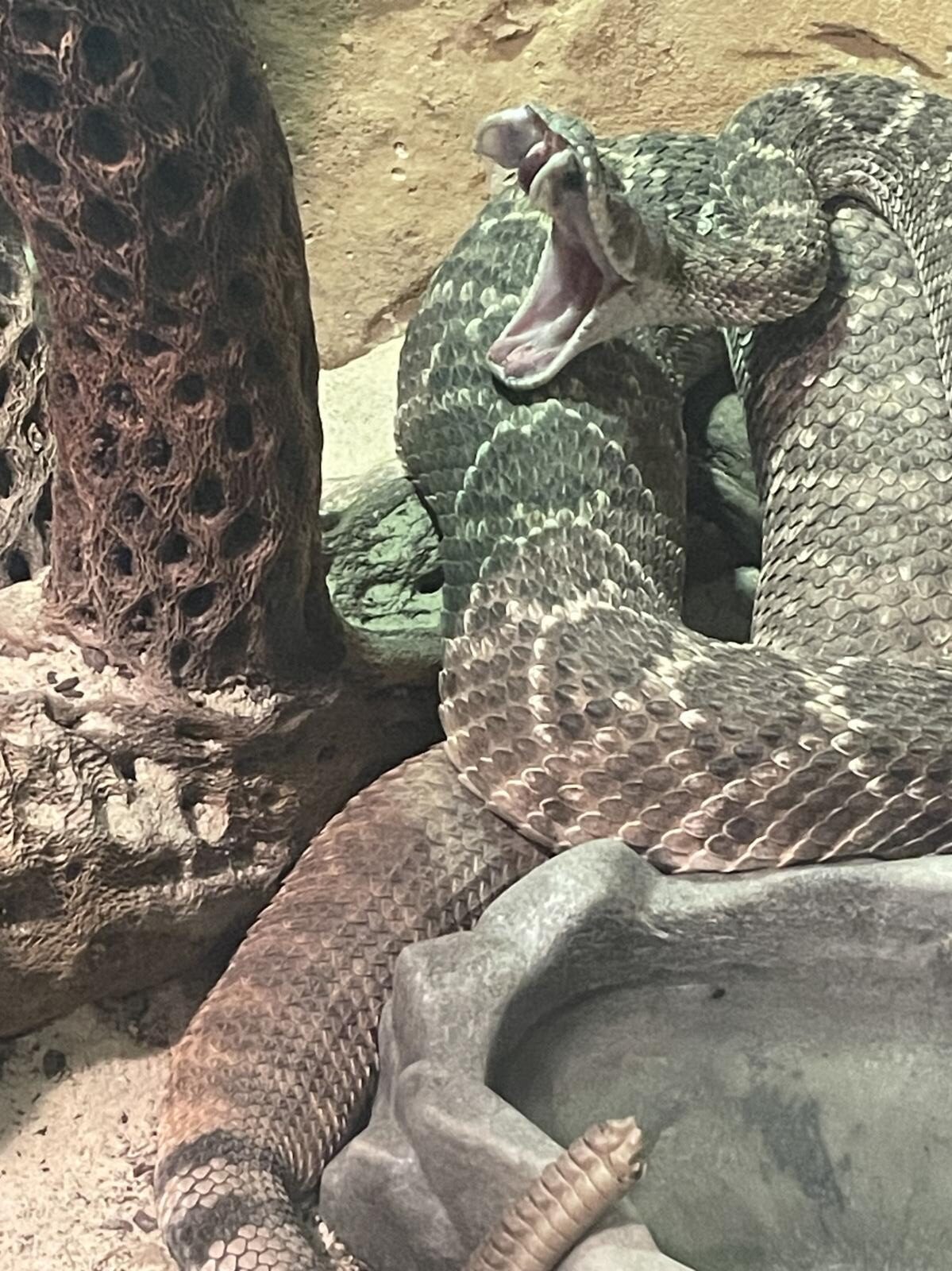
Range: Southwestern United State and Northern Mexico
Diet: Carnivore
Conservation Status: Least Concern
The Western diamondback rattlesnake is a heavy bodied snake with a triangular shaped head. There are two dark diagonal lines on each side of its face running from the eyes to its jaws. It has dark diamond-shaped patterns along its back. The tail has black and white bands just above the rattles.
It is the largest rattlesnake in North America growing to over seven feet in length. Rattlesnakes are pit vipers. This means that they have a heat sensing pit (loreal pit) located behind each nostril that can detect differences in temperature. The heat given off by an animal is detected by the snake helping it to determine predator from prey. Diamondbacks have many predators and not always because the predator wants to eat them. Animals such as deer, antelope, cows and horses regard the diamondback as a threat and they may try to trample or stomp the snake. Eagles, hawks, roadrunners, kingsnakes, coyote, bobcats or fox are predators who look at these snakes as a source of food.
The rattle of the rattlesnake is made up of a protein called keratin, the same protein as your hair and fingernails. A new segment is added each time a rattlesnake sheds, but they can shed at different rates. Because of this, and the fact that segments can break off, you really can't tell a snakes age by counting the segments. A rattlesnake can move its rattle back and forth 60 or more times per second.

Mexican Beaded Lizard
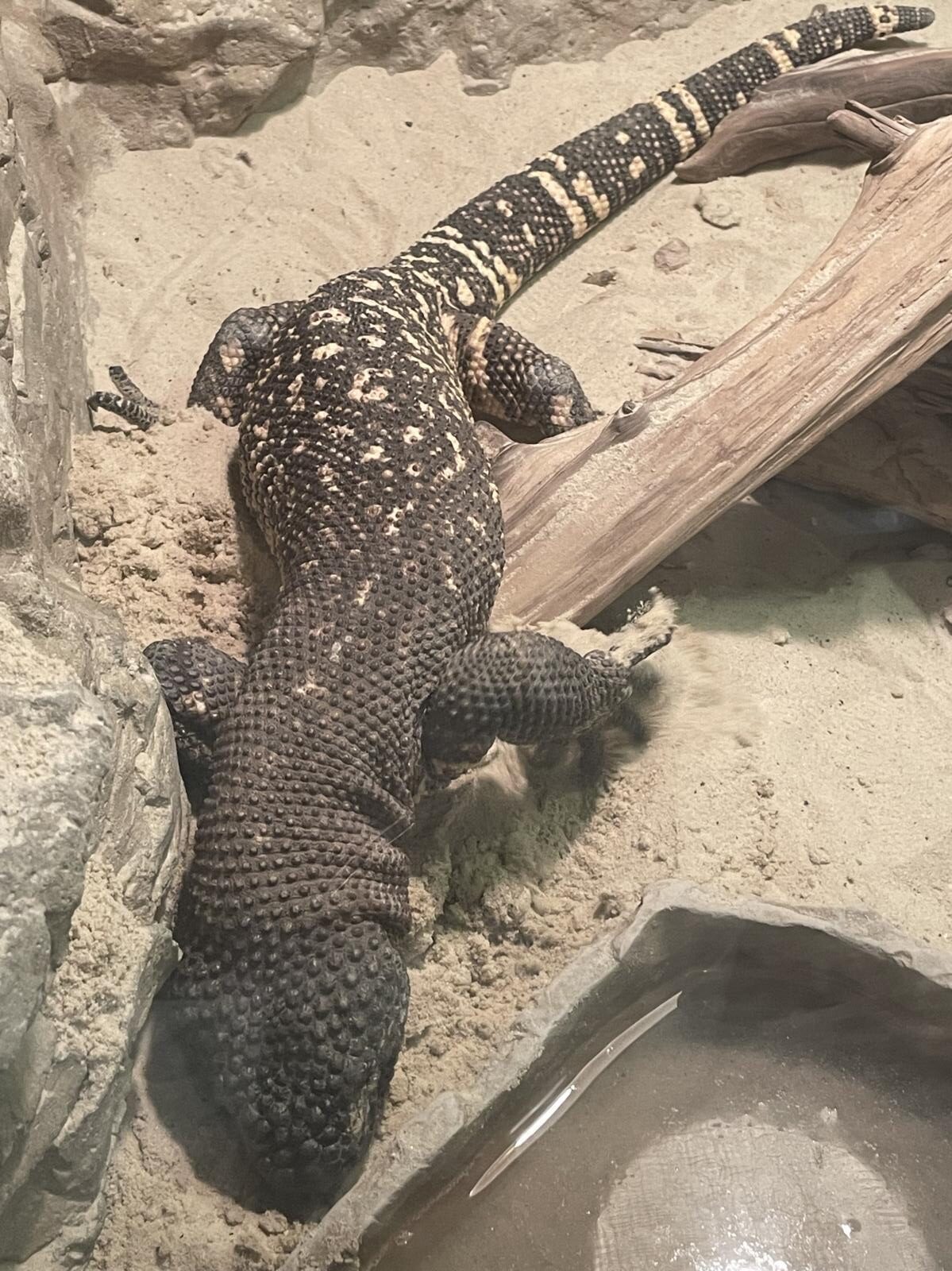
Range: Northern Mexico to Guatemala
Diet: Carnivore
Conservation Status: Least Concern
The Mexican beaded lizard is about 13 to 18 inches, with the tail making up nearly half that length. They can weigh up to 6 pounds. The beaded lizard is one of only two venomous lizards in the world, the other is the gila monster. Mexican beaded lizards have several special grooved teeth that deliver venom. The grooved teeth are on the lower jaw bones, along with the venom glands, which are arranged at the rear edge. The venom passes from these glands through a channel to the roots of the grooved teeth. The venom is drawn into the wound as the lizard chews its prey. This requires the lizard to hold onto the victim to maximize the amount of venom in the wound.
Mexican Beaded Lizards are carnivores. Their diet consists of small mammals, birds, lizards, frogs, insects, and eggs of birds and reptiles. Their prey is swallowed whole, except for eggs, which are broken first. When food is scarce, they live off fat reserves in their tail. Fat is stored in their tail making it appear swollen. After the fat reserves are used up, the tail appears thin again. They use their forked tongues and sensory cells in their noses to locate prey. They play a crucial role in ecology by helping to control the population of rodents, insects, and other desert animals.
Naked Mole Rat
Range: Eastern Africa
Diet: Carnivore
Conservation Status: Least Concern
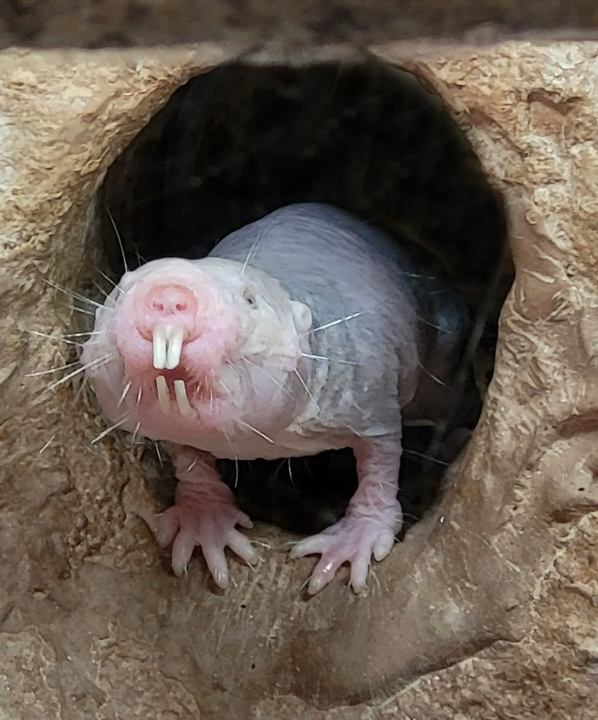
Naked mole rats are pink, nearly hairless subterranean rodents that live in burrows in eastern Africa. These surprisingly long-lived animals are one of the only true eusocial mammals; they live in large colonies in which only one female breeds and the majority of individuals spend their lives working for the colony. They have wrinkly pink or grayish-pink skin, which is somewhat translucent and short, broad heads with powerful jaw muscles and very large incisors, which they use to dig tunnels.
Naked mole rats dig underground chambers to use for different purposes. They have special areas for nesting, storing food, and going to the bathroom. They also have designated areas for different tasks, such as digging tunnels, gathering food, and taking care of their young. The chambers are also an important part of their social structure, as they live in large colonies with a queen at the head of the group. Each rat has its own job within the colony, and the chambers are designed to facilitate their daily activities and interactions.
These eusocial rodents also cooperate to thermoregulate. Unlike most other mammals, they cannot maintain a steady body temperature. Their temperatures fluctuate with the ambient temperature, making naked mole rats essentially cold blooded. By huddling together in large masses, they slow their rate of heat loss. They also behaviorally thermoregulate by basking as needed in their shallow surface tunnels, which are warmed by the sun.
_____________________________________________________________________________________________________________________________________________________
Why Deserts Matter
Despite their reputation for being dry empty wastelands, deserts are home to one-sixth of the world's population, and they cover over one-fifth of the Earth's landmass. Deserts can be found on every single continent, and even though they lack water, they play an important role in helping animals, humans and the environment.
- Many plants and animals benefit humans. Domesticated camels in the deserts of Asia and North Africa have been reliable pack animals. Desert plants such as the date are an important food source in North Africa.
- The dry condition of deserts helps promote the formation and concentration of important minerals such as potassium, gold, diamonds, and bauxite. Over 50% of the world's copper comes from deserts in Mexico, Australia and Chile. Desert regions also hold 75% of known oil reserves in the world.
- Desert plants have adapted special properties to help them survive in harsh desert climates. Scientists believe that certain chemically based adaptations can have medical applications in humans. A recent survey of plants in Israel’s Negev desert found plants that could be used to fight malaria.
- Arid conditions are ideal for preserving human artifacts and remains. Mummified human remains found in countries like Peru, China and Egypt have taught present day archaeologists about ancient civilizations. Discoveries such as these help shape modern understanding of how our societies first formed.
- Scientists discovered that bacteria living in the sands of the Kalahari desert in Africa help gather and store carbon dioxide from the air. Since carbon dioxide is one of the prime causes of global warming, these desert sands may play a critical role in preventing additional carbon dioxide from entering the atmosphere.