Corcovado Jungle
Prehensile Tailed Porcupine

Did you know...
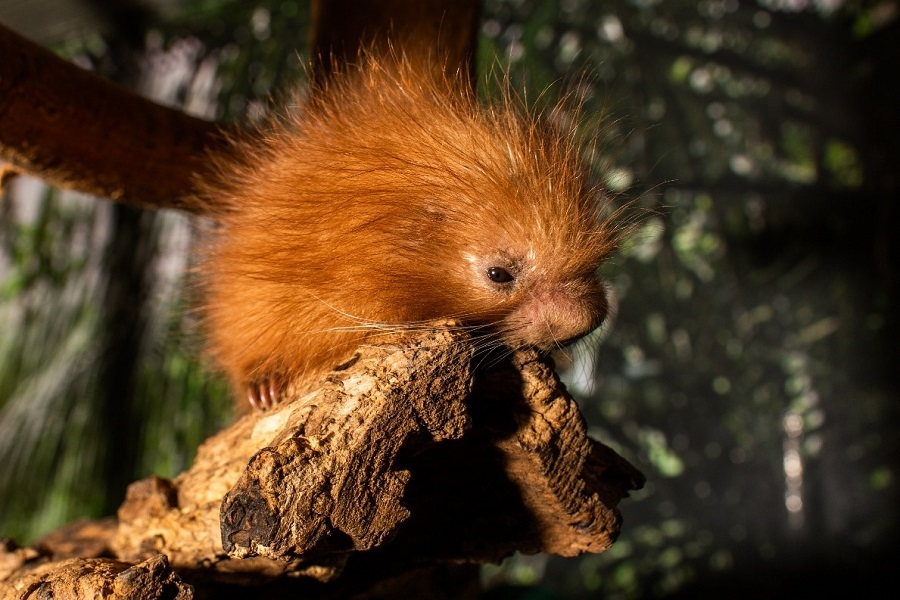
Baby prehensile tailed porcupines, called porcupettes, are born with soft quills that are covered by reddish-orange fur. As the baby grows, they gradually lose the reddish fur, revealing their quills.

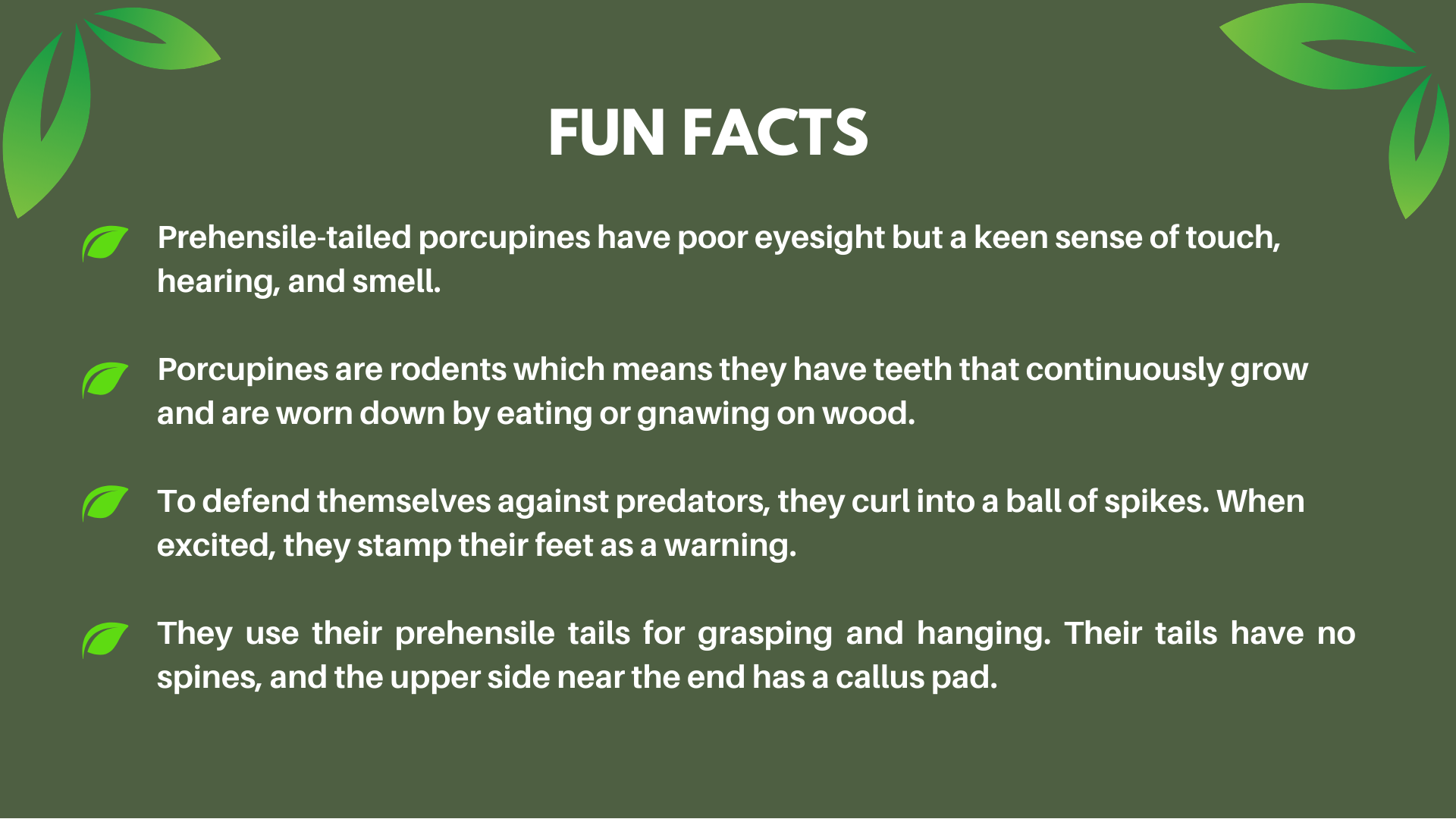
These porcupines get their name from their prehensile tail, which they use to grasp when climbing and perching in trees. Over half of the weight of their tail is made of muscle, also allowing them to use it to hang upside down. They spend the majority of their time in trees.
- Their quills are short and barbed. They cannot throw their quills (no porcupine can) but the quills detach easily when touched and embed themselves in the skin of an enemy.
This species does not hesitate to attack an adversary, which it does by biting and/or sitting on its haunches to shake its quills. They will stamp their hind feet when excited and curl up to protect their soft underbelly. They can produce a variety of sounds, from moans and whines to grunts, coughs, shrieks, barks and wails.
______________________________________________________________________________________________________________________
Can I feed a prehensile tailed porcupine?
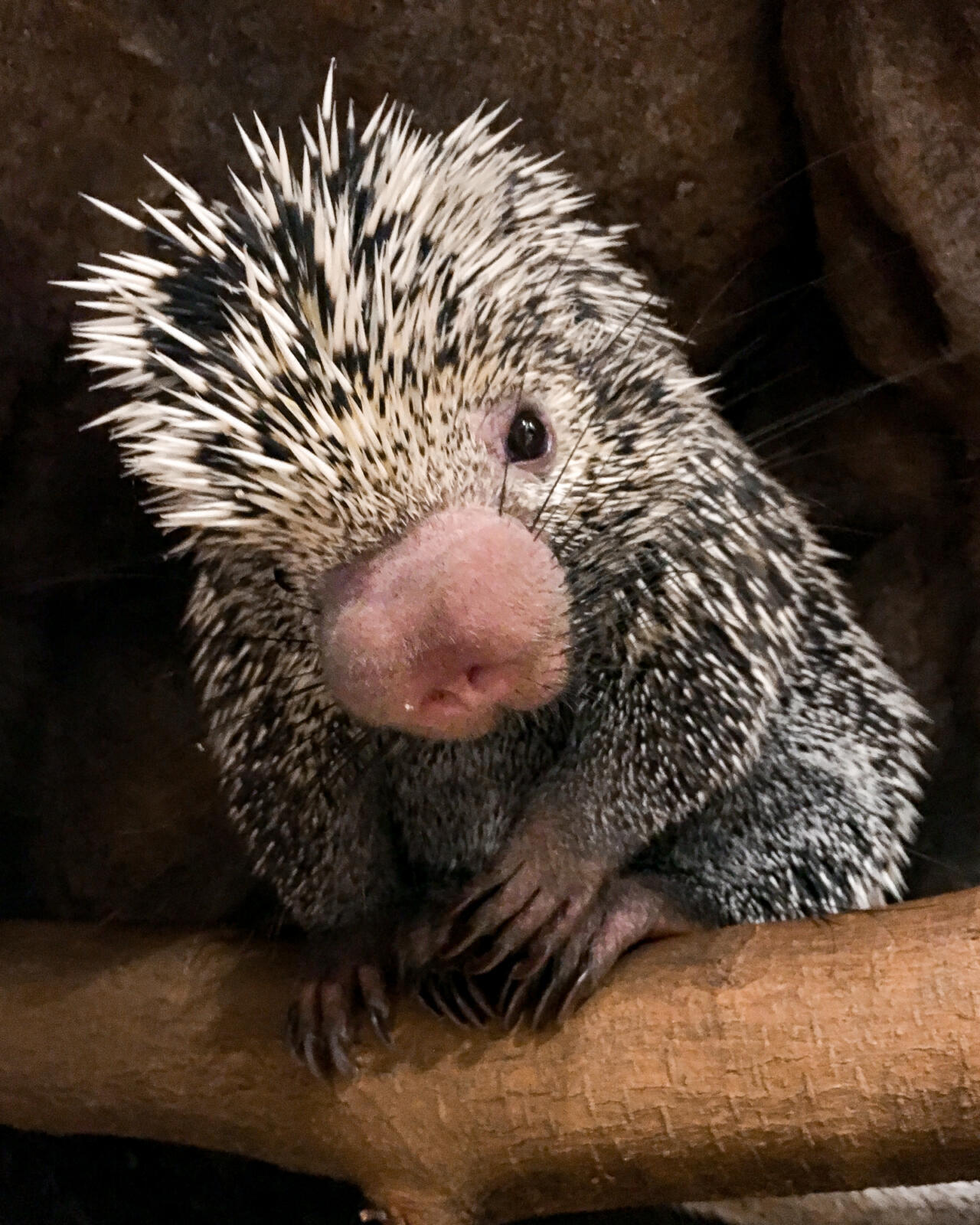
Yes, you can! Join us for a prehensile tailed porcupine Wild Encounter and get a behind the scenes up-close visit. Click here to learn more.
_______________________________________________________________________________________
How prehensile tailed porcupines are being helped in the wild
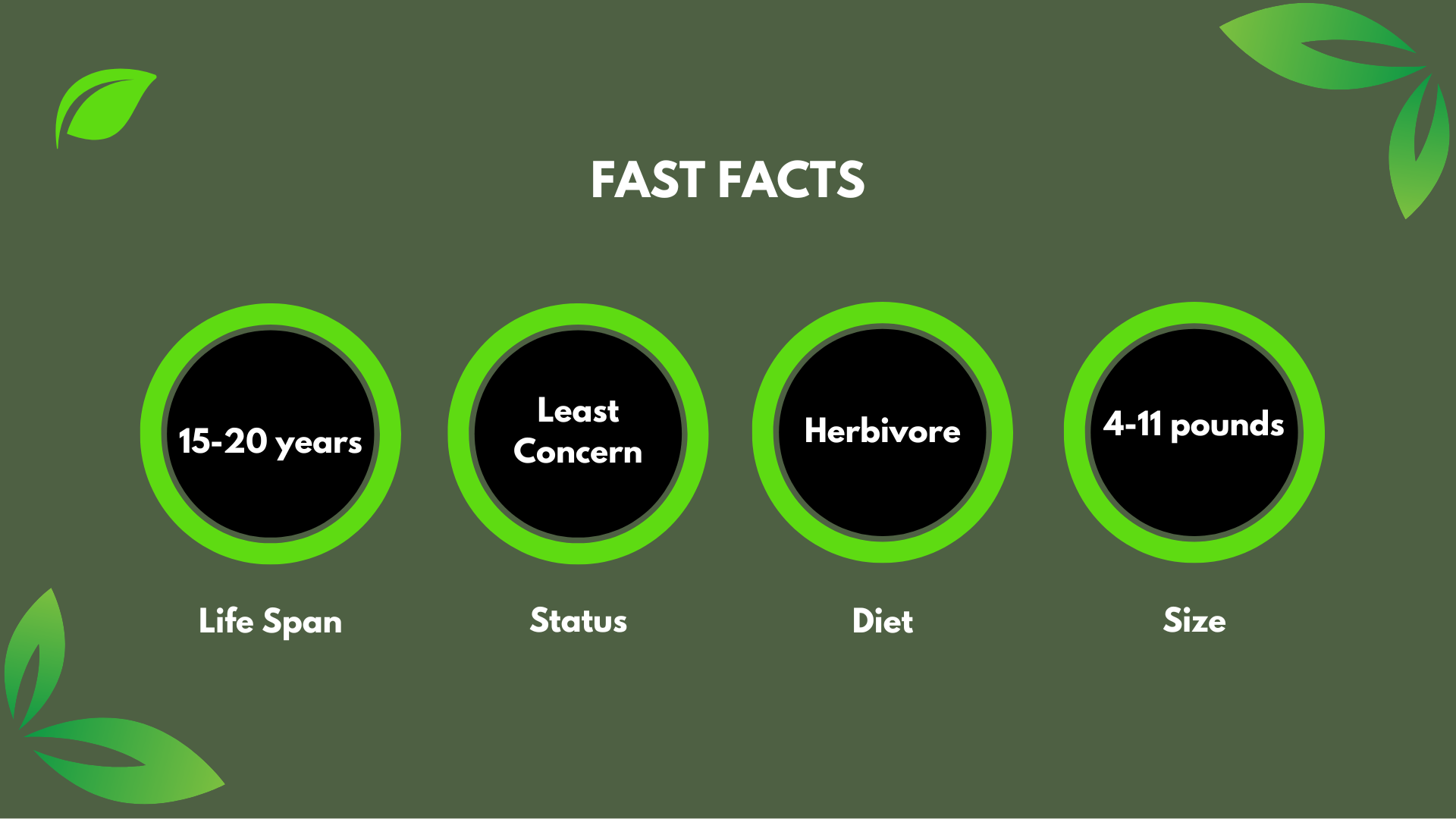
These animals are not listed as threatened or endangered, but are pressured by habitat loss and are killed in parts of their range by hunters for food.
One of the key areas for Coendou porcupines, in which the prehensile tail porcupine belongs, is the Brazilian Atlantic Rainforest; an area that is considered a world priority for biodiversity conservation, as the fourth most important biological hotspot on earth.
- Shade-grown coffee: Most strains of coffee plants have been cultivated over time to withstand full sunlight. This has created large-scale deforestation for coffee plantations. You can help by choosing organic shade-grown coffee in which the plants are grown beneath the forest canopy, preserving arboreal habitat for tamarins, marmosets, binturongs, and birds while the forest floor is being used for human purposes. Look for coffee that is Rainforest Alliance Certified or marked "Organic Shade-Grown".
- Paper – Reduce, Reuse, Recycle: One of the best ways you can help the rainforest is to reduce your use of paper. Many rainforest trees are cut down each year for paper that ends up in countries all over the world. Much of the tropical paper pulp products that end up in the United States come from South America, particularly the Amazon Rainforest. Go paperless in the office whenever possible, print on both sides, recycle any paper or cardboard you do use, and purchase products made from recycled paper. At home, substitute re-usable cloth towels for disposable paper towels and cleaning wipes and purchase toilet paper made from recycled material rather than super-plush toilet paper which is made from old-growth forests.
How you can help prehensile tailed porcupines
- Enjoy a Prehensile Tail Porcupine Wild Encounter at Chattanooga Zoo. A portion of the proceeds supports organizations that conduct awareness at local villages and establish new protected areas.
- Chattanooga Zoo participates in the Association of Zoos and Aquariums' Species Survival Plan (SSP) for prehensile tailed porcupines. The mission of an SSP program is to cooperatively manage threatened or endangered species populations within managed-care facilities. By supporting Chattanooga Zoo, you are our partner in saving and protecting wildlife worldwide.