Corcovado Jungle
Southern Pudu
Coming Soon To The Zoo
Did you know?
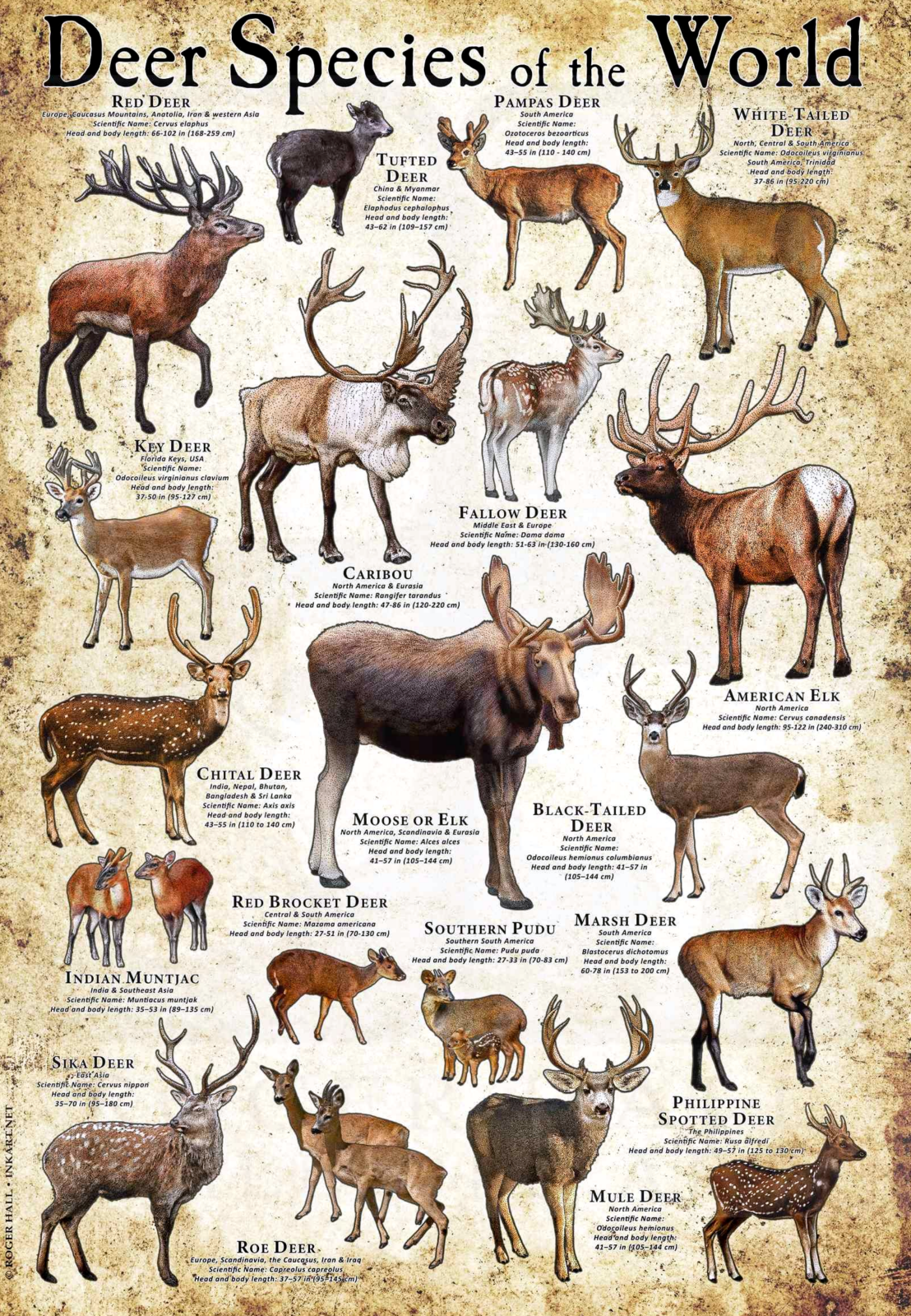
There are 43 species of deer in the world? Pudu's are the smallest of all the deer species.
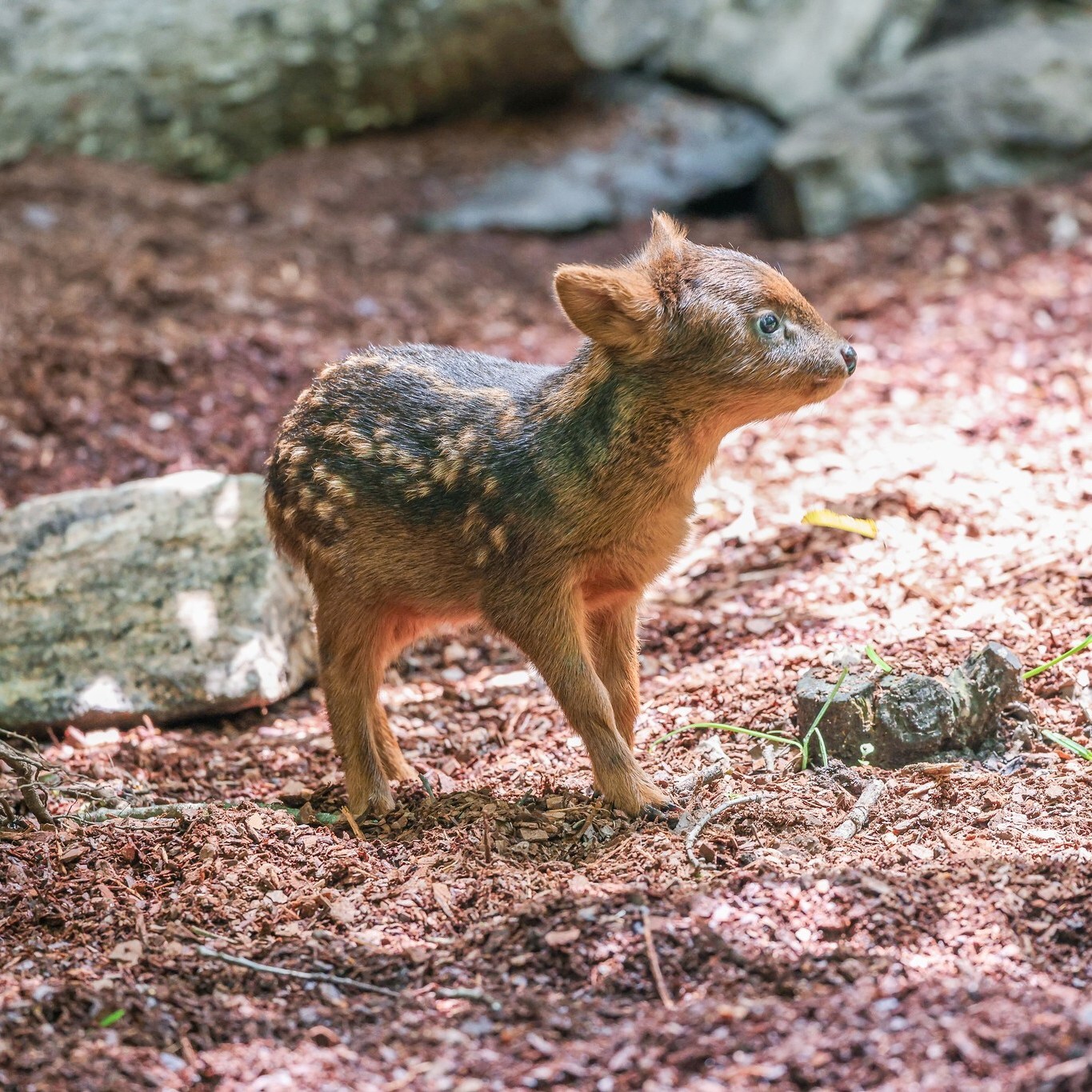
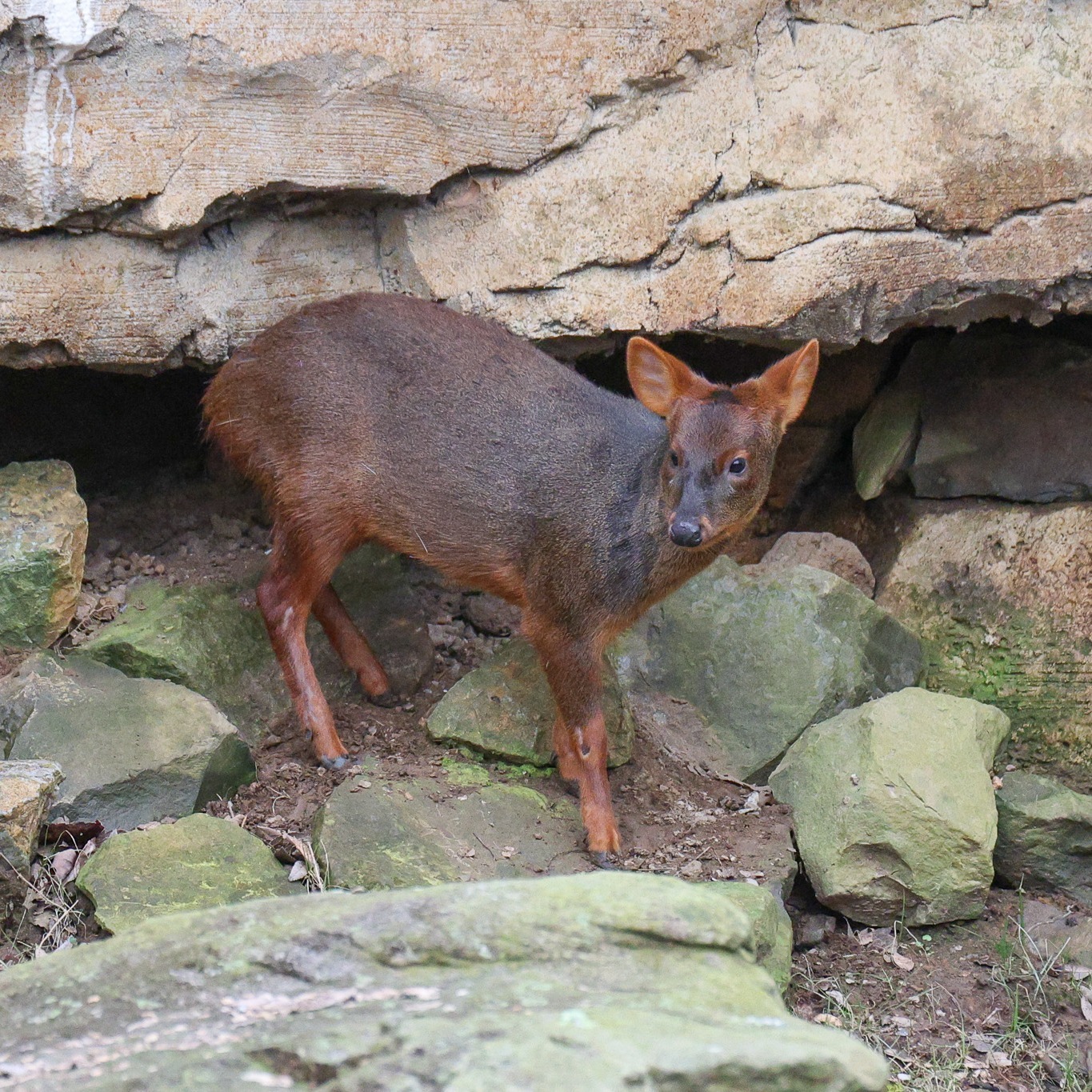
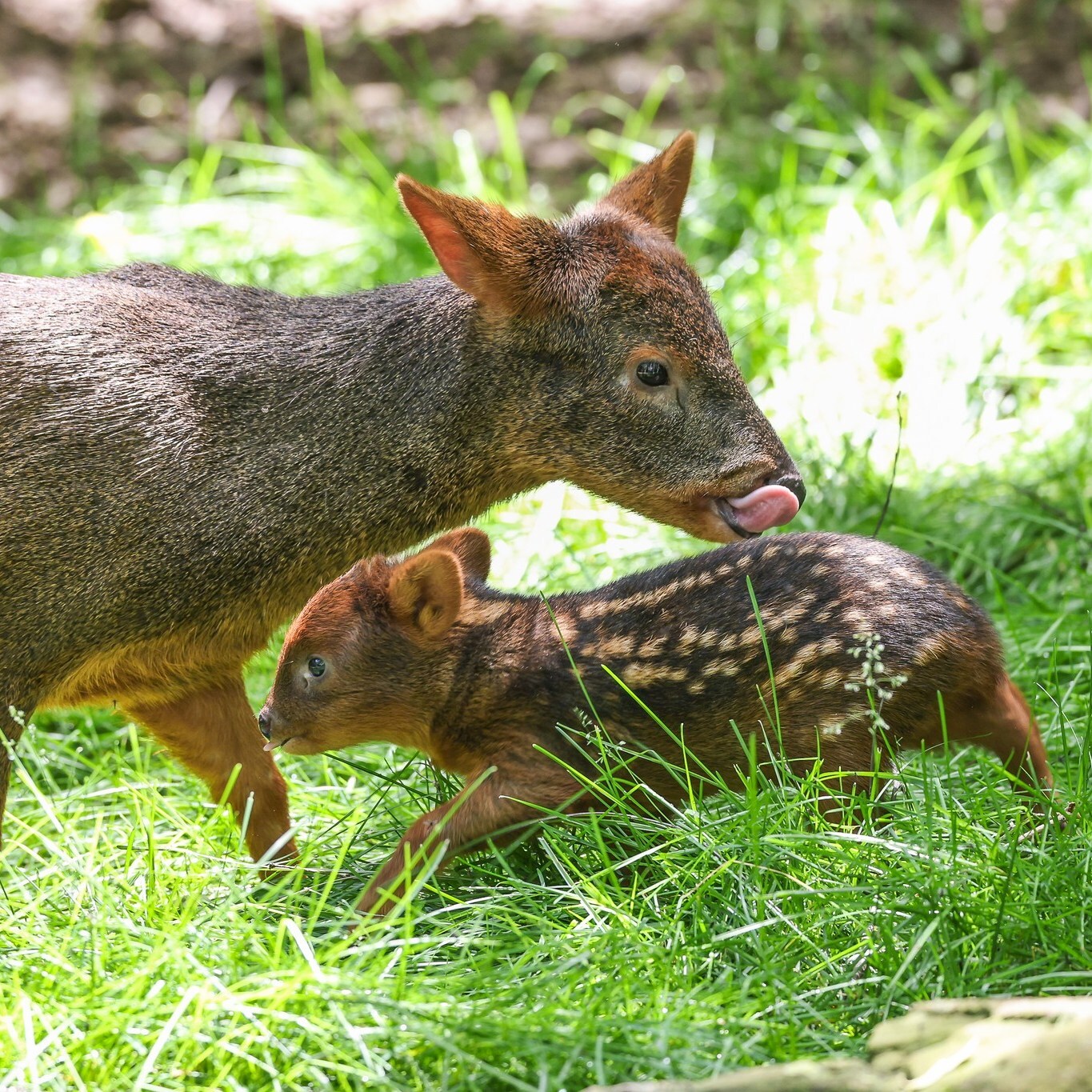
Pudus are the world's smallest deer, with the southern pudu being slightly larger than the northern pudu. The pudu housed at Chattanooga Zoo are Southern pudu. Their coat is short, glossy, and dark brown to reddish-brown in color, with slightly lighter legs and underparts. The insides of their ears and lips are orangish. Fawns have white spots, for camouflage. Males have small, simple spiked antlers which are shed each year in July.
Southern pudus are active in the morning, late afternoon, and evening. They tend to rest and groom in the middle of the day. They move together when feeding, and do not form groups of more than 2 or 3. Most of the time they are sedentary and solitary. They navigate through the thick jungle along a network of well-used trails, which lead to places for feeding and resting. They are territorial animals with a home range of about 40-60 acres. They are wary animals and move slowly, stopping often, testing the air for a predators' scent. They are proficient jumpers, climbers and sprinters, and will flee in a zigzag path when being pursued by a predator.
Southern pudus use a network of trails to move to feeding areas throughout the day. They prefer to eat at the edges of forests or clearings where there are abundant small, growing plants, rather than deep within the forest. They are browser feeders and feed on leaves of ferns, trees, vines, herbs and shrubs. They can stand on the hind legs or fallen logs to reach food. They are ruminants, with four-chambered stomachs.
______________________________________________________________________________________________________________________________________________
Run-Hide
The main natural predators of southern pudus are pumas (Felis concolor). Southern pudus are one of the most important prey for Chilean pumas. Other predators include foxes, spotted cats and, kod-kods, (a small wild cat), domestic dogs, and owls. There has been an increase in the number of domestic dogs in the range of southern pudus, increasing the instances of attack and death of pudus. Domestic dogs also interfere in the success of southern pudus through introducing disease and resource competition. To flee from predators, southern pudus hide in small tunnels or burrows. Because pudus tire quickly, there is little likelihood of them evading a chasing domestic dog.
__________________________________________________________________________________
Why pudus are an important species
Southern pudus are browsers and herbivores, and impact vegetation abundance, consumption and growth in their habitat. They have an affect on the abundance of trees that grow, and help to spread plant seedlings through their droppings to grow new vegetation. This could be harmful if the seedlings being distributed were from an introduced plant or tree species. But Southern pudus prefer eating native species of plants and trees which helps to lessen the opportunity for invasive species to infiltrate further. Southern pudus also serve an important role in regards to other small animals that live in the same forests, by building and maintaining tunnels in the undergrowth which enables small animals to move through and remain hidden from predators.
How you can help pudus
- Donate or volunteer at organizations that work with local communities to protect pudu habitat and ban the hunting and poaching of them. Don't participate in the pudu pet trade.
- Volunteer at Chattanooga Zoo. As a volunteer you can talk with our Zoo guests about the Zoo's pudus and share their information in hopes to foster an awareness and appreciation to help conserve pudus in the wild.
- Chattanooga Zoo participates in the Association of Zoos and Aquariums' Species Survival Plan (SSP) for pudus. The mission of an SSP program is to cooperatively manage threatened or endangered species populations within managed-care facilities. By supporting Chattanooga Zoo, you are our partner in saving and protecting pudus in the wild.