Corcovado Jungle
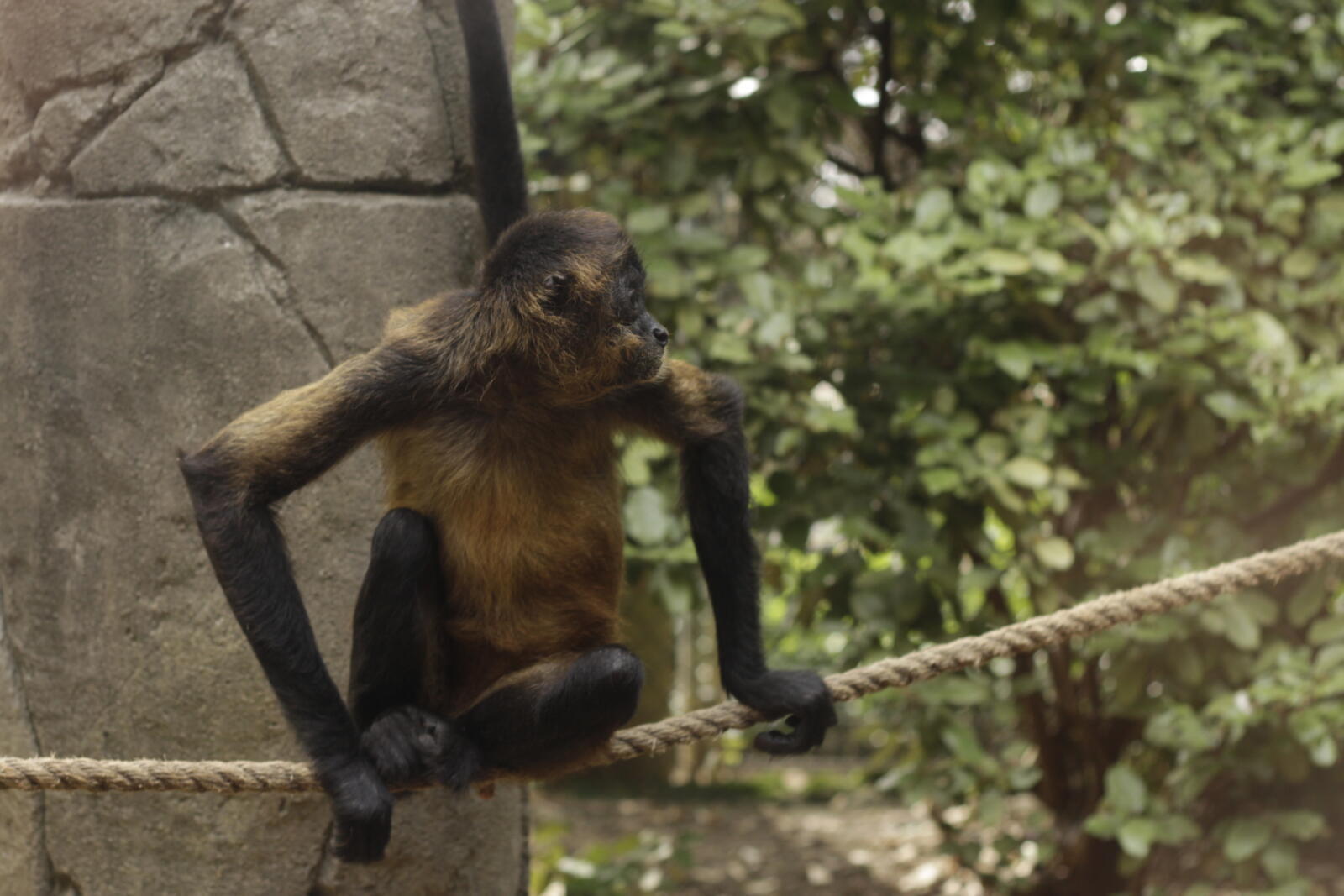
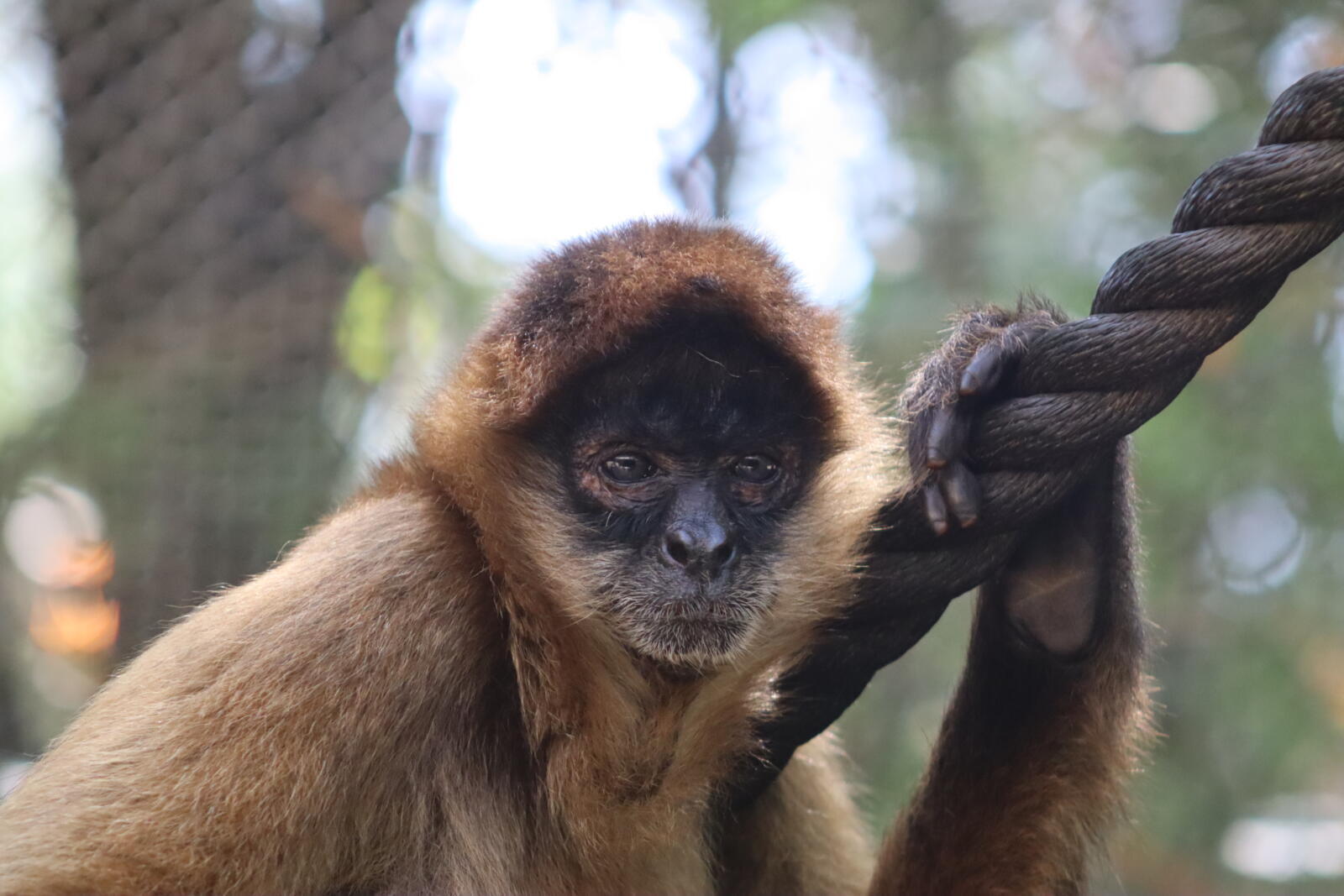
Black Handed Spider Monkey
Did you know...
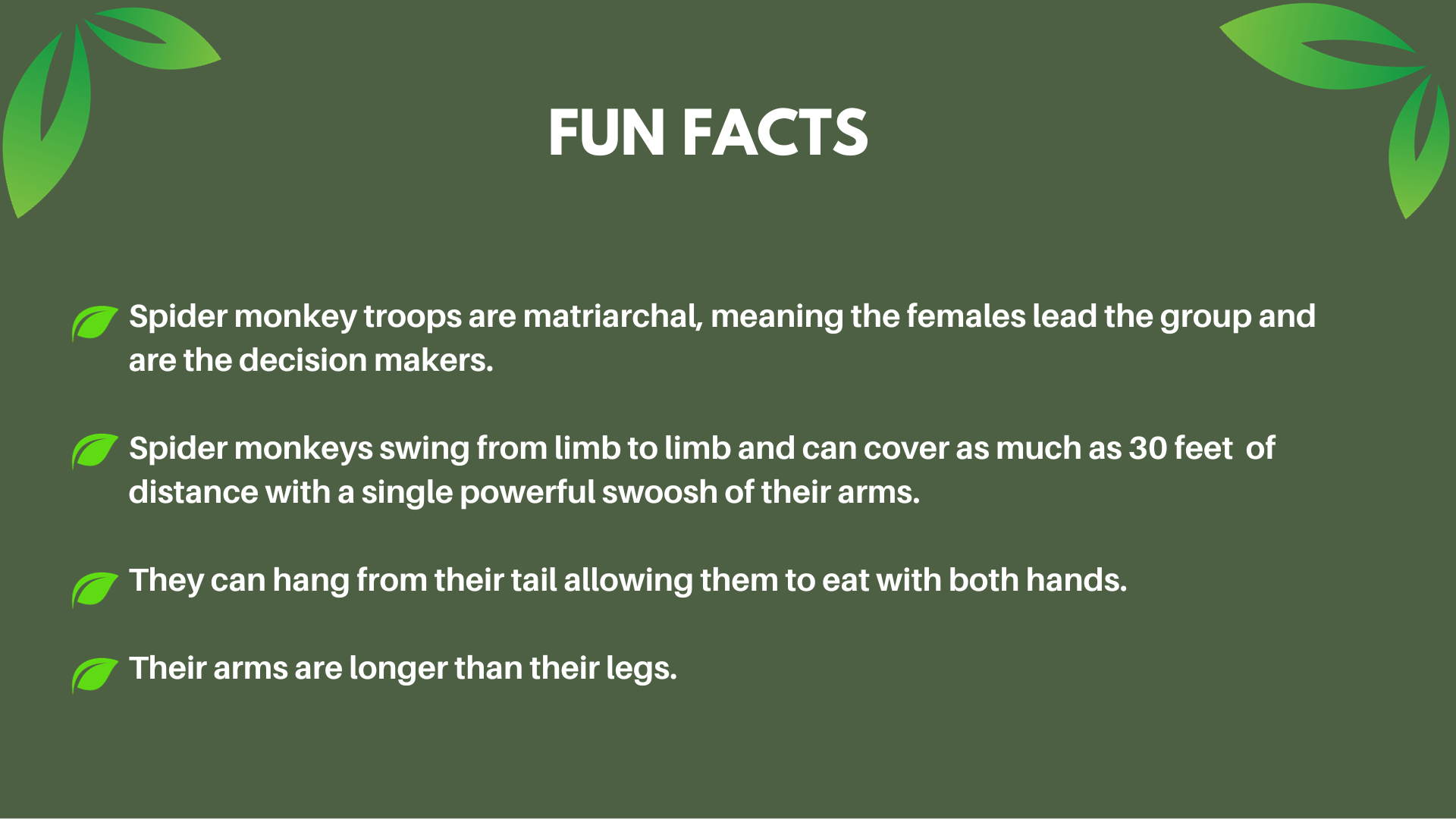
Spider monkeys help grow forests? When large groups of spider monkeys converge in a region, the feces they leave behind is rich in seeds and nutrients to help grow more trees. This pattern not only creates more food for the spider monkeys, it improves the tropical ecosystem for all creatures in the area.

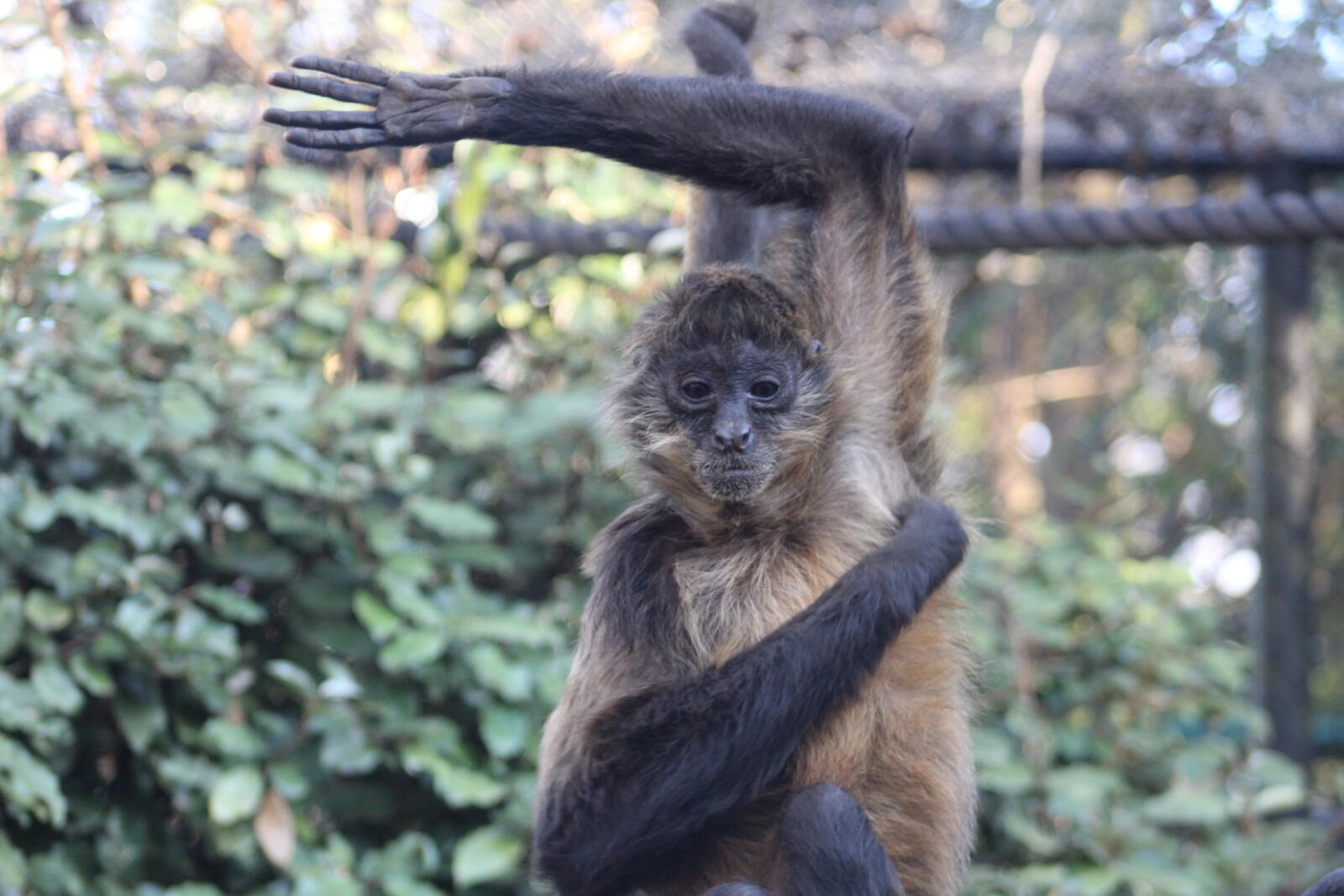
Two of the most distinct characteristics of the spider monkey is its long prehensile tail and its four fingered hands.
The spider monkey’s tail is strong and well developed for arboreal life and is described as an extra limb. It lacks hair on the underside so they can easily grasp branches with it while gathering fruit with their hands. The tails are longer than their bodies with some as long as 35 inches.
Spider monkeys don't have a thumb. A unique adaptation when compared to other primates is their lack of an opposable thumb on their hands. Their hands have a vestigial thumb -- a tiny nub left over from their ancestors who did have thumbs. The absence of this extra digit gives the spider monkey a more hooklike hand with long, slender fingers, providing a better grip to swing from branch to branch.
___________________________________________________________________________________________________________________________________________________
How spider monkeys are being helped in the wild
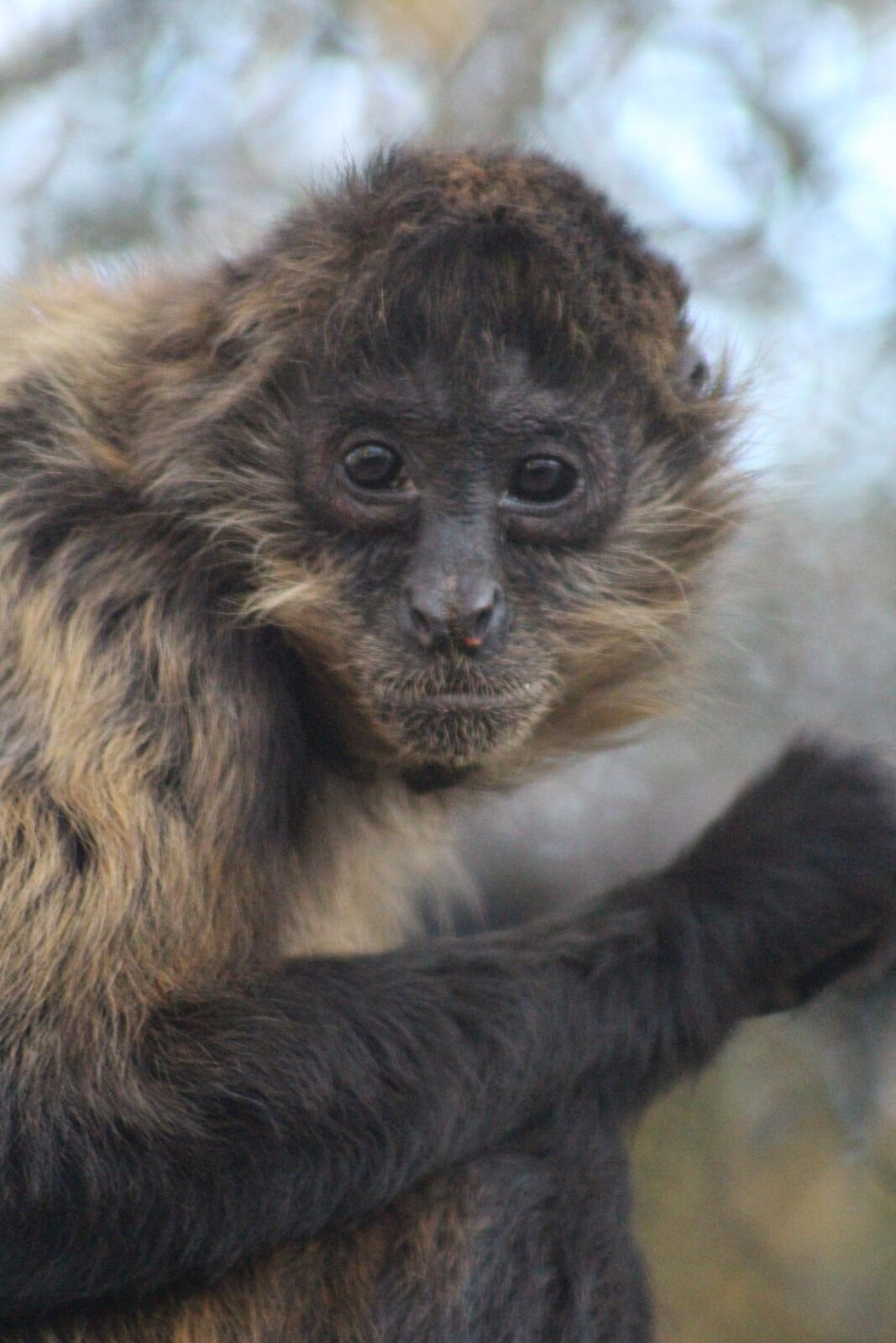
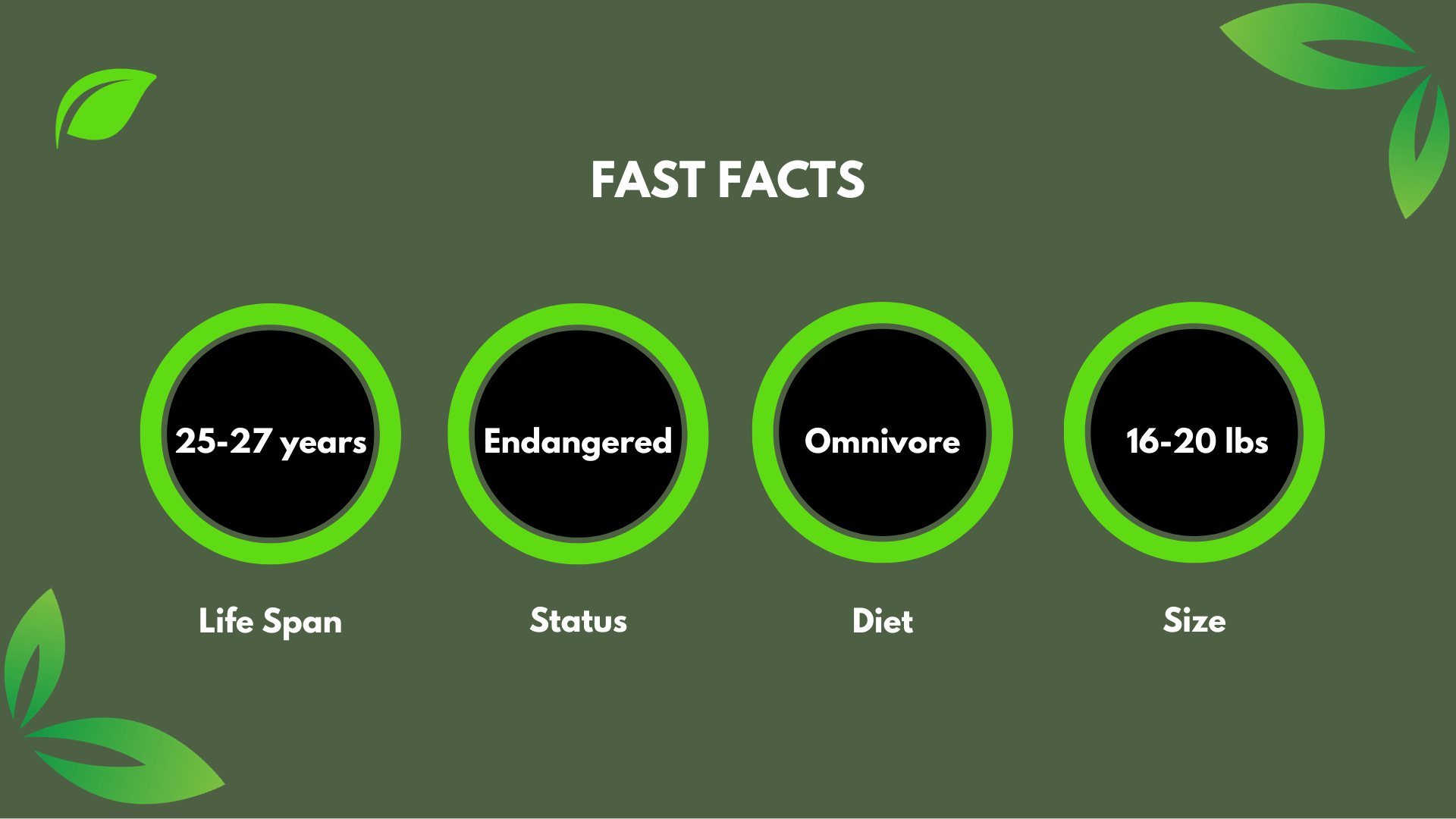
Habitat loss through deforestation (clear-cutting and transforming forests into agricultural fields) is the biggest threat to the survival of spider monkeys. These monkeys require large tracts of land to survive. Over the past 45 years (three generations), their population has suffered a 50% decline. They are also hunted for food and captured for the pet trade throughout Central America. As a result of both these issues, the species has become locally extinct in most areas that are accessible to humans.
Pasco Pacifico is an organization whose mission is to help protect and bring back spider monkey species in their native ranges. They have formed teams of community forest rangers who patrol the forest, protecting wildlife and collecting valuable data about the monkeys. Some of them also help educate community members and care for rescued monkeys housed in the Karen Warren & Susan White Spider Monkey Sanctuary. In late 2016, they were able to purchase a 120-acre-property with mature dry forest in the heart of the Paso del Istmo wildlife corridor. They named it the Mono Bayo Reserve, after mono bayo, the local name for the black handed spider monkey. In 2019, they started a second ranger team to safeguard monkeys in the Paso del Golfo wildlife corridor in eastern El Salvador.
Since Pasco Pacifico began this project, the population of black handed spider monkeys in area of the Mono Bayo Reserve has increased by 60%. This decades long work has been possible through a range of supporters, including Zoo Boise, the Disney Conservation Fund, Prince Bernhard Nature Fund, Primate Conservation International, and Margot Marsh Biodiversity Foundation.
How you can help spider monkeys
- Donate to organizations like the Paso Pacifico, that work with local communities to protect spider monkey habitat and ban the hunting, poaching and collection of spider monkeys.
- The pet trade is a large factor in many primate species becoming endangered. However, primates do not make good pets for multiple reasons. They pose a risk to health and safety through disease transfer to humans and can cause serious injury by aggressive behavior or strength. Primates are very social animals and need to live with other members of the same species to be emotionally and psychologically healthy. Not supporting primates as pets or primates in entertainment, you can help primates thrive.
- Chattanooga Zoo participates in the Association of Zoos and Aquariums' Species Survival Plan (SSP) for black handed spider monkeys. The mission of an SSP program is to cooperatively manage threatened or endangered species populations within managed-care facilities. By supporting Chattanooga Zoo, you are our partner in saving and protecting wildlife worldwide.