Walkin' The Tracks
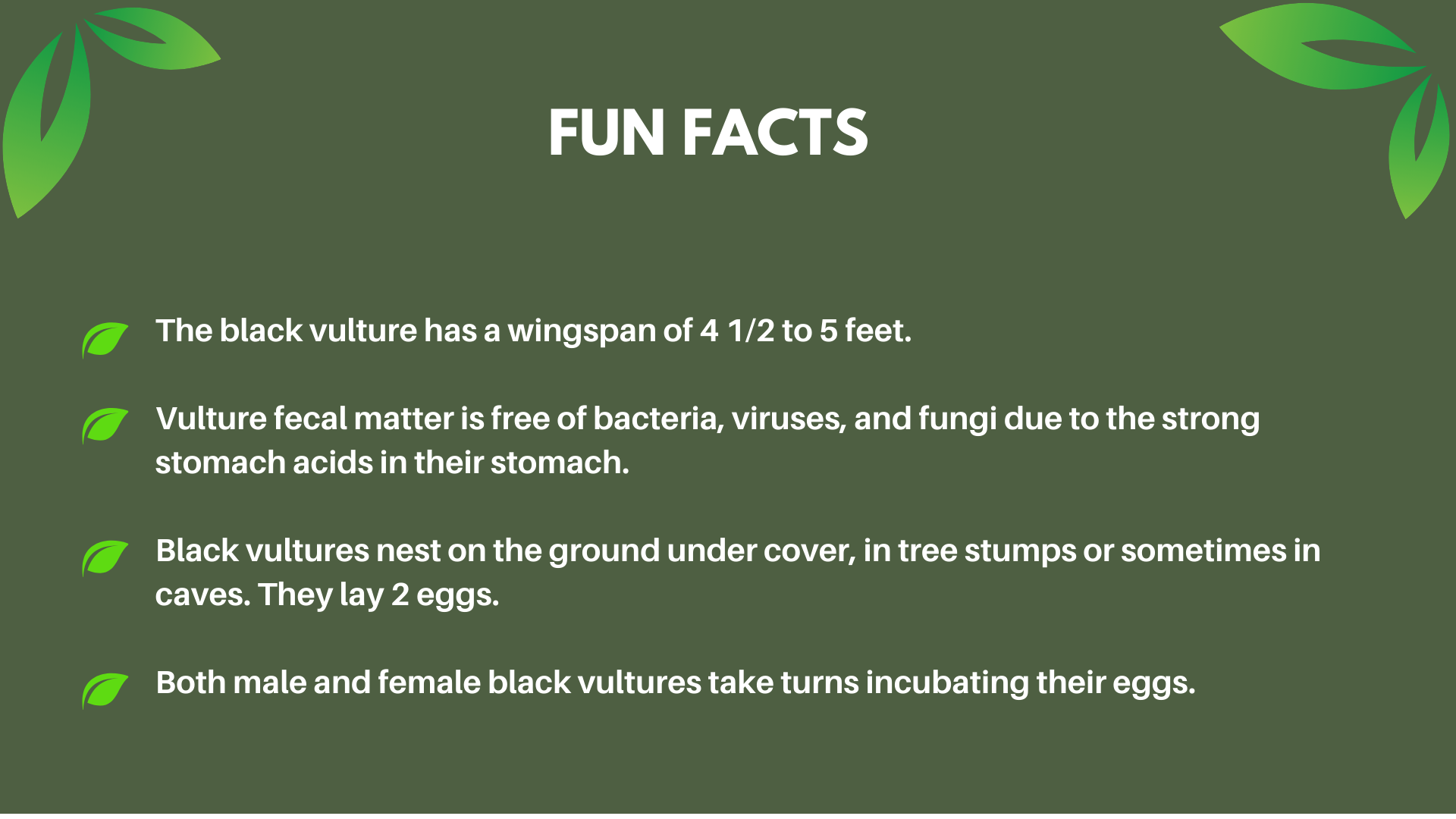
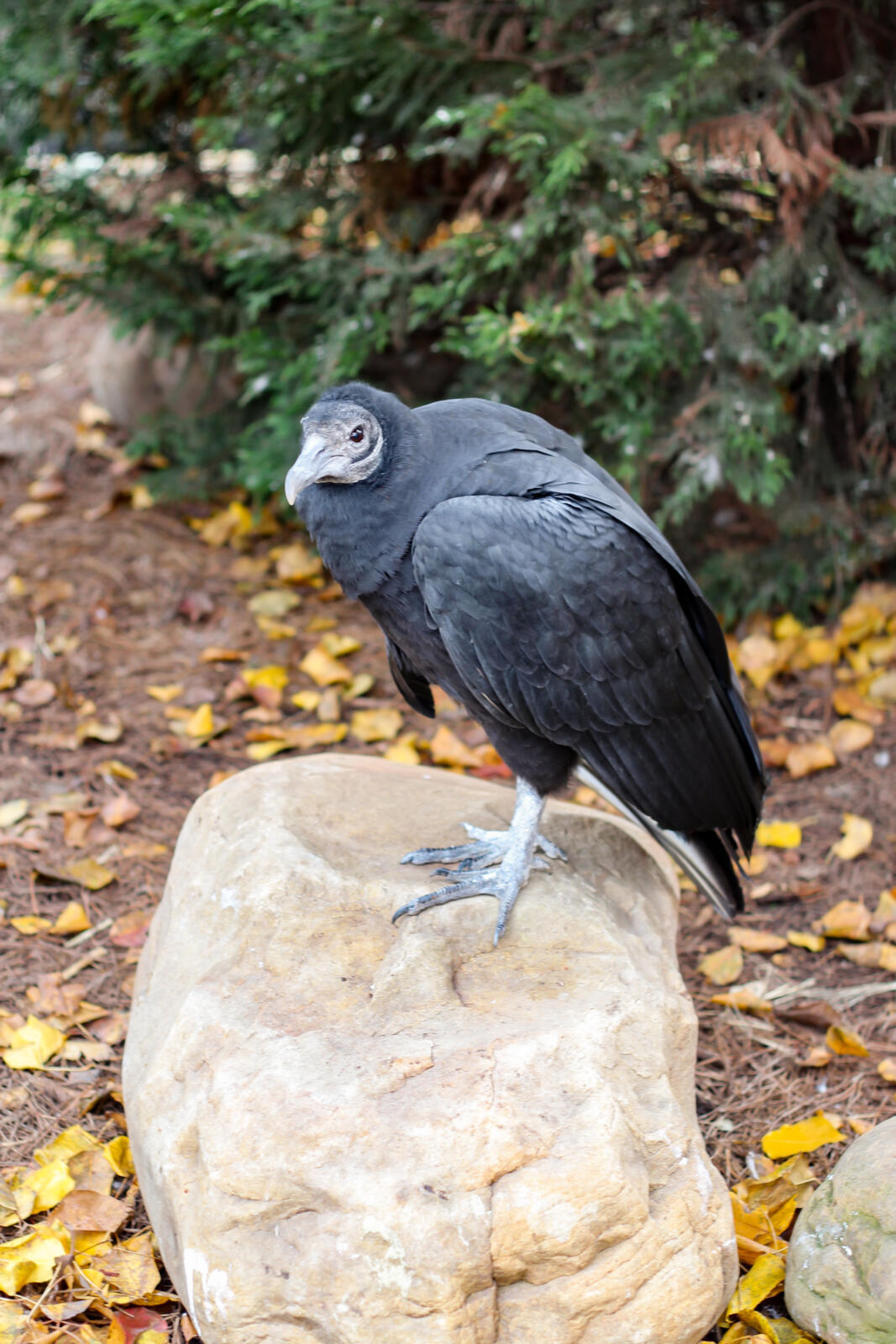
Black Vulture
Temporarily off exhibit while we build him a new home
Did you know...
there are three species of vultures in the United States? Two are found in Tennessee--the turkey vulture (red head) and the black vulture (black head). The third is the California condor.

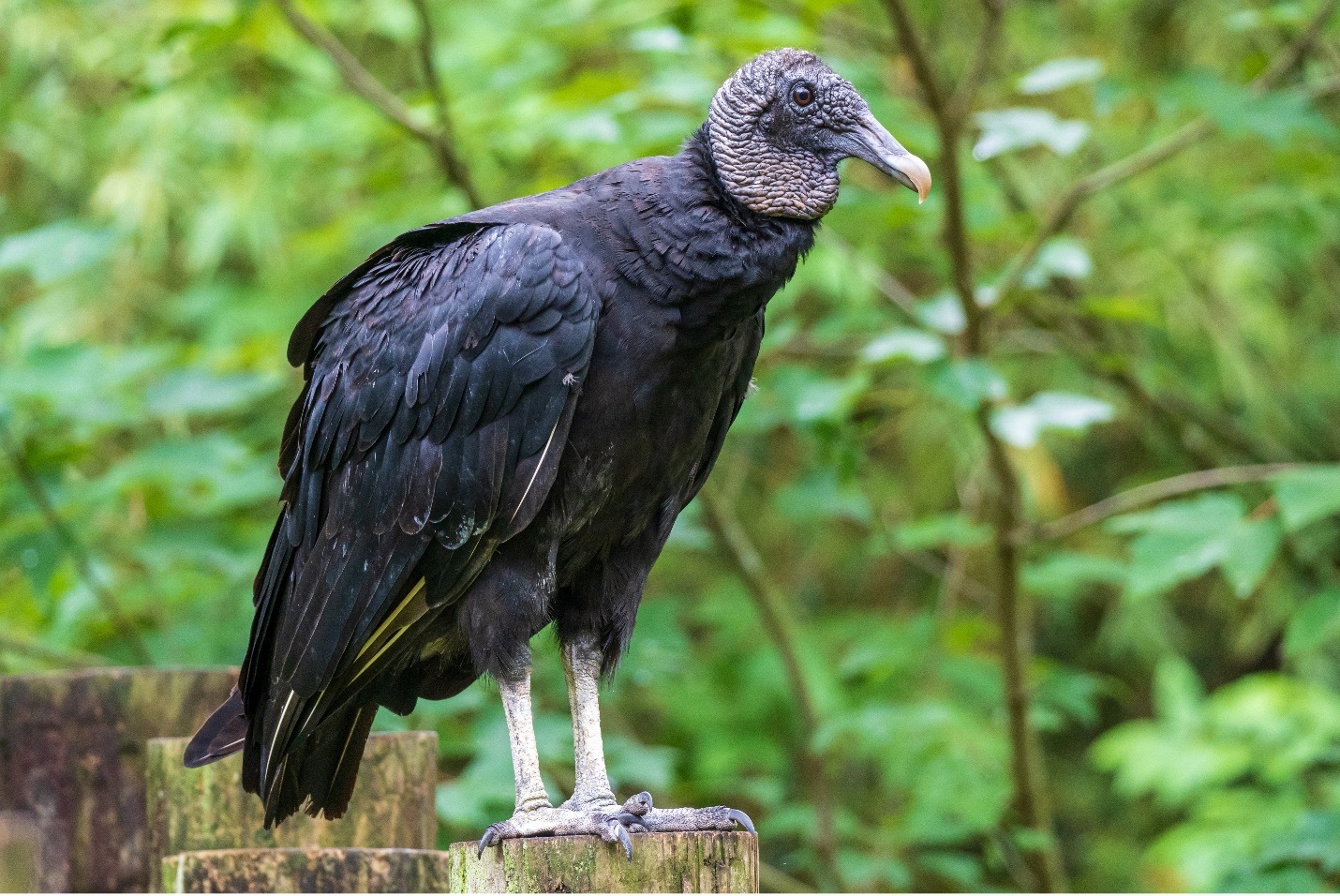
The black vulture differs in appearance from the turkey vulture primarily by it slightly smaller size, its white wing patches, and the very noticeable bare head which is black in coloration, in stark contrast to the red head of the turkey vulture. They can be easily identified in flight by the presence of a white patch underneath each wing tip.
It soars high while searching for food, holding its wings horizontally when gliding. It flaps in short bursts which are followed by short periods of gliding.
Black vultures are good at finding “thermals” which they use in soaring to high elevations. They are more visual hunters than the turkey vulture and often watch turkey vultures from above. Once food (carrion) is located, the black vulture, being more aggressive, often drives away the turkey vulture from its newly found meal. Vultures prefer meat as fresh as possible and won’t eat extremely rotted carcasses. They can smell carrion only 12-24 hours old.

_____________________________________________________________________________________________________________________________________________
Defensive Moves
- When startled, a black vulture may regurgitate partially digested food to discourage predators and lessen its weight for flight.
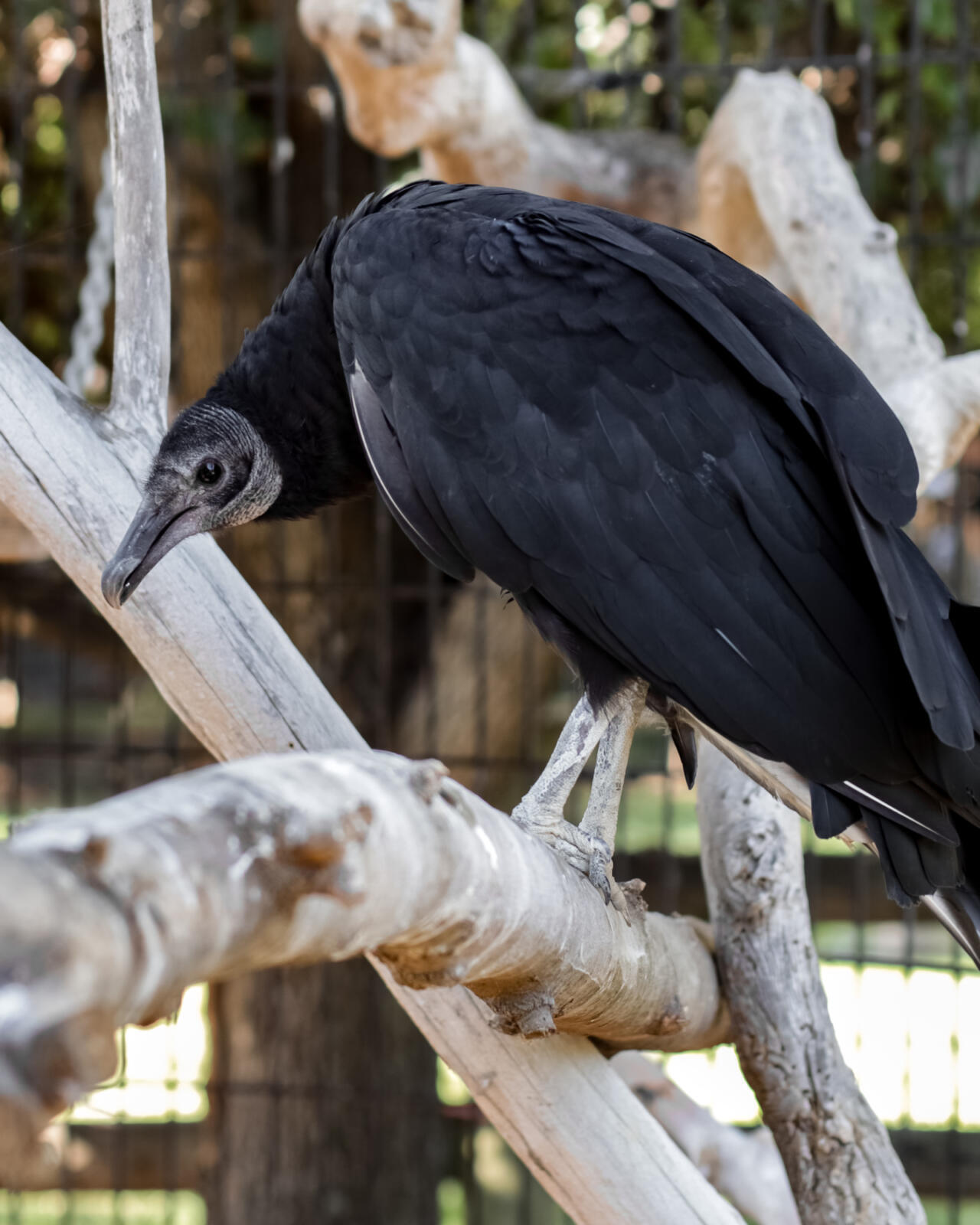
- Like all other vultures, the black vulture has a bald head. This is so that bits of carrion (dead meat) do not adhere to the skin as they would to feathers.
- They often defecate on their own legs, using the evaporation of the water in the feces and/or urine to cool itself. It cools the blood vessels in the un-feathered tarsi and feet, and causes white uric acid to streak the legs.
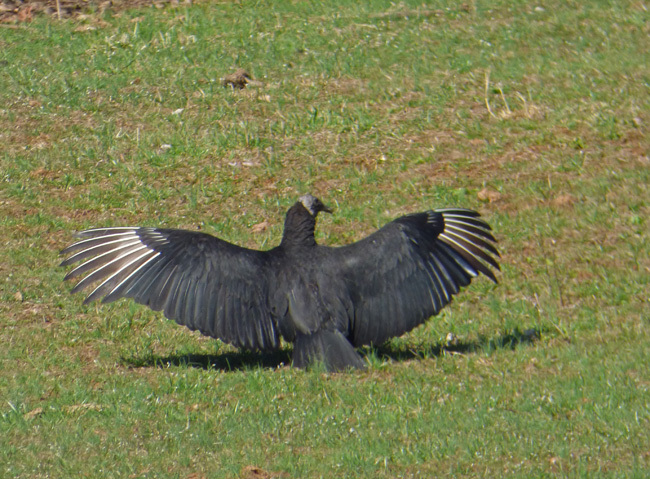
- They are often seen standing in a spread-winged stance. The stance is believed to serve multiple functions: drying the wings, warming the body, and baking off bacteria.
- These awesome birds are able to eat diseased meat without getting ill.
______________________________________________________________________________________________________________________________________
Natures Clean Up Crew
Vultures have long been perceived as loathsome creatures because of their repulsive feeding habits. We now know, however, the important role these scavenging birds fulfill by “cleaning up” dead animals from our forests and fields.
Black vultures feed on carrion. They are often seen feeding in large groups but will eat almost anything. As scavengers, these birds play a vital role in the environment by removing decaying carcasses that could otherwise cause the spread of disease.
Because these birds have a negative image, public education may be one of the most helpful conservation tools for their survival.