Cape of Africa
Common Warthog

Did you know...
there are two types of warthogs.

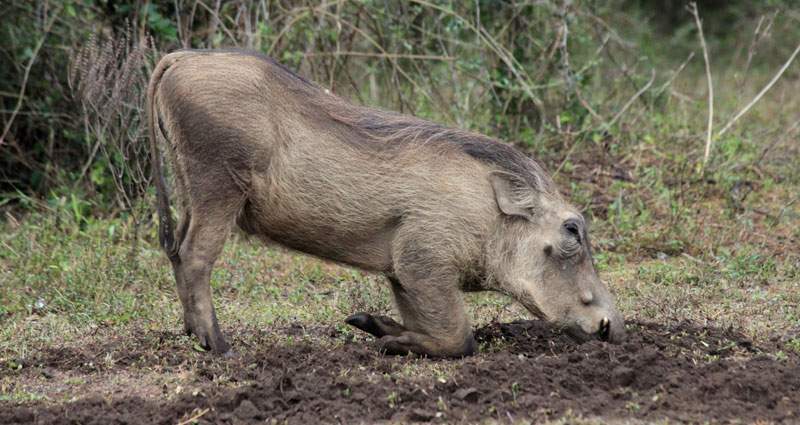
Common warthogs are light grey to brown in color, with very sparse black or brown hair all over the body. They have large heads with manes that run along the spine to mid-back. The warthog is a wild pig that lives primarily in sub-Saharan Africa. It roams across the open plains, grazing on berries and grasses, using its strong tusks to dig up roots and remove tree bark. The common warthog and the desert warthog are the two main species. Both have similar physical traits, but desert warthogs are able to withstand drier, more arid climates and are typically found in the savannas of northern Kenya and Somalia. Two of the most distinct behaviors attributed to the warthog are its tendency to rest on its forelegs while eating or drinking and its pin-straight tail that sticks up as it runs. They are quite graceful on their feet and can run up to speeds of 30 mph. Once they sense a problem, they raise their tails and manes straight up and head for the safety of their dens or dense vegetation.
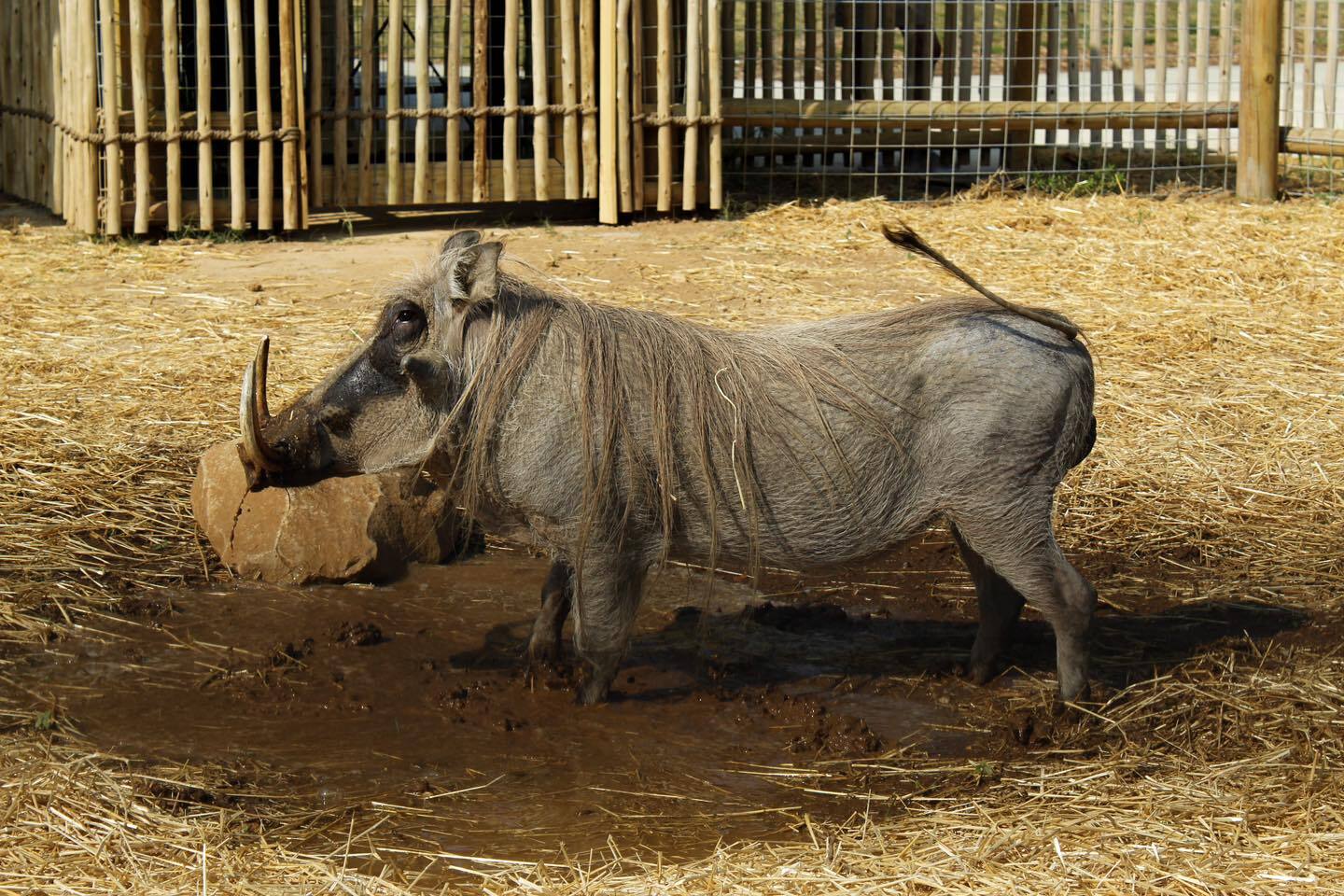
Warthogs lack sweat glands, so they often rest in mud wallows during the day to cool their bodies and protect themselves from sunburn and biting insects. At the same time their bodies become camouflaged by taking on the color of the earth. At night, during their least active time, warthogs move to the safety of underground dens. These spaces have already been made by other animals and warthogs simply come in and take over the abandoned dens. Available brush or vegetation is sometimes used to pad or insulate the den, especially when raising the young. In order to be ready to protect themselves, warthogs back in, rear end first, into the den. When they exit the den, they run straight out to avoid any predators waiting for them.

_________________________________________________________________________________________________________________________________
Tusks and Teeth
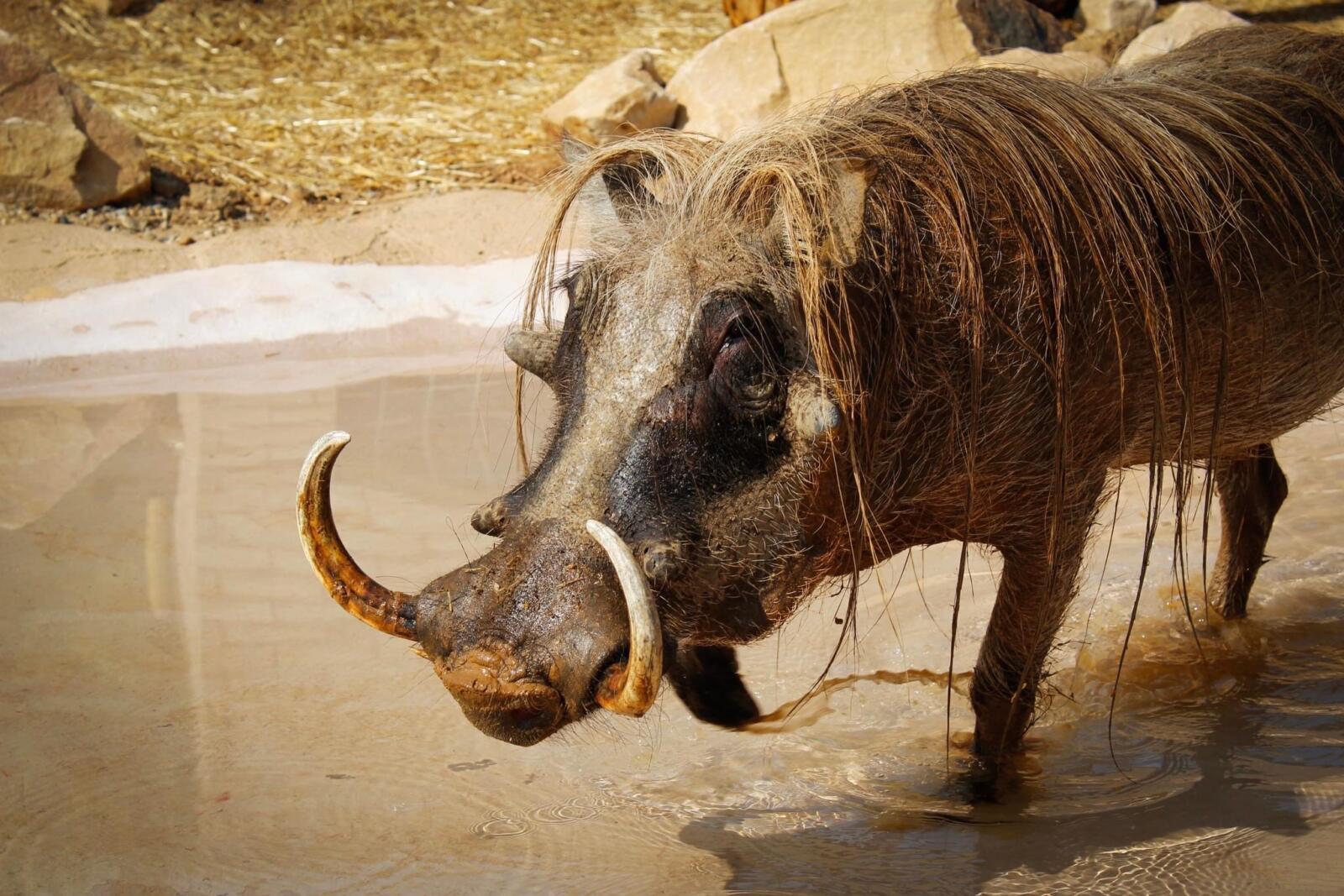
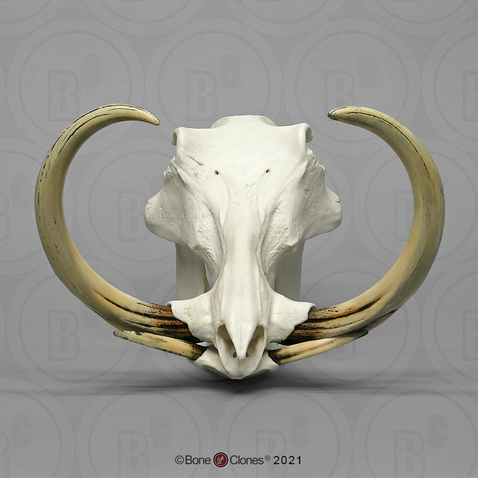
Warthogs have a total of 34 teeth. Four of those are very long tusks on each side of their snout. They can grow up to 10 inches long. Their tusks are enlarged canine teeth that protrude upwards from its mouth. The shorter, lower pair are worn to a razor-sharp edge by rubbing against the longer, upper pair whenever the mouth is opened and closed.
Large cats, crocodiles, and wild dogs are usually their main predators. If they aren't able to outrun their enemies, their tusks are the second line of defense. Warthog use their tusks for digging, fighting with rivals and defending themselves against predators.
______________________________________________________________________________________________________________________________________
Warts
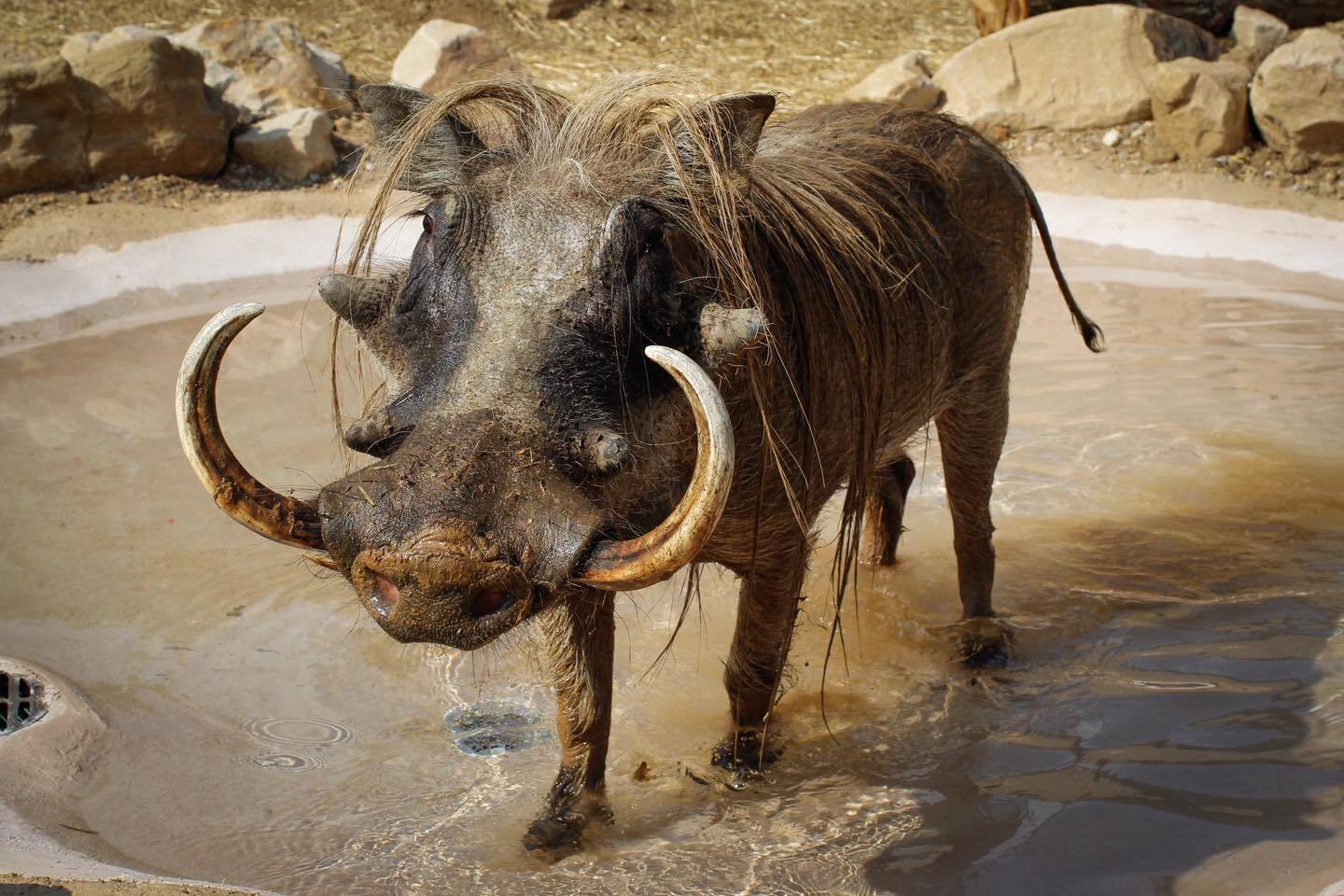
It's the bumps or "warts" on the sides of their faces that give them their unusual name warthog. A warthog’s “warts” are not really warts, but just thick growths of skin. Even though the growths stick out, they don’t have any bones or cartilage. The warts are also a good way of determining if a warthog is male or female. In general, males have a total of three pairs of warts on their face and they are larger, while females only have two. These thick patches of skin are also a way to protect the warthog and cushion the animal's face from teeth and claws during an attack.