Makazi Ya Twiga
Birds of Africa
Did you know...
there are almost 2,500 different bird species found in Africa? Some are water birds, some hunt meat, some forage, some sing songs, some can't fly, and one (ostrich) can weigh up to 300 pounds. The African bird world has an amazing assortment of sizes, shapes, and colors.

African Birds at Chattanooga Zoo
Violaceous turaco

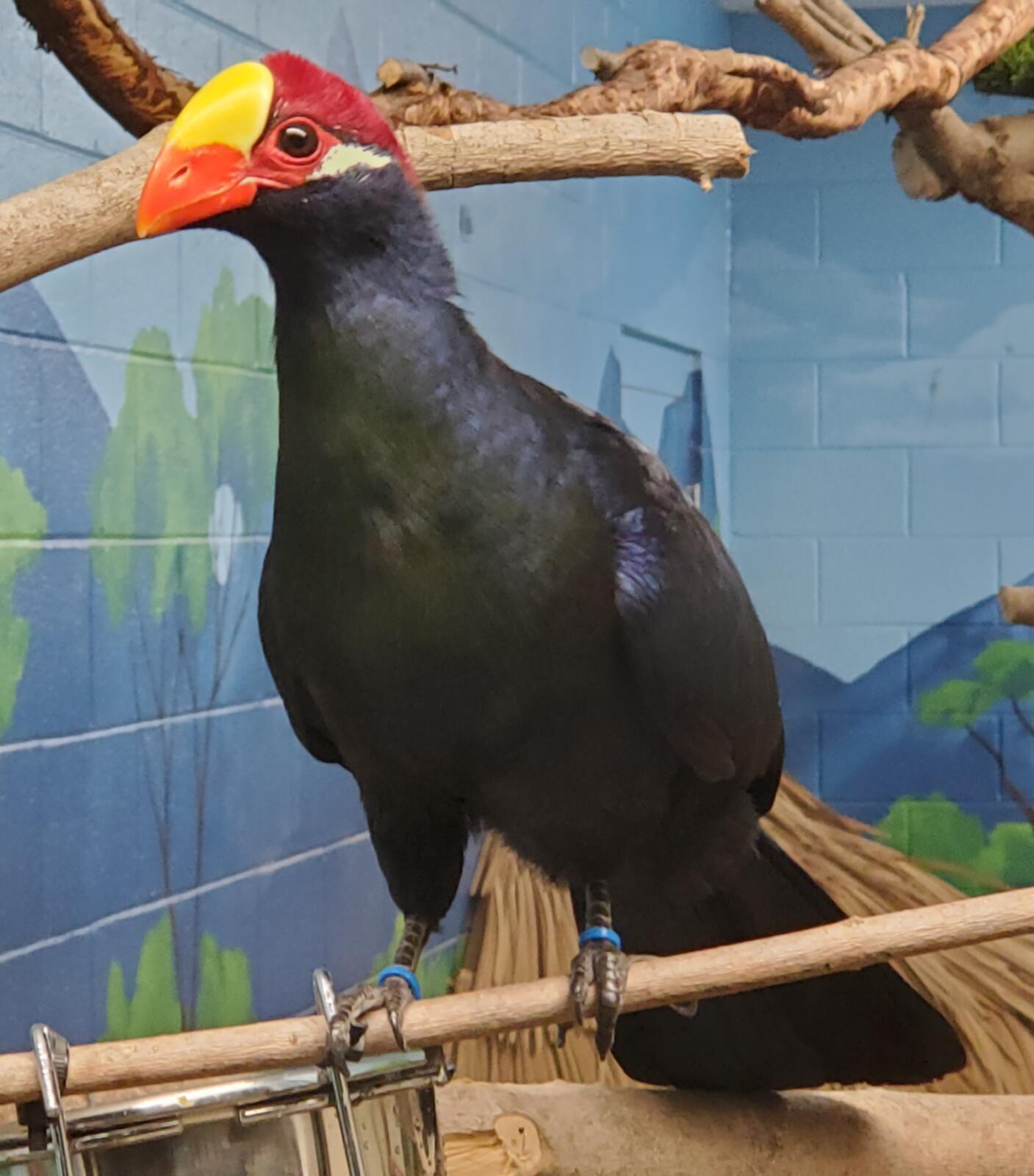
Common. Native to West Africa. Habitat includes tropical forests and dry savannah streams. Violaceous turacos, also known as violet turacos, are covered in melanin-rich, deep purple feathers. The red in their feathers comes from turacin, a copper pigment. Turacin is only found in turacos. Other birds derive their red coloration from carotenoids or phaeomelanins. Violet turacos are around 30 inches long, and weigh less than a pound. They also have a yellow shield on their forehead. This is the only turaco species without a crest. Violet turacos aren’t the best flyers, and prefer to navigate their forest habitat by running along branches. They are aided by several semi-zygodactyl toes; these toes are reversible, allowing the bird extra balance where they need it. These African birds love to eat fruit and insects, but they drop more food than they get in their mouths, which provides food for animals on the ground and aids in seed dispersal. When threatened, they freeze. This helps them camouflage with their surroundings. If they are caught by a predator, they will release feathers in an effort to escape.
Blue-bellied roller
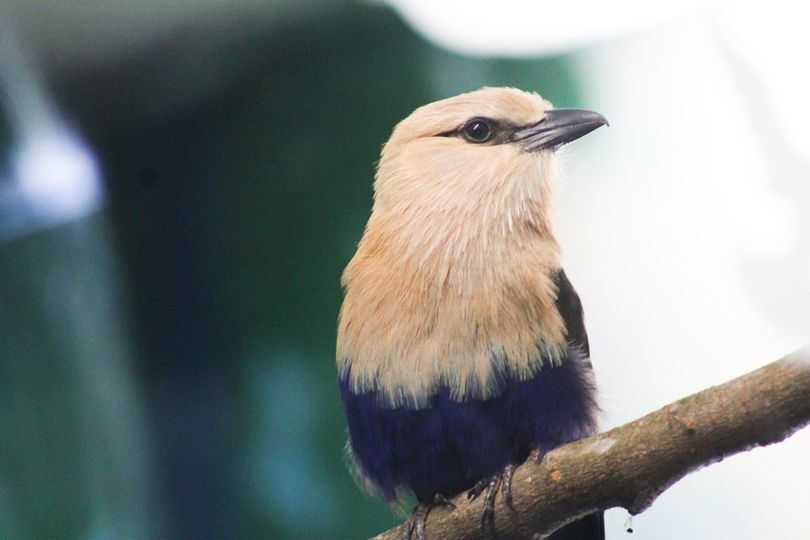
Common. Blue-bellied rollers are small birds with relatively large heads. They have heavy, downward-curved beaks and short legs to fit their stocky bodies. They get their name not just from their vivid blue color, but also the acrobatic, "rolling" flight pattern when courting a potential mate. When hunting for their main diet of insects, they sit in trees at about 32 feet off the ground and dive to the forest floor to catch their prey on the ground. They have also been known to flock to forest and savanna fires, where they wait outside the fire and feed on insects fleeing the flames. This species has actually benefitted agriculture by preying on pest insects which may otherwise feed on the crops.
Superb starling
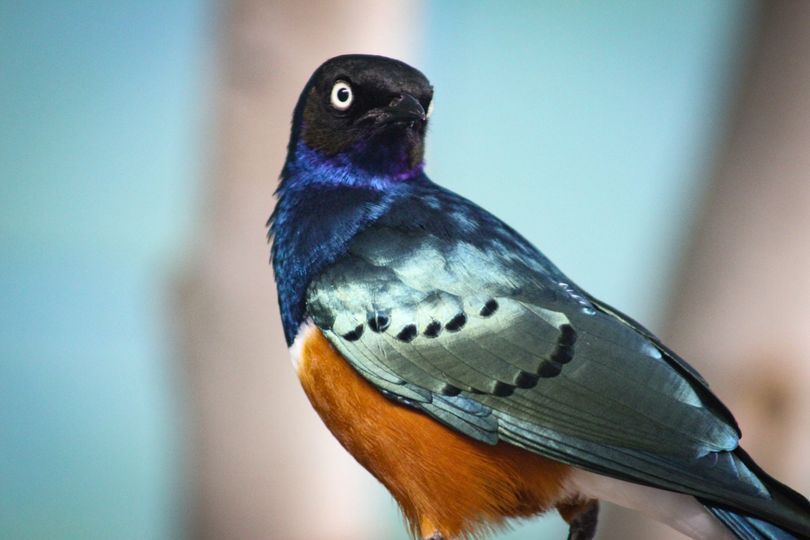
Common. The superb starling is found in east Africa. They are very colorful birds with a black head, blue backs, and reddish brown. Their feathers have an iridescent sheen that stands out in bright sunlight. They are excellent flyers. The shape of the wings helps them fly swiftly and maneuver quickly. Such agility is helpful in woodlands or to escape a predator. They feed primarily on the ground, often below, or in the vicinity of acacia trees mainly on insects (grasshoppers, beetles, termites, ants and flies) and worms, but also on grains, fruits and small berries. Superb starlings have an interesting feeding approach in that they probe into the soil and then forcing the beak open, create an open space where they can search for food. They are gregarious and are generally rather tame and unafraid of people.
Eastern crowned crane
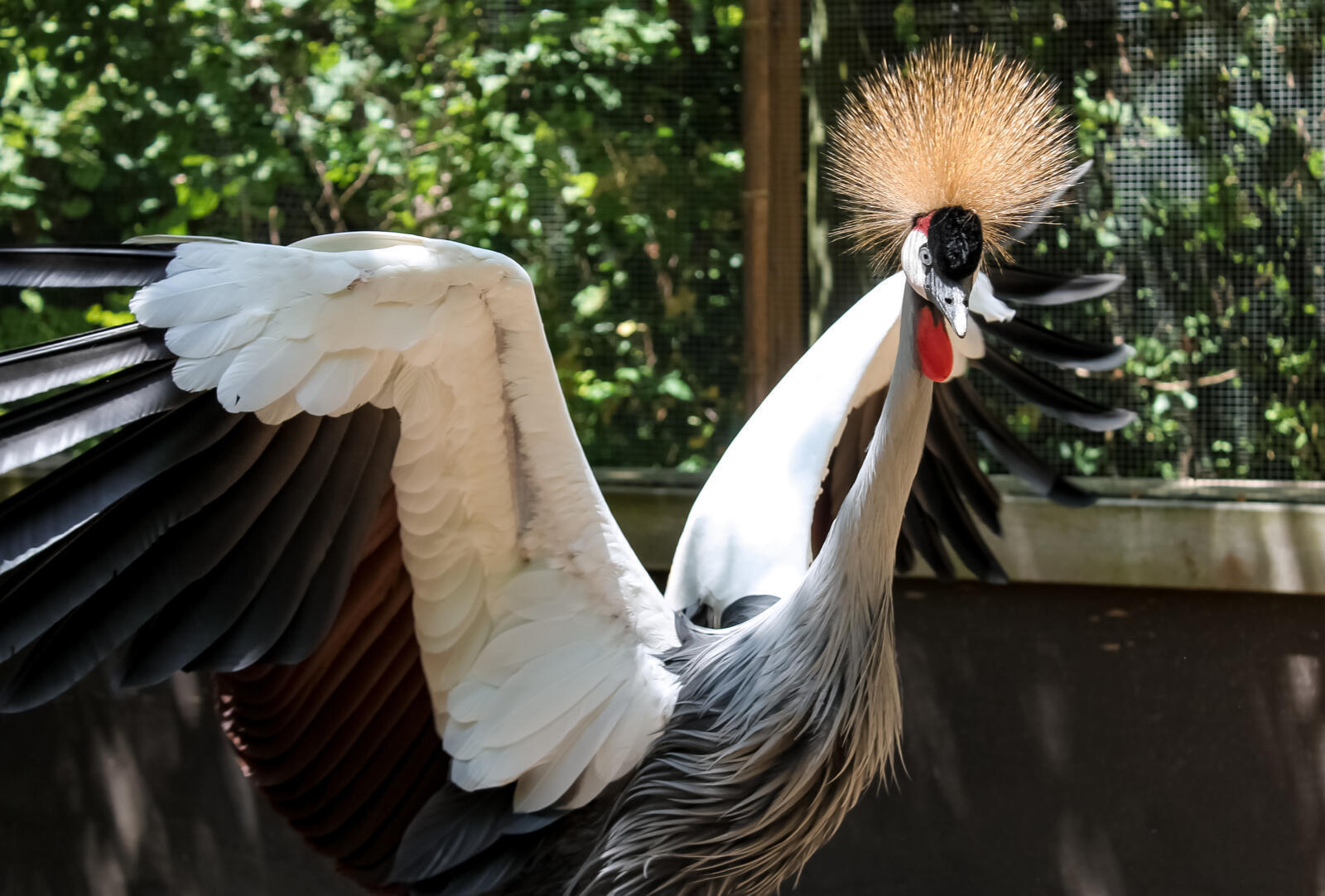
Endangered. While this bird is not located in our Makazi Ya Twiga area, it is an African bird housed at the Zoo. You can find it in our Gombe Forest aviary. For more detailed information, check out its full bio by clicking here.
_____________________________________________________________________________________________________________________________________________________
Why African Birds Matter
- They provide aesthetic enjoyment by adding life, sound and color to our lives.
- They are a source of economic growth, providing income and an incentive for conservation through ecotourism.
- They have cultural significance in myths, legends, symbols, ceremonies (such as the ceremonial use of feathers), art and names.
- Birds have important ecological values. They control pests and disperse seeds and pollinate plants. Vultures clean up the environment by feeding on carcasses and other waste. Honeyguides lead people to honey, thus providing them with food and a source of income. Insectivorous birds help to control pest infestations in farm crops.
____________________________________________________________________________________________________________________________________
How African Birds Are Being Helped In The Wild
BirdLife International is partnering with other non-governmental organizations, civil society organizations and
government agencies to achieve its aim of conserving birds, their habitats and global diversity by working with
people towards the sustainable use of Africa’s natural resources. Through the four main pillars of BirdLife’s strategy:
1) Species, 2) Sites and Habitats, 3) Ecological Sustainability, 4) People, the BirdLife Africa Partnership emphasizes developing positive links between birds, biodiversity and the livelihoods of people.